JLPT N3 - Grammar 🌟 ばよかった
Have you ever thought, “Ahh, I should have done that…” or “It would have been better if I hadn’t done this…”?
Like when you eat too much dessert:
“I shouldn’t have had that extra cake…”
Or when you forget your passport before going on an overseas trip:
“I should have double-checked my luggage list…”
And sometimes it’s even a more serious regret, like:
“If that was our last conversation, I should have been kinder…”
In Japanese, this kind of regret or “it would’ve been better if…” feeling is expressed with 〜ばよかった (ba yokatta).
It’s super useful for sharing those little “oops” moments or reflecting on past choices. Let’s dive in and see how to use it!


〜たらよかった (tara yokatta)
Almost the same meaning as 〜ばよかった, but slightly more casual and common in spoken Japanese.
え、近くまで来てたの?電話してくれたらよかったのに!
e, chikaku made kite ta no? Denwa shite kuretara yokatta noni!
What, you were nearby? You should have called me!
〜ほうがよかった (hou ga yokatta)
Used when comparing what you did with what would have been the better choice.
バスは混雑して座れそうにないね。ちょっと高くてもタクシーに乗ったほうがよかったね。
basu ha konzatsu shite suwaresou ni nai ne. Chotto takakute mo takushii ni notta hou ga yokatta ne.
The bus is too crowded to get a seat. It would have been better to take a taxi, even if it was a bit more expensive.
💡 Note on Structure:
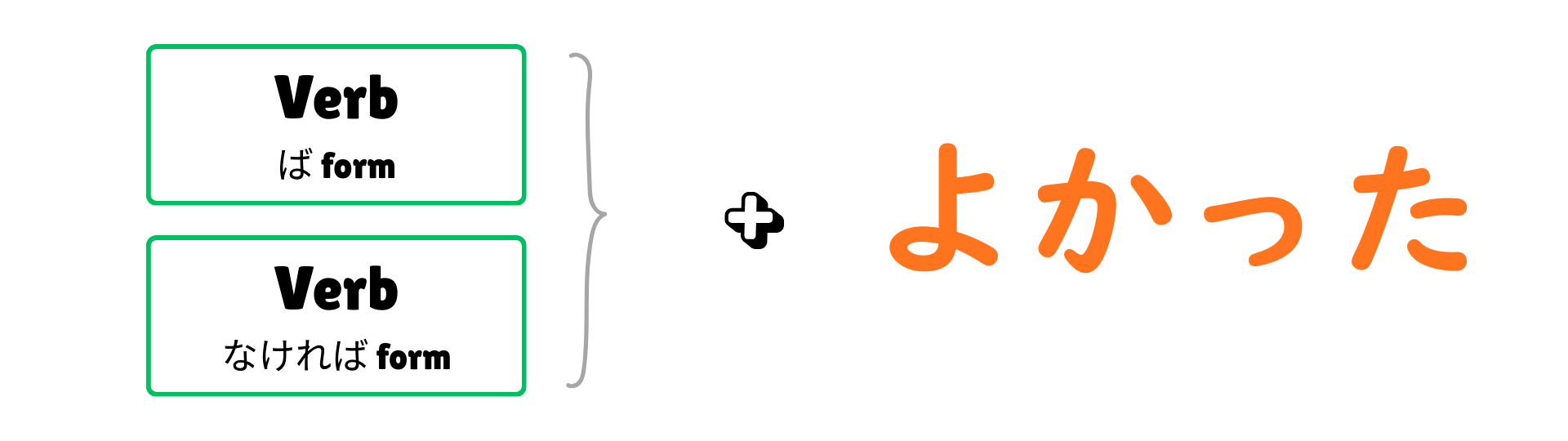
The phrase ばよかった is made of two parts:
ば → conditional form (if ~)
よかった → past tense of いい (good), meaning “was good / would have been better”
Together: “If ~, it would have been good” → “I should have…”

1. Affirmative Cases
パスポートをちゃんと確認すればよかった。
paasupooto wo chanto kakunin sureba yokatta.
I should have checked my passport properly.
テストの点数が思ったより悪かった…もっと勉強すればよかった。
tesuto no tensuu ga omotta yori warukatta… motto benkyou sureba yokatta.
My test score was worse than I expected… I should have studied more.
ミスドの新作ドーナツ、3つも食べちゃって胃がもたれてる。2つにすればよかった。
misudo no shinsaku doonatsu, mittsu mo tabechatte i ga motareteru. Futatsu ni sureba yokatta.
I ate three new Mister Donut donuts and now I have a heavy stomach. I should have stopped at two.
夜遅くまでスマホを見ていたから、今すごく眠い。もっと早く寝ればよかった。
yoru osoku made sumaho wo mite ita kara, ima sugoku nemui. Motto hayaku nereba yokatta.
I was on my phone until late at night, so now I’m super sleepy. I should have gone to bed earlier.
2. Negative Cases
遅くまで起きていなければよかった。
osoku made okite inakereba yokatta.
I shouldn’t have stayed up so late.
昨日のバーベキュー、元彼も来たの、しかも新しい彼女と一緒に!行かなければよかった。
kinou no baabekyuu, motokare mo kita no, shikamo atarashii kanojo to issho ni! Ikanakya yokatta.
My ex showed up at yesterday’s BBQ, together with his new girlfriend! I shouldn’t have gone.
親とケンカしてすごい感情的になっちゃって…あんなひどいこと、言わなければよかった。
oya to kenka shite sugoi kanjouteki ni nacchatte… anna hidoi koto, iwanakereba yokatta.
I argued with my parents and got really emotional… I shouldn’t have said such harsh things.

- Grammar Point: 〜ばよかった (ba yokatta)
- JLPT Level: N3
- Meaning: Should have, would have been better if
- Quick Explanation: 〜ばよかった is used when you regret something you didn’t do, or you feel it would have been better if things had gone differently.
It expresses “I should have…” or “It would have been better if…” in English.
So that’s how we use 〜ばよかった in Japanese!
It’s the perfect phrase to express regret, whether it’s about eating too many donuts, forgetting something important, or wishing you’d made a different choice.
However, mistakes are part of life, and they turn into stories that give your life deeper meaning.
When studying Japanese, you might sometimes think, “もっと日本語を勉強すればよかった (I should have studied more Japanese).”
But instead of filling your life with regret, let’s focus on what you can do right now, step by step.
Now it’s your turn, try making your own sentences with 〜ばよかった and remember: every little effort today builds your tomorrow.
So keep going, and no regrets!
Your Sensei,
Hikari 👩🏻🏫
Get Hikari's JLPT Mock Exams & Preparation Lessons!
Whether you are studying to pass the JLPT or looking for a challenge in your learning journey, these courses are perfect for you!
Join my ニュースレター Newsletter 📩
You can expect an email from me once a week about Japanese culture.
Don't worry, your information will not be shared.
We hate SPAM. We will never sell your information, for any reason.