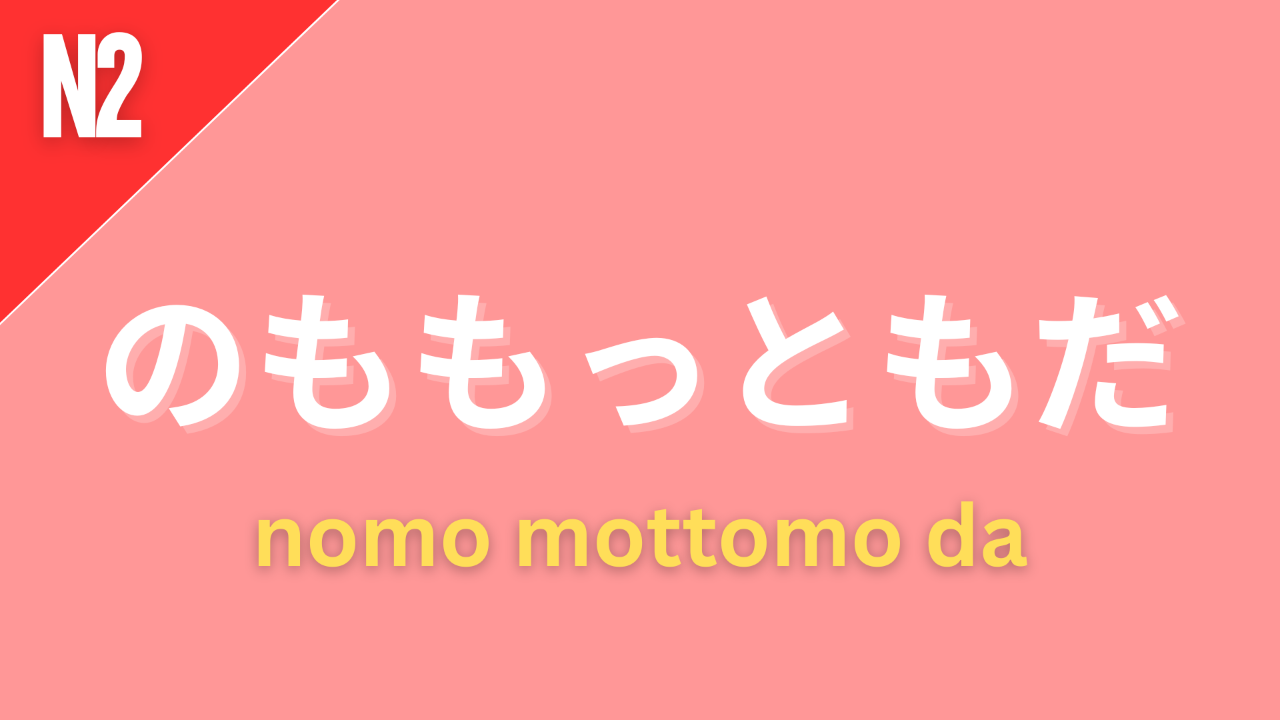
JLPT N2 - Grammar 🌟 のももっともだ nomomottomoda
Have you ever listened to someone’s story and thought,
“Yeah, no wonder you feel that way” or “That’s only natural”?
Like…
Your friend failed an exam because they didn’t study. → “Well, it’s no wonder.”
Someone is angry because they were treated unfairly. → “That’s only natural.”
In Japanese, this kind of expression is said with のももっともだ (no mo motto mo da).
It’s a polite and formal way to acknowledge that someone’s feelings or reaction makes perfect sense.
Let’s dive in and see how it works!


1. のも当然だ (no mo touzen da)
Meaning: natural, expected, of course
彼が怒るのも当然だ。
かれがおこるのもとうぜんだ。
kare ga okoru no mo touzen da.
It’s only natural that he gets angry.
2. のも無理はない (no mo muri ha nai)
Meaning: no wonder, understandable
夜遅くまで勉強していたんだから、眠いのも無理はない。
よるおそくまでべんきょうしていたんだから、ねむいのもむりはない。
yoru osoku made benkyou shite ita n dakara, nemui no mo muri ha nai.
You studied until late at night, so it’s no wonder you’re sleepy.
💡Extra Tip:
Use のももっともだ (nomo mottomo da) - when you want to sound polite, formal, or logical.
Use のも当然だ (nomo touzen da) - in casual or neutral contexts.
Use のも無理はない (nomo muri ha nai) - when you want to empathize with someone’s situation.
💡Note on Structure:
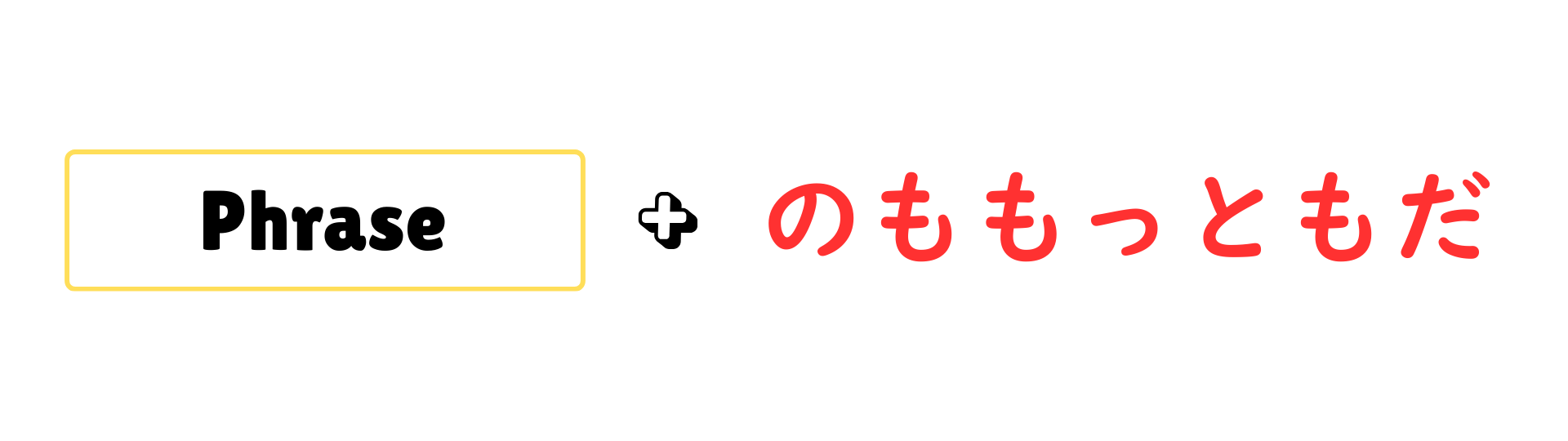
The phrase のももっともだ (nomo mottomo da) is made up of:
の (no) → nominalizer (turns a clause into a noun phrase)
も (mo) → particle that adds nuance emphasizing that the situation is understandable
もっとも (mottomo) → “reasonable / natural / makes sense”
だ (da) → copula
So, literally it feels like saying:
“It is also reasonable that ~”
💡Note:
You may also say 〜はもっともだ (~ha mottomo da), especially when directly pointing out that something itself is reasonable.

これは日本語話者でも迷うところだよ。日本語学習者がこの文法を難しいと思うのももっともだよ。
これはにほんごわしゃでもまようところだよ。にほんごがくしゅうしゃがこのぶんぽうをむずかしいとおもうのももっともだよ。
kore ha Nihongo washa demo mayou tokoro da yo. Nihongo gakushuusha ga kono bunpou wo muzukashii to omou no mo motto mo da yo.
Even native Japanese speakers get confused this one. It’s no wonder learners find this grammar difficult.
初めて日本に来た人が新宿駅で迷うのももっともだ。
はじめてにほんにきたひとがしんじゅくえきでもようにももっともだ。
hajimete Nihon ni kita hito ga Shinjuku-eki de mayou no mo motto mo da.
It’s no wonder that someone visiting Japan for the first time gets lost at Shinjuku Station.
100人の前でプレゼンするの?きんちょうするのももっともだ。
100にんのまえでぷれぜんするの?きんちょうするのももっともだ。
100-nin no mae de purezen suru no? Kinchou suru no mo motto mo da.
Presenting in front of 100 people? It’s only natural to feel nervous.
日本の夏が暑すぎて、クーラーなしでは過ごせないのももっともだ。
にほんのなつがあつすぎて、くーらーなしではすごせないのももっともだ。
nihon no natsu ga atsusugite, kuuraa nashi de wa sugosenai no mo motto mo da.
Japanese summers are so hot, it’s no wonder you can’t live without air conditioning.
だれよりもいちばん練習したんだから、彼が試合で勝ったのももっともだよ。
だれよりもいちばんれんしゅうしたんだから、かれがしあいでかったのももっともだよ。
dare yori mo ichiban renshū shita n dakara, kare ga shiai de katta no mo motto mo da yo.
He practiced more than anyone else, so it’s only natural that he won the match.
日本語の敬語を覚えるのが難しいと思うのももっともだ。日本人でも間違えるよ!
にほんごのけいごをおぼえるのがむずかしいとおもうのももっともだ。にほんじんでもまちがえるよ!
nihongo no keigo wo oboeru no ga muzukashii to omou no mo motto mo da. Nihonjin demo machigaeru yo!
It’s no wonder you think learning Japanese honorifics is difficult. Even Japanese people make mistakes!

- Grammar Point: のももっともだ (no mo motto mo da)
- JLPT Level: N2
- Meaning: No wonder, only natural, it makes sense that
- Quick Explanation: のももっともだ is used when you want to say that someone’s feelings, actions, or reactions are reasonable or understandable given the situation.
It’s often used in more formal or polite contexts, like writing, speeches, or thoughtful conversations.
So that’s how we use のももっともだ in Japanese!
It’s the perfect phrase when you want to say, “Yeah, that makes sense,” or “No wonder!” in a logical but natural way.
Now it’s your turn, try making your own sentences with のももっともだ and see how natural your Japanese sounds!
Your Sensei,
Hikari 👩🏻🏫✨
Get Hikari's JLPT Mock Exams & Preparation Lessons!
Whether you are studying to pass the JLPT or looking for a challenge in your learning journey, these courses are perfect for you!
Join my ニュースレター Newsletter 📩
You can expect an email from me once a week about Japanese culture.
Don't worry, your information will not be shared.
We hate SPAM. We will never sell your information, for any reason.