JLPT N5 - Grammar 🌟 や ya (particle)

Have you ever wanted to say “things like A and B” in Japanese?
That’s where the particle や (ya) comes in!
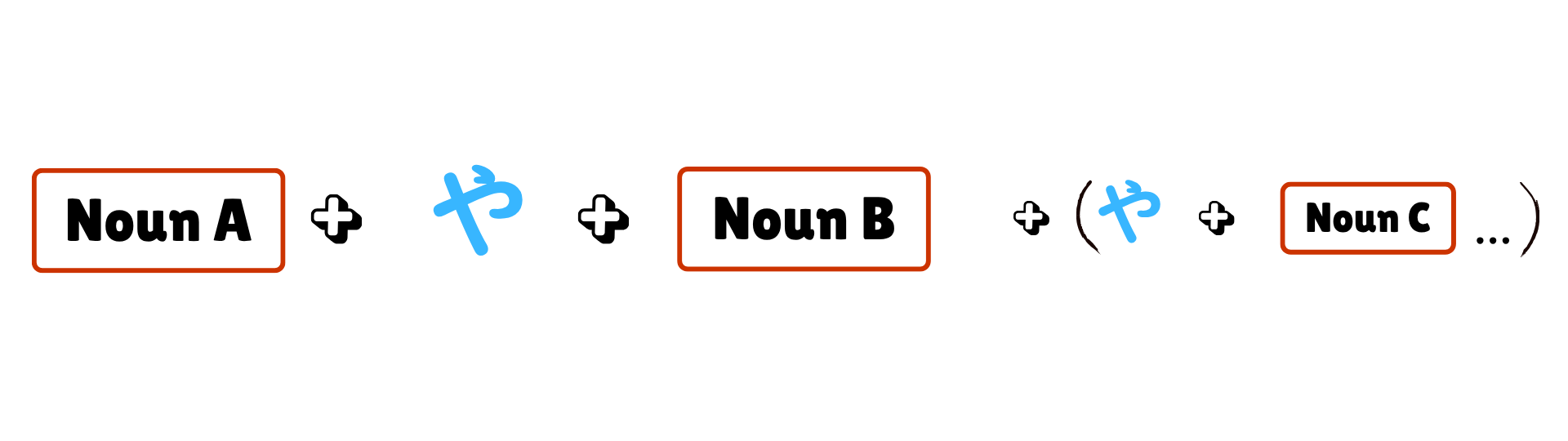
We use や to list a few examples from a longer list.
Unlike particle と (to), which lists everything specifically, や leaves the door open, there are other things not mentioned.
Think about sentences like…
“I bought snacks and fruit (and other things).”
“There are ramen and gyoza (and more).”
“I brought a bento and juice (and some other stuff).”
It’s super handy when you don’t want to name every single item but still want to give an idea of what’s included.
Shall we check it out?


と (to) : “A and B (only)”
Lists everything completely, nothing more.
りんごとバナナをかいました。
りんご と ばなな を かいました。
ringo to banana wo kaimashita.
I bought apples and bananas. (That’s it, nothing else.)
💡 Tip:
Use や (ya) when you don’t need to give the full list, or when the list is long.
Use と (to) when you want to be specific and complete.


スーパーで、お菓子や 果物を 買いました。
すーぱー で、おかし や くだもの を かいました。
suupaa de, okashi ya kudamono wo kaimashita.
I bought snacks and fruit (and other things) at the supermarket.
動物園には、ゾウや キリンが いました。
どうぶつえん に は、ぞう や きりん が いました。
doubutsuen ni ha, zou ya kirin ga imashita.
At the zoo, there were elephants and giraffes (and more).
居酒屋には、和食のほかに ピザやぎょうざも あります。
いざかや に は、わしょく の ほか に ぴざ や ぎょうざ も あります。
izakaya ni ha, washoku no hoka ni piza ya gyouza mo arimasu.
At the izakaya, besides Japanese food, there’s also pizza and gyoza (and more).
私の部屋には、ギターやウクレレが あります。
わたし の へや に は、ぎたー や うくれれ が あります。
watashi no heya ni ha, gitaa ya ukurere ga arimasu.
In my room, there are guitars and ukuleles (and other instruments).
ひかり先生の 授業では、文法や漢字を 勉強します。
ひかり せんせい の じゅぎょう で は、ぶんぽう や かんじ を べんきょう します。
hikari sensei no jugyou de ha, bunpou ya kanji wo benkyou shimasu.
In Hikari-sensei’s class, we study grammar, kanji, and other things.

- Grammar Point: や (ya)
- JLPT Level: N5
- Meaning: And, things like A and B
- Quick Explanation: Use や to list a few examples from a longer list. It implies there are other things not mentioned.
So that’s how we use the particle や in Japanese!
It’s perfect when your list is too long or when you just want to give examples without naming everything.
わたしの ブログや ポッドキャストで、たくさん 日本語を 吸収してね!
わたし の ぶろぐ や ぽっどきゃすとで、たくさん にほんご を きゅうしゅう して ね!
watashi no burogu ya poddokyasuto de, takusan nihongo wo kyuushuu shite ne!
Absorb lots of Japanese through my blog and podcast (and more)!
Now it’s your turn! Try making your own sentence with や and see what fun examples you can come up with!
Your Sensei,
Hikari 👩🏻🏫
Get Hikari's JLPT Mock Exams & Preparation Lessons!
Whether you are studying to pass the JLPT or looking for a challenge in your learning journey, these courses are perfect for you!
Join my ニュースレター Newsletter 📩
You can expect an email from me once a week about Japanese culture.
Don't worry, your information will not be shared.
We hate SPAM. We will never sell your information, for any reason.