JLPT N5 - Grammar 🌟 とても totemo
Have you ever wanted to say “very” in Japanese…
but weren’t sure if it sounds polite enough? Too strong? Too casual?
Good news! Japanese has a safe, friendly, and super reliable word for that:
とても (totemo) .
Whether you’re talking about the weather, food, feelings, or even a difficult situation,
とても helps you express a strong degree without sounding rude or over-the-top.
It’s one of the first words learners meet at the N5 level, and it stays useful all the way up to business Japanese and JLPT reading texts.
Let’s take a closer look at how とても works, and when it’s the perfect choice.
Are you ready? Let’s go!


すごく (sugoku) vs とても (totemo)
Both すごく and とても are used to mean “very” in Japanese, but they differ in tone, formality, and how emotional they sound.
すごく (sugoku)
すごく is a casual, spoken expression commonly used in everyday conversation.
It sounds emotional, personal, and lively. Like you’re reacting in the moment.
You’ll hear it a lot among friends, family, and people of the same age.
この映画、すごくおもしろい!
この えいが、すごく おもしろい!
kono eiga, sugoku omoshiroi!
This movie is really interesting!
Use すごく when you’re speaking casually and want to sound natural and expressive.
とても (totemo)
とても is neutral, calm, and polite.
It’s suitable for daily conversation, work situations, speaking to teachers, and even written Japanese. Rather than expressing excitement, とても sounds like you’re describing a situation objectively.
この映画はとてもおもしろいです。
この えいが は とても おもしろい です。
kono eiga ha totemo omoshiroi desu.
This movie is very interesting.
Use とても when you want to sound polite, safe, and well-balanced.

今日は風がふいていて、とても寒いです。
きょう は かぜ が ふいて いて、とても さむい です。
kyou ha kaze ga fuite ite, totemo samui desu.
It’s windy today, and it’s very cold.
このカメラは軽くて、とても使いやすい。
この かめら は かるく て、とても つかい やすい。
kono kamera ha karuku te, totemo tsukai yasui.
This camera is light and very easy to use.
日本で食べた天ぷらは、とてもおいしかったです。
にほん で たべた てんぷら は、とても おいしかった です。
nihon de tabeta tenpura ha, totemo oishikatta desu.
The tempura I ate in Japan was very delicious.
先生はいつも笑顔で、とても明るい人です。
せんせい は いつも えがお で、とても あかるい ひと です。
sensei ha itsumo egao de, totemo akarui hito desu.
The teacher is always smiling and is a very cheerful person.
日本の電車は、時間がとても正確です。
にほん の でんしゃ は、じかん が とても せいかく です。
nihon no densha ha, jikan ga totemo seikaku desu.
Japanese trains are very punctual.
重い荷物を持って歩いたので、とても疲れました。
おもい にもつ を もって あるいた の で、とても つかれました。
omoi nimotsu wo motte aruita no de, totemo tsukaremashita.
I carried heavy luggage and walked, so I got very tired.

- Grammar Point: とても (totemo)
- JLPT Level: N5
- Meaning: Very, exceedingly
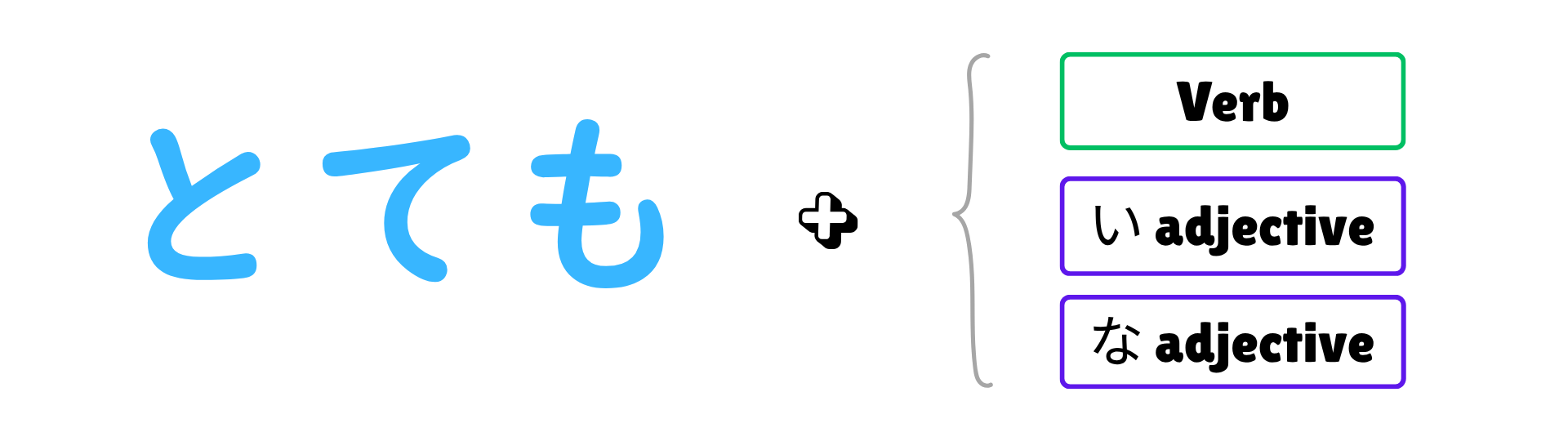
- Quick Explanation: とても is used to strongly emphasize adjectives and states in a polite, neutral, and reliable way. It comes before what you want to emphasize and works well in daily conversation, formal situations, and written Japanese.
So that’s how we use とても!
It may look like a simple word, but it’s one of the most dependable expressions in Japanese.
When you’re not sure how strong you should sound, とても helps you express your feelings clearly, politely, and naturally.
東京の夜景はとてもきれいです。
とうきょうのやけいはとてもきれいです。
Toukyou no yakei wa totemo kirei desu.
The night view in Tokyo is very beautiful.
Now, it’s your turn!
Try making your own sentence with とても, about today’s weather, your feelings, or something you experienced recently.
Your Japanese will become clearer and more natural, one sentence at a time.
Your Sensei,
Hikari 👩🏻🏫✨
Get Hikari's JLPT Mock Exams & Preparation Lessons!
Whether you are studying to pass the JLPT or looking for a challenge in your learning journey, these courses are perfect for you!
Join my ニュースレター Newsletter 📩
You can expect an email from me once a week about Japanese culture.
Don't worry, your information will not be shared.
We hate SPAM. We will never sell your information, for any reason.