JLPT N5 - Grammar 🌟 たり〜たり tari ~ tari

Have you ever wanted to talk about your day in a relaxed, natural way, like saying “I went shopping, watched a movie, and did a few other things”? Or maybe you want to describe your weekend plans without listing every single detail?
In Japanese, one of the easiest ways to do that is with たり〜たり (tari ~ tari), an N5 grammar pattern that lets you mention a couple of representative actions without implying any strict order.
It allows you to describe things you did, things you usually do, or even things you plan to do, all without having to list the full sequence of events.
With たり〜たり, you can say something like “I watched YouTube, listened to music, and so on,” in a natural, flexible way, just like a native speaker.
So, are you ready to learn this super useful grammar and make your conversations flow naturally? Let’s explore together!


💡とか (toka) vs たり (tari)
Both とか and たり can be used to list examples, but they have different nuances and are used in different contexts.
とか (toka)
とか is a casual, conversational expression used to give loose, open-ended examples.
It carries the nuance of “things like A and B,” without implying a full list.
You’ll hear it often in everyday conversation among friends.
カフェとか さんぽとか が 好きです。
かふぇ とか さんぽ とか が すき です。
kafe toka sanpo toka ga suki desu.
I like things like going to cafes and taking walks.
たり (tari)
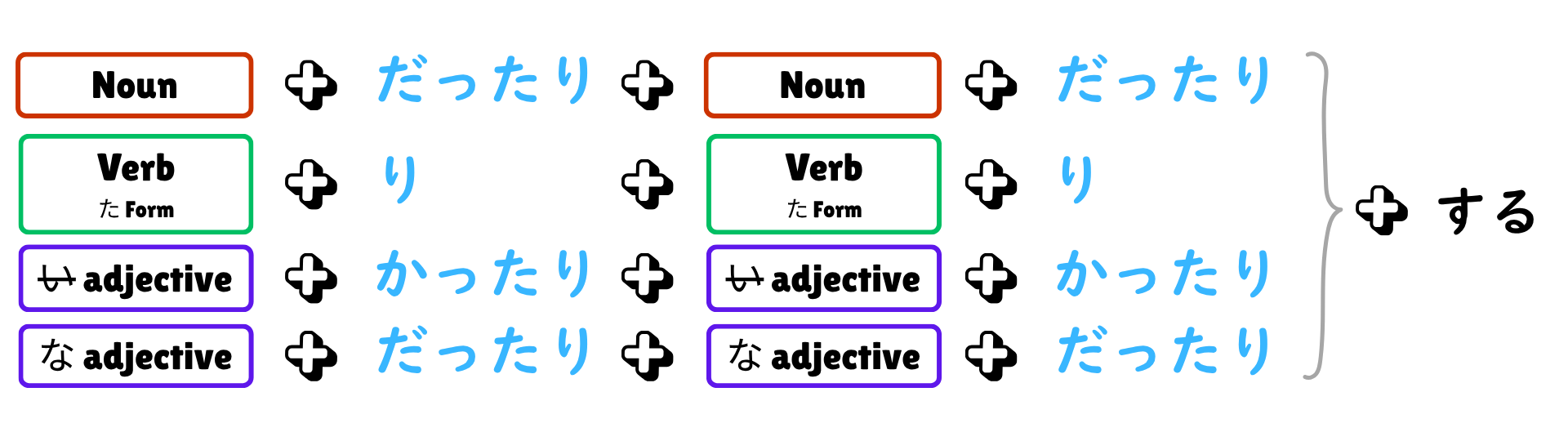
たり is a more structured and neutral grammar pattern used to list representative actions or states.
It’s perfect for describing multiple activities you do, usually two or more, without suggesting the list is complete.
土曜日 は えいが を 見たり、本 を よんだり します。
どようび は えいが を みたり、ほん を よんだり します。
doyoubi ha eiga wo mitari, hon wo yondari shimasu.
On Saturdays, I do things like watching movies and reading books.

歌ったり、踊ったりするのが好きです。
うたったり、おどったり する の が すき です。
utattari, odottari suru no ga suki desu.
I like doing things such as singing and dancing.
学校の後は、宿題をしたり、ゲームをしたりします。
がっこう の あと は、しゅくだい を したり、げーむ を したり します。
gakkou no ato ha, shukudai wo shitari, geemu wo shitari shimasu.
After school, I do things like homework and playing games.
私が勉強する場所は、リビングだったり、近くのカフェだったりします。
わたし が べんきょう する ばしょ は、りびんぐ だったり、ちかく の かふぇ だったり します。
watashi ga benkyou suru basho ha, ribingu dattari, chikaku no kafe dattari shimasu.
The places where I study are sometimes the living room and sometimes a nearby cafe.
天気によって私は気分が良かったり、悪かったりします。
てんき に よって わたし は きぶん が よかったり、わるかったり します。
tenki ni yotte watashi ha kibun ga yokattari, warukattari shimasu.
Depending on the weather, my mood can be good or bad.
彼女の第一印象は人によって親切だったり、真面目だったりします。
かのじょ の だいいちいんしょう は ひと に よって しんせつ だったり、まじめ だったり します。
kanojo no daiichi inshou ha hito ni yotte shinsetsu dattari, majime dattari shimasu.
Her first impression can be kind for some people and serious for others.

- Grammar Point: たり〜たり (tari ~ tari)
- JLPT Level: N5
- Meaning: Doing things like A and B, listing representative actions or states
- Quick Explanation: たり〜たり is used to list multiple actions, states, or examples in a soft, representative way. It highlights that the actions mentioned are just examples, not a complete list.
So that’s how we use たり〜たり!
It’s a simple and super useful pattern for listing examples, perfect when you want to say you do “things like A and B” without giving a full list.
You’ll use it all the time to describe your hobbies, routines, and daily life in a natural, conversational way.
週末は、本を読んだり映画を見たりします。
しゅうまつは、ほんをよんだりえいがをみたりします。
shuumatsu ha, hon wo yondari, eiga wo mitari shimasu.
On weekends, I read books and watch movies.
Now it’s your turn! try making your own sentences with たり〜たり and talk about your daily activities just like a real Japanese speaker!
Your Sensei,
Hikari 👩🏻🏫✨
Get Hikari's JLPT Mock Exams & Preparation Lessons!
Whether you are studying to pass the JLPT or looking for a challenge in your learning journey, these courses are perfect for you!
Join my ニュースレター Newsletter 📩
You can expect an email from me once a week about Japanese culture.
Don't worry, your information will not be shared.
We hate SPAM. We will never sell your information, for any reason.