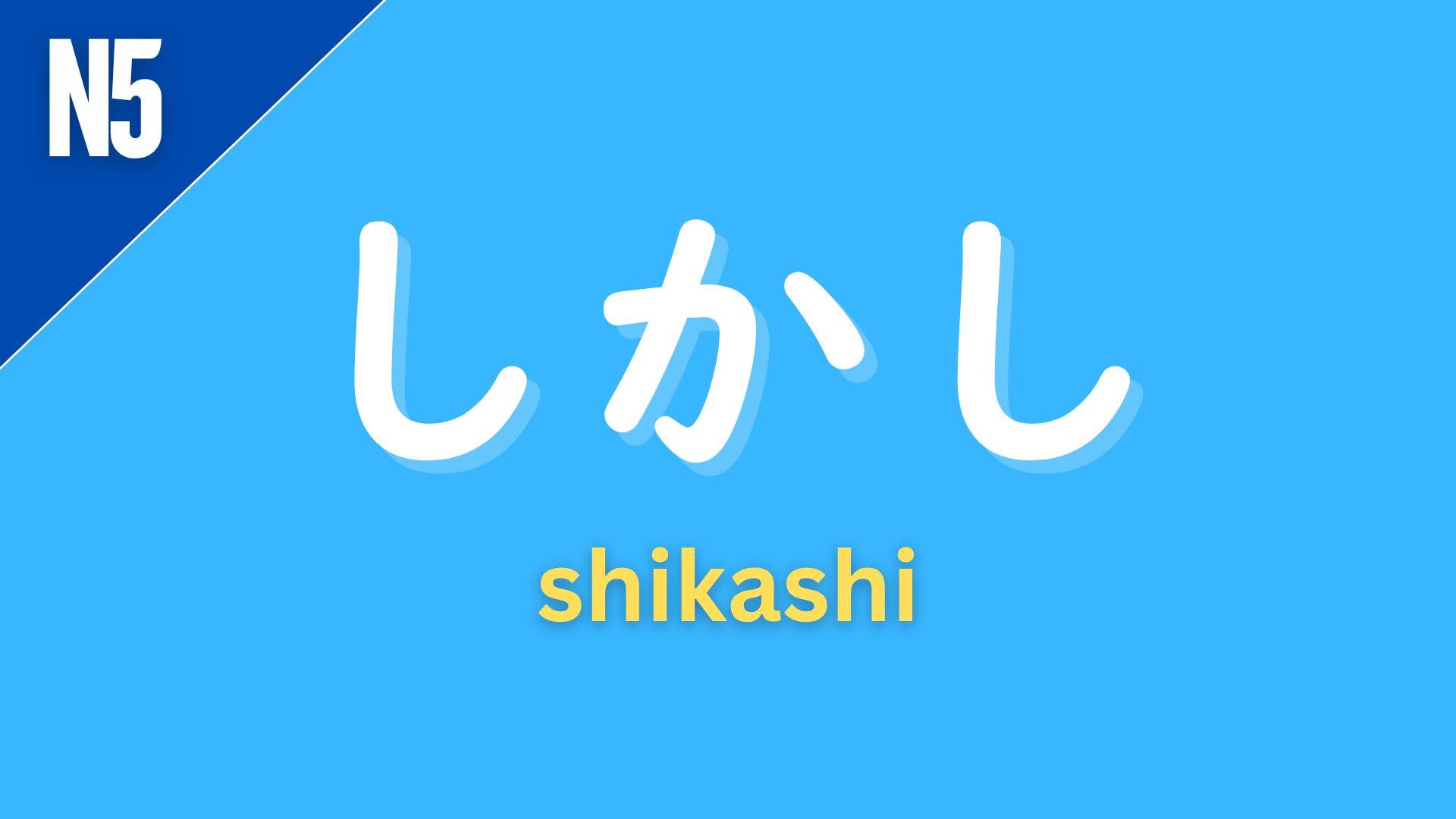
JLPT N5 - Grammar 🌟 しかし shikashi
Have you ever been so excited about something, only for a “but” to pop up and ruin the vibe?
Maybe you found the perfect pair of shoes, but they were too expensive.
Or you studied really hard for a test, but the result wasn’t what you hoped for.
We’ve all been there!
In Japanese, when you want to connect two contrasting ideas, especially in a slightly more formal or dramatic way, you use しかし (shikashi).
While you might already know でも (demo) for everyday chatting, しかし is like the sophisticated older sibling.
It means “but” or “however,” and it’s perfect when you want to sound clear, professional, or add a bit of weight to your point.
Let’s learn how to use this powerful connector to show contrast like a pro! Ready? Here we go!



でも (demo) vs けれども (keredomo) vs しかし (shikashi)
Japanese has many ways to say “but,” and choosing the right one depends on who you are talking to and the situation!
でも (demo)
でも is the most casual and conversational way to say “but.”
It is commonly used at the beginning of a sentence when speaking with friends, family, or in relaxed situations. It sounds natural, friendly, and very everyday-Japanese.
あしたは 休みです。でも、どこにも 行きません。
あした は やすみ です。でも、どこ に も いきません。
ashita wa yasumi desu. demo, doko ni mo ikimasen.
Tomorrow is a holiday. But I’m not going anywhere.
けれども (keredomo)
けれども is more polite and softer than でも.
It sounds calm and professional, and is often used in polite conversation, explanations, or writing. It can be used at the beginning of a sentence or to smoothly connect two clauses.
行きたいです。けれども、時間がありません。
いきたい です。けれども、じかん が ありません。
ikitai desu. keredomo, jikan ga arimasen.
I want to go. However, I don’t have time.
しかし (shikashi)
しかし is the most formal and stiff of the three.
It is often seen in newspapers, textbooks, essays, or formal speeches. It is typically used at the start of a sentence to show a clear and strong contrast.
彼は 走りました。しかし、間に合いませんでした。
かれ は はしりました。しかし、まにあいませんでした。
kare wa hashirimashita. shikashi, maniaimasen deshita.
He ran. However, he didn’t make it in time.

日本語の勉強は楽しい。しかし、漢字は難しい。
にほんご の べんきょう は たのしい。しかし、かんじ は むずかしい。
nihongo no benkyou wa tanoshii. shikashi, kanji wa muzukashii.
Studying Japanese is fun. However, kanji are difficult.
かっこいい靴を見つけました。しかし、高いです。
かっこいい くつ を みつけました。しかし、たかい です。
kakkoii kutsu wo mitsukemashita. shikashi, takai desu.
I found some cool shoes. However, they’re expensive.
日本料理は好きです。しかし、納豆だけは食べられません。
にほんりょうり は すき です。しかし、なっとう だけ は たべられません。
nihon ryouri wa suki desu. shikashi, nattou dake wa taberaremasen.
I like Japanese food. However, I can’t eat natto.
その島は美しい。しかし、行くのは非常に大変だ。
その しま は うつくしい。しかし、いく の は ひじょう に たいへん だ。
sono shima wa utsukushii. shikashi, iku no wa hijou ni taihen da.
That island is beautiful. However, getting there is extremely difficult.
彼は天才と呼ばれています。しかし、影では誰よりも努力しています。
かれ は てんさい と よばれて います。しかし、かげ では だれ より も どりょく して います。
kare wa tensai to yobarete imasu. shikashi, kage dewa dare yori mo doryoku shite imasu.
He is called a genius. However, behind the scenes, he works harder than anyone.

- Grammar Point: しかし (shikashi)
- JLPT Level: N5
- Meaning: But, however
- Quick Explanation: しかし is a formal conjunction used at the beginning of a sentence to introduce a contrasting idea. It sounds more academic or professional than でも.
So that’s how we use しかし.
It’s a great word to have when you want to sound a bit more serious or polished in Japanese.
勉強は 大変な ことも ある。 しかし、 同じ 夢を 追いかける 仲間が たくさん いる!
べんきょう は たいへん な こと も ある。 しかし、 おなじ ゆめ を おいかける なかま が たくさん いる!
benkyou ha taihen na koto mo aru. shikashi, onaji yume wo oikakeru nakama ga takusan iru!
Studying can be hard. However, there are many friends chasing the same dream!
Now it’s your turn!
Try making your own sentences with しかし and level up your Japanese writing!
Your Sensei,
Hikari 👩🏻🏫✨
Get Hikari's JLPT Mock Exams & Preparation Lessons!
Whether you are studying to pass the JLPT or looking for a challenge in your learning journey, these courses are perfect for you!

Join my ニュースレター Newsletter 📩
You can expect an email from me once a week about Japanese culture.
Don't worry, your information will not be shared.
We hate SPAM. We will never sell your information, for any reason.