JLPT N5 - Grammar 🌟 お / ご o / go (honorific prefix)
You’ve probably heard that Japanese has many polite ways of speaking. And it’s true! Even small changes can make your words sound softer and more respectful.
One of the simplest examples is the little prefixes お (o) and ご (go).
Have you ever noticed how Japanese suddenly becomes extra polite just by adding one of these tiny sounds at the beginning of a word?
Maybe you're at a cafe and hear someone say:
おみずをどうぞ(omizu wo douzo / Here’s some water / Please have some water.)
Or someone asks you:
ごかぞくは日本にいますか?(gokazoku ha nihon ni imasu ka? / Is your family in Japan?)
You can feel how these versions sound more polite and thoughtful than simply saying mizu or kazoku, right?
These prefixes お / ご are like little magic touches in Japanese.
They instantly make your words sound gentle, polite, and considerate, especially when talking about the other person or their belongings.
And the best part?
At the N5 level, you don’t need complicated rules. Just learn the most common patterns and set phrases, and you’ll already sound more natural and courteous in Japanese.
Let’s take a look at how お and ご work and how you can start using them right away!


How to choose お (o) or ご (go)
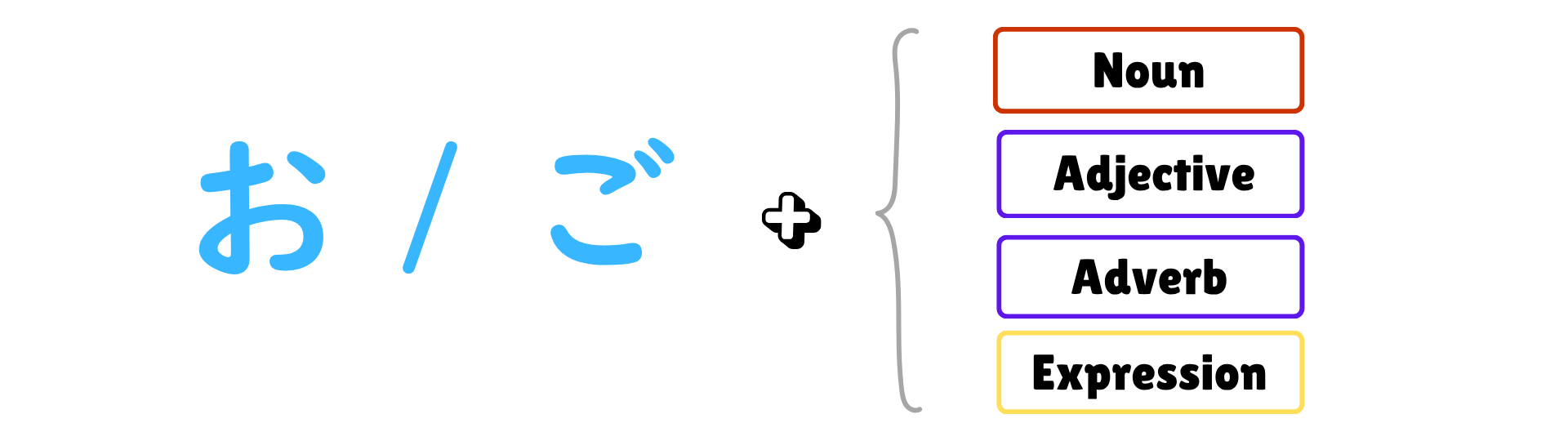
Add お or ご to certain nouns to make them sound polite.
お (o) - mostly used with Japanese-origin words
お茶
おちゃ
ocha
Tea
お水
おみず
omizu
Water
お名前
おなまえ
onamae
Name
ご (go) - mostly used with kanji-based words
ご家族
ごかぞく
gokazoku
Family
ご住所
ごじゅうしょ
gojuusho
Address
ご注文
ごちゅうもん
gochuumon
Order
💡 At the N5 level, the easiest rule
Just memorize common お / ご pairs as fixed expressions.
You’ll naturally learn the patterns over time!

お名前を教えてください。
おなまえ を おしえて ください。
onamae wo oshiete kudasai.
Please tell me your name.
お水をください。
おみず を ください。
omizu wo kudasai.
Please give me some water.
毎日お茶を飲みます。
まいにち おちゃ を のみます。
mainichi ocha wo nomimasu.
I drink tea every day.
お金があまりありません。
おかね が あまり ありません。
okane ga amari arimasen.
I don't have much money.
お弁当を持って学校へ行きます。
おべんとう を もって がっこう へ いきます。
obentou wo motte gakkou he ikimasu.
I bring a bento and go to school.
お電話ありがとうございます。
おでんわ ありがとう ございます。
odenwa arigatou gozaimasu.
Thank you for calling.
ご住所を確認してもよろしいですか。
ごじゅうしょ を かくにん して も よろしい です か。
gojuusho wo kakunin shite mo yoroshii desu ka?
May I confirm your address?
ご注文は以上でよろしいですか。
ごちゅうもん は いじょう で よろしい です か。
gochuumon ha ijou de yoroshii desu ka?
Is that everything for your order?
ご都合のよい日を教えてください。
ごつごう の よい ひ を おしえて ください。
gotsugou no yoi hi wo oshiete kudasai.
Please tell me a convenient day for you.
ごゆっくりどうぞ。
ごゆっくり どうぞ。
goyukkuri douzo.
Please take your time.
ご自由にお取りください。
ごじゆう に おとり ください。
gojiyuu ni otori kudasai.
Please take one freely.

- Grammar Point: お / ご (o / go) (honorific prefix)
- JLPT Level: N5
- Meaning: Honorific prefix, makes words sound polite and respectful
- Quick Explanation: お and ご are special prefixes you put before certain nouns (and some fixed expressions) to make them sound polite, gentle, and respectful.
So that’s how we use お/ご!
They’re small prefixes, but they completely change the tone of your Japanese. Making your words sound polite, gentle, and naturally respectful.
You’ll hear them everywhere, and mastering them is one of the first steps toward speaking smooth, natural Japanese.
お会計お願いします。
おかいけいおねがいします。
Okaikei onegaishimasu.
The bill, please.
Now it’s your turn! Try making your own sentences with お/ご, and see how polite and natural your Japanese can become!
Your Sensei,
Hikari 👩🏻🏫✨
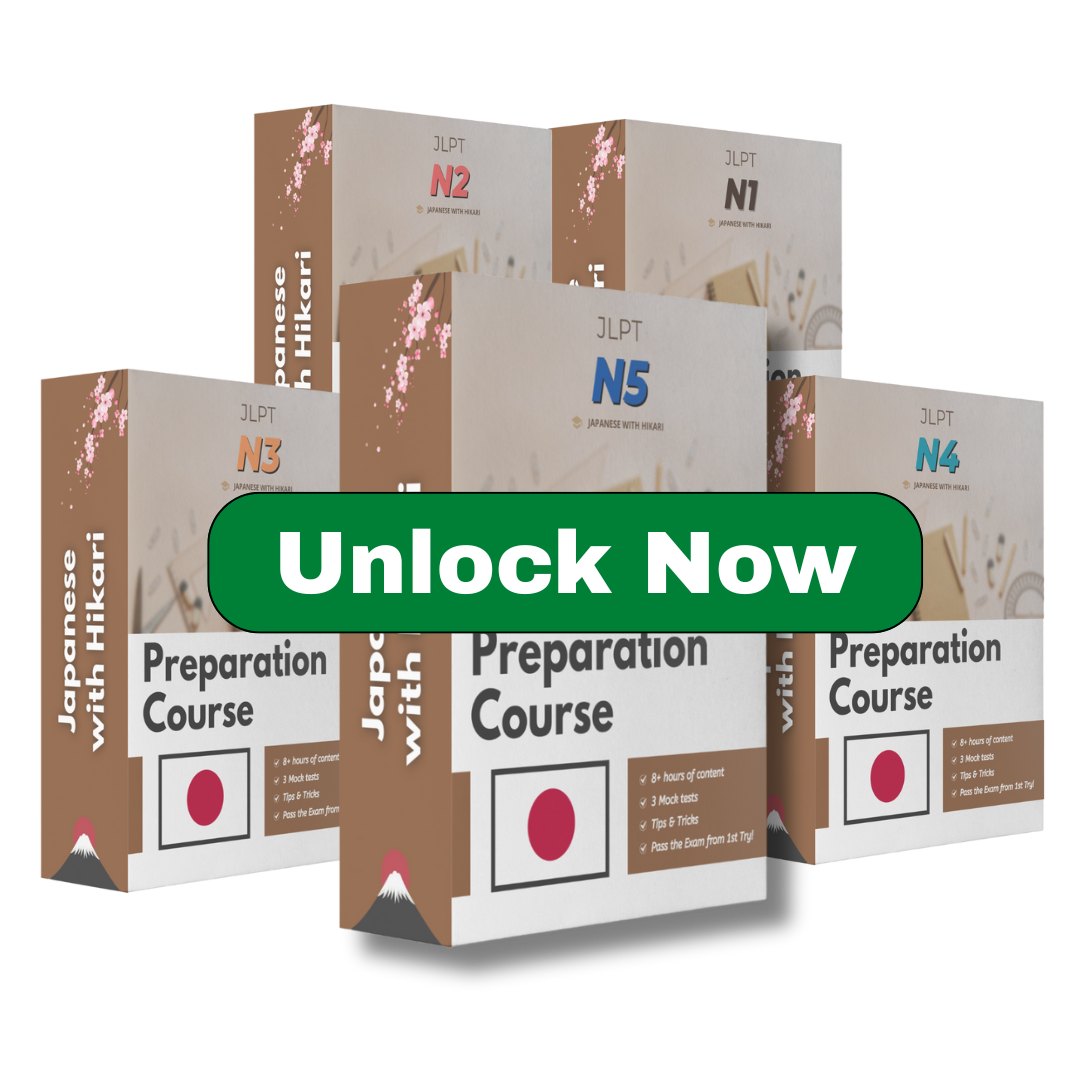
Get Hikari's JLPT Mock Exams & Preparation Lessons!
Whether you are studying to pass the JLPT or looking for a challenge in your learning journey, these courses are perfect for you!
Join my ニュースレター Newsletter 📩
You can expect an email from me once a week about Japanese culture.
Don't worry, your information will not be shared.
We hate SPAM. We will never sell your information, for any reason.