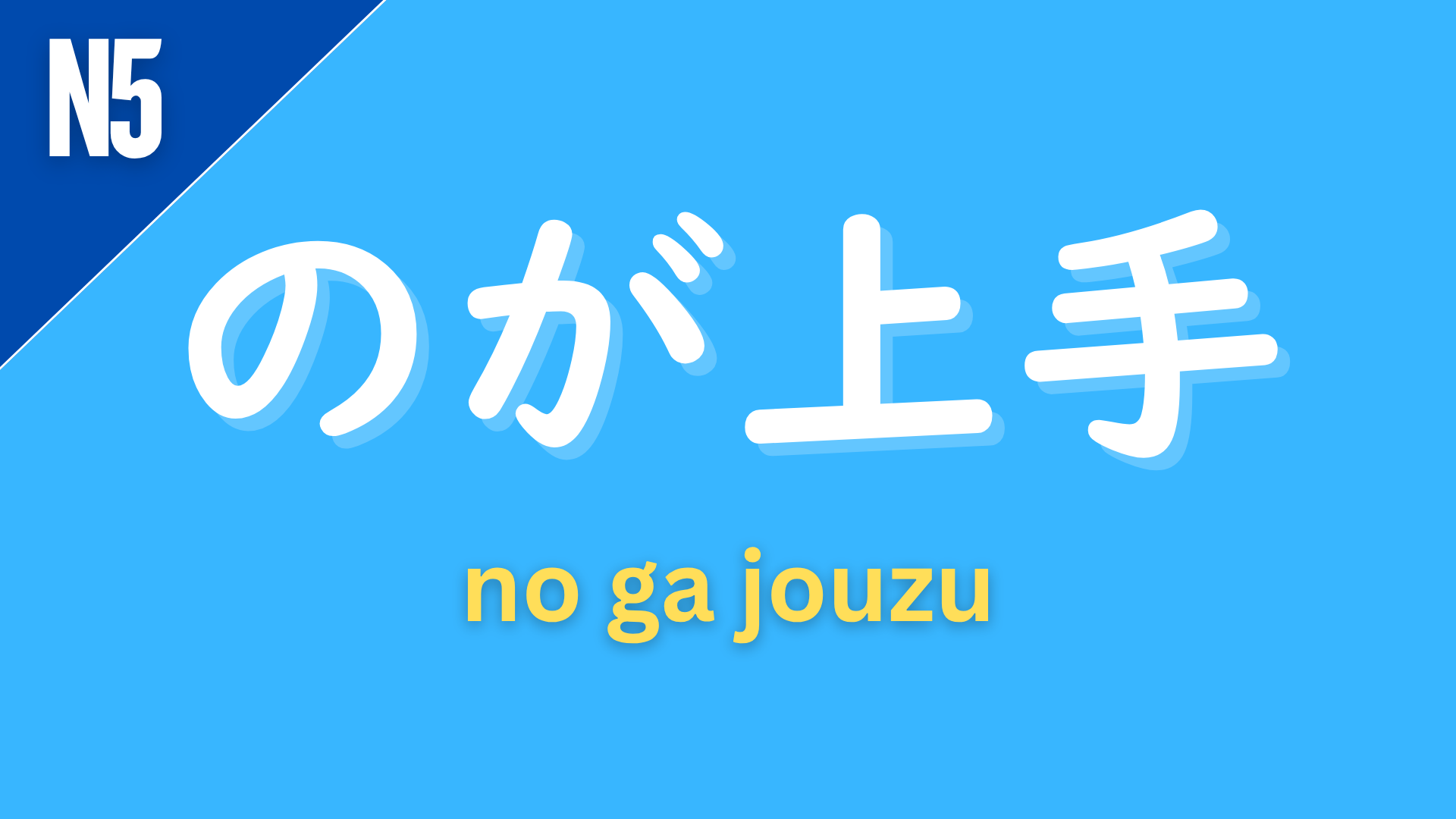
JLPT N5 - Grammar 🌟 のが上手 no ga jouzu
Have you ever been scrolling through Instagram or TikTok and suddenly saw a video of your quiet friend absolutely shredding a guitar solo?
Or maybe you saw a post with gorgeous, professional-looking sweets and thought they were from a high-end bakery… only to realize they were homemade by your friend?
You probably thought…
“Wait… I didn’t know they were that good!”
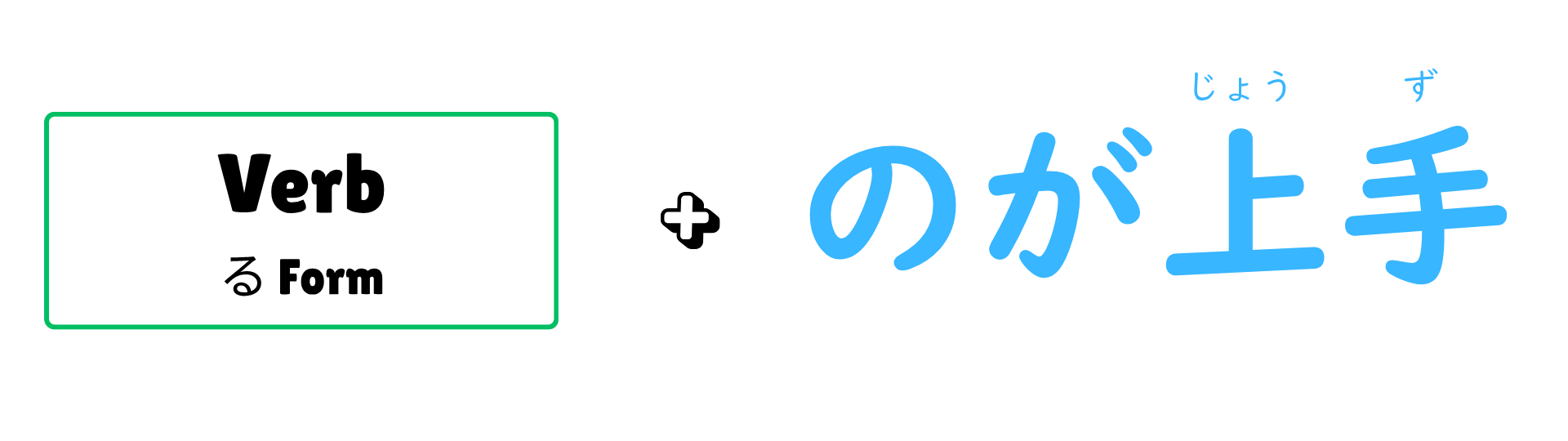
In Japanese, when you want to talk about someone’s skills, we use this expression: のが上手 (のがじょうず / no ga jouzu).
It’s like the level-up button for compliments.
Whether you’re reacting to a friend’s SNS post or talking about skills you want to improve, this is a must-know grammar point.
Let’s learn how to use のが上手 and start praising people like a pro.


のが得意 (のがとくい / noga tokui) vs のが上手 (のがじょうず / noga jouzu)
Both expressions mean “to be good at doing something,” but they differ in focus and nuance.
のが得意 (noga tokui)
This expression is used to talk about skills you feel confident or comfortable with.
It often reflects a personal feeling and is commonly used when talking about your own abilities.
私は料理を作るのが得意です。
わたし は りょうり を つくる の が とくい です。
watashi ha ryouri wo tsukuru no ga tokui desu.
I’m good at cooking.
Use のが得意 (noga tokui) when you want to talk about something you’re confident in or comfortable doing, especially about yourself.
のが上手 (noga jouzu)
This expression focuses on skills that are easy to see objectively.
It’s most often used to praise other people when you notice their ability through actions, results, or performances. People rarely describe themselves as のが上手, but it is natural to use it in the negative form, like のが上手ではありません (noga jouzu deha arimasen). Sometimes, people (like… me?) may use 上手 (jouzu) about themselves as a joke, though!
田中さんはギターを弾くのが上手ですね。
たなか さん は ぎたー を ひく の が じょうず です ね。
tanaka san ha gitaa wo hiku no ga jouzu desu ne.
Mr. Tanaka, you’re really good at playing the guitar.
Use のが上手 (noga jouzu) when you want to compliment someone else’s visible or technical skill.
[ Noun ] + が上手 (ga jouzu)
上手 (jouzu) can also be used with nouns, not just verbs.
This form is used when you want to praise someone’s ability in a general area or role, rather than a specific action.
彼女は説明が上手です。
かのじょ は せつめい が じょうず です。
kanojo ha setsumei ga jouzu desu.
She is good at explaining things.
Use “[Noun] + が上手 (ga jouzu)” when the noun itself already represents the skill or activity you want to compliment.
One Polite Tip: のがお上手 (noga ojouzu)
In Japanese culture, there are actually very few situations where you directly evaluate or praise someone who is older or in a higher position, such as a teacher or a boss.
However, if there is a moment where you truly want to express admiration or appreciation,
using のがお上手 (noga o jouzu) instead of のが上手 (noga jouzu) sounds more polite and considerate.
It’s a small change, but it helps your Japanese feel more respectful and culturally natural.

弟はマンガをかくのが上手です。
おとうと は まんが を かく の が じょうず です。
otouto ha manga wo kaku no ga jouzu desu.
My younger brother is good at drawing manga.
私は歌を歌うのが上手になりたいです。
わたし は うた を うたう の が じょうず に なりたい です。
watashi ha uta wo utau no ga jouzu ni naritai desu.
I want to become good at singing.
父はせまい道でも車を運転するのが上手です。
ちち は せまい みち でも くるま を うんてん する の が じょうず です。
chichi ha semai michi demo kuruma wo unten suru no ga jouzu desu.
My father is good at driving a car, even on narrow roads.
本当に人の話を聞くのが上手ですね。
ほんとう に ひと の はなし を きく の が じょうず です ね。
hontou ni hito no hanashi wo kiku no ga jouzu desu ne.
You’re really good at listening to people.
顔にすぐ出てしまうので、私は嘘をつくのが上手ではありません。
かお に すぐ でて しまう の で、わたし は うそ を つく の が じょうず では ありません。
kao ni sugu dete shimau no de, watashi ha uso wo tsuku no ga jouzu de ha arimasen.
It shows on my face right away, so I’m not good at lying.
私は料理を作るのが上手ではありません。食べるのは得意なんですけどね!
わたし は りょうり を つくる の が じょうず で は ありません。たべる の は とくい なん です けど ね!
watashi ha ryouri wo tsukuru no ga jouzu de ha arimasen. taberu no ha tokui nan desu kedo ne!
I’m not good at cooking. But I am good at eating!

- Grammar Point: のが上手 (のがじょうず / noga jouzu)
- JLPT Level: N5
- Meaning: To be good at doing something
- Quick Explanation: It describes an action that someone is skilled at. It’s a natural and friendly way to compliment someone’s ability.
So that’s how we use のが上手.
It’s a simple grammar point, but a powerful way to notice and compliment someone’s skills in everyday life.
あなたは何をするのが上手だと言われますか?
あなた は なに を する の が じょうず だ と いわれます か?
anata ha nani wo suru no ga jouzu da to iwaremasu ka?
What are you told you’re good at doing?
Now it’s your turn!
Try making your own sentence using のが上手, or praise someone’s skill in Japanese.
Your Sensei,
Hikari 👩🏻🏫✨
Get Hikari's JLPT Mock Exams & Preparation Lessons!
Whether you are studying to pass the JLPT or looking for a challenge in your learning journey, these courses are perfect for you!
Join my ニュースレター Newsletter 📩
You can expect an email from me once a week about Japanese culture.
Don't worry, your information will not be shared.
We hate SPAM. We will never sell your information, for any reason.