JLPT N5 - Grammar 🌟 のが下手 no ga heta
Have you ever tried to sing your heart out at karaoke, only to realize you’re hitting all the wrong notes?
Or maybe you tried to cook a fancy dinner, but it ended up looking like a science experiment gone wrong?
We’ve all been there!
Sometimes, we’re just not very good at certain things.
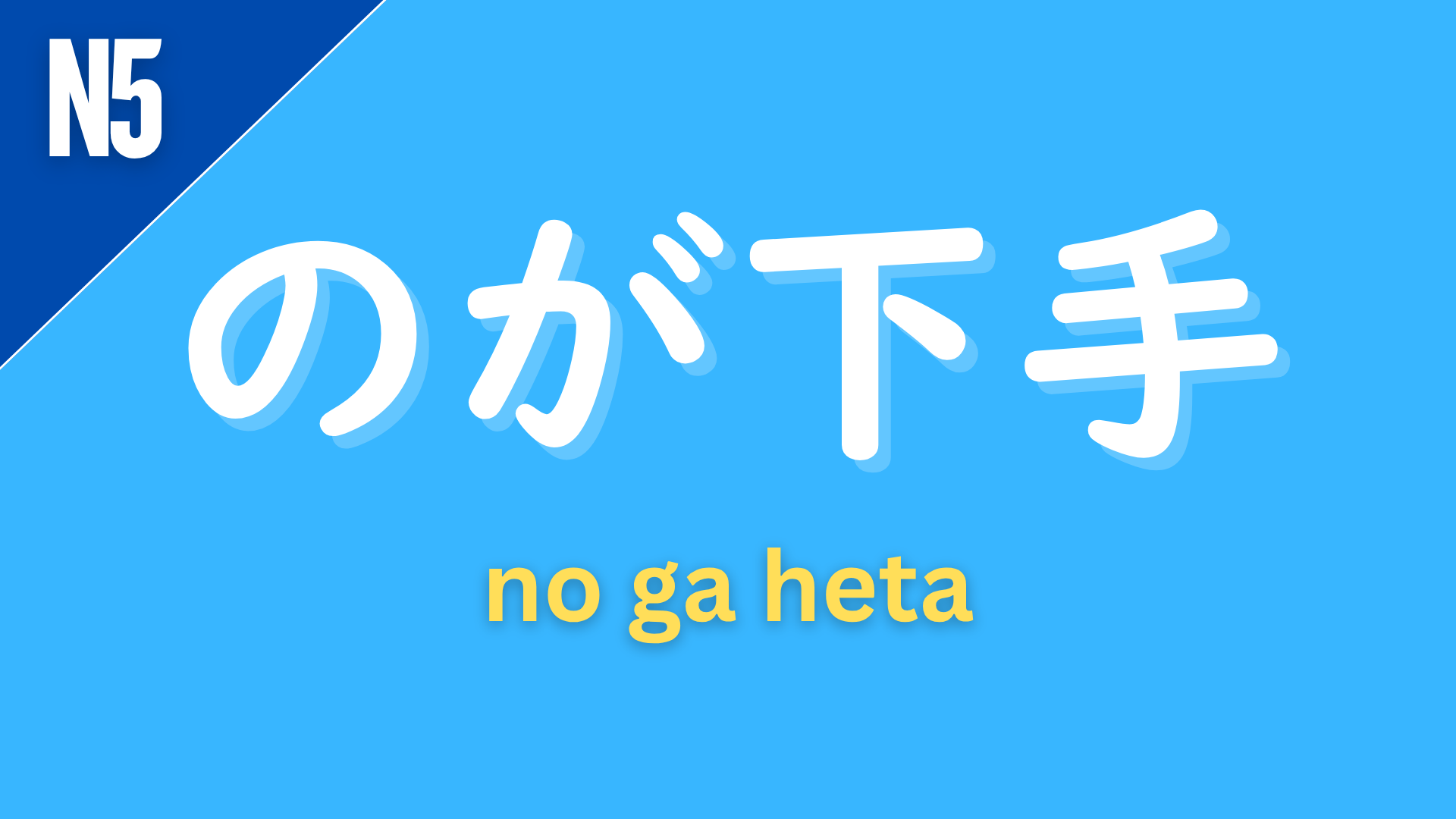
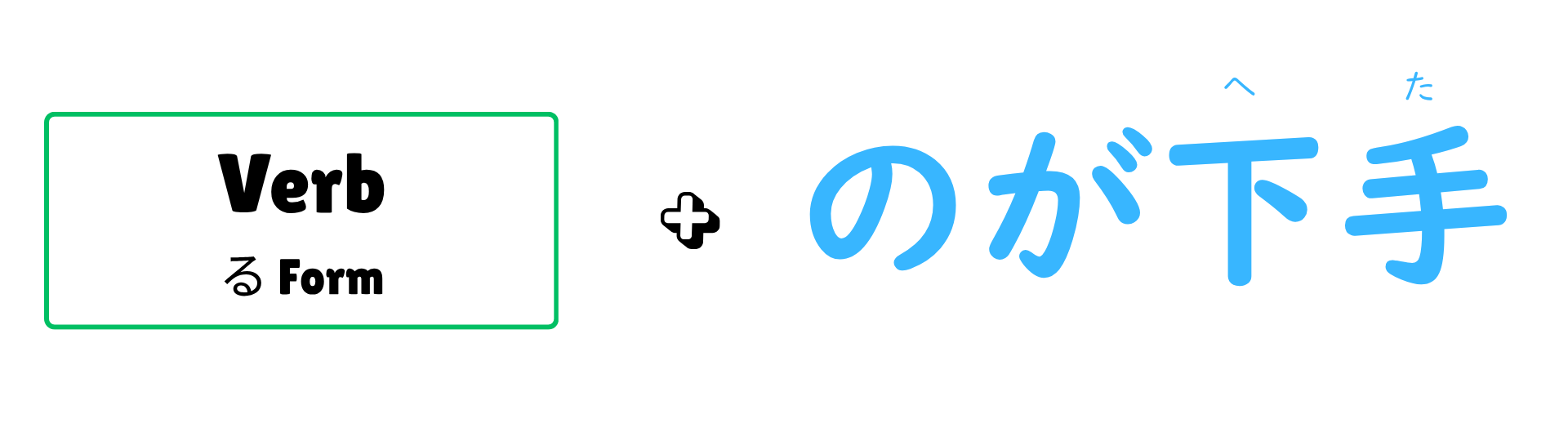
In Japanese, when you want to say that you’re bad at an action or that your technique isn’t quite there yet, we use this expression: のが下手 (のがへた / no ga heta)
It’s the direct opposite of のが上手 (good at).
While it’s great to talk about what you’re good at, being able to humbly admit what you struggle with is just as important. It shows your human side and actually makes people feel closer to you.
Let’s learn how to use のが下手 naturally and politely, so you can express your very human side in Japanese.


のが苦手 (のがにがて / no ga nigate) vs のが下手 (のがへた / noga heta)
Both expressions can be translated as “not good at” in English, but they differ in focus and nuance.
のが苦手 (noga nigate)
This expression focuses on personal feeling.
It’s used when you dislike doing something, feel uncomfortable with it, or lack confidence.
Because it reflects how you feel, it’s very commonly used when talking about yourself.
私は泳ぐのが苦手です。
わたし は およぐ の が にがて です。
watashi ha oyogu no ga nigate desu.
I’m not good at swimming. (I don’t like it, or I don’t feel comfortable doing it.)
Use のが苦手 (noga nigate) when you want to talk about something you don’t enjoy or don’t feel confident doing, especially about yourself.
のが下手 (noga heta)
This expression focuses on technical skill.
It means that the actual result or performance is objectively not very good. In other words, your technique is low.
私は泳ぐのが下手です。
わたし は およぐ の が へた です。
watashi ha oyogu no ga heta desu.
I’m bad at swimming. (My form isn’t good and I’m slow.)
Use のが下手 (noga heta) when you want to talk about low technical skill.
It’s most natural to use this expression when talking about yourself.
💡 Important Tip:
Be very careful when talking about other people.
Saying something like 「あなたは〜のが下手ですね (anata ha ~ noga heta desu ne)」 (“You are bad at something”) directly to someone can sound rude.
If you really need to talk about someone else’s weak point politely,
it sounds much softer to say 「〜のが上手ではありません (~ noga jouzu deha arimasen)」, which means “not very good at.”
Another option is to use humor with someone you’re close to.
When it’s said gently, a weakness can sound like a lovable flaw rather than criticism.
[ Noun ] + が下手 (ga heta)
下手 (heta) can also be used with nouns, not just verbs.
This form is used when you want to talk about being bad at something in a general area or skill, rather than a specific action.
It often sounds natural when you’re talking about yourself and admitting a weakness in a broad sense.
私は料理が下手です。
わたし は りょうり が へた です。
watashi ha ryouri ga heta desu.
I’m bad at cooking.
Use [Noun] + が下手(ga heta) when the noun itself already represents the skill or activity, and you want to describe low ability in a general way.

私は地図を読むのが下手です。
わたし は ちず を よむ の が へた です。
watashi ha chizu wo yomu no ga heta desu.
I’m bad at reading maps.
彼は嘘をつくのが下手です。
かれ は うそ を つく の が へた です。
kare ha uso wo tsuku no ga heta desu.
He’s bad at telling lies.
字を書くのが下手なので、あまり書きたくありません。
じ を かく の が へた な の で、あまり かきたく ありません。
ji wo kaku no ga heta na no de, amari kakitaku arimasen.
Since my handwriting is bad, I don’t really want to write.
人前で話すのが下手で、いつも声が震えてしまいます。
ひとまえ で はなす の が へた で、いつも こえ が ふるえて しまいます。
hitomae de hanasu no ga heta de, itsumo koe ga furuete shimaimasu.
I’m bad at speaking in front of people, so my voice always shakes.
父はメールを打つのが下手で、返信がとても短いです。
ちち は めーる を うつ の が へた で、へんしん が とても みじかい です。
chichi ha meeru wo utsu no ga heta de, henshin ga totemo mijikai desu.
My father is bad at typing emails, so his replies are very short.
私の犬は走るのが下手で、よく自分の足にひっかかっています。それがすごくかわいいんですけどね!
わたし の いぬ は はしる の が へた で、よく じぶん の あし に ひっかかって います。それ が すごく かわいい ん です けど ね!
watashi no inu ha hashiru no ga heta de, yoku jibun no ashi ni hikkakatte imasu. sore ga sugoku kawaii n desu kedo ne!
My dog is bad at running and often trips over its own feet. But that’s actually really cute!

- Grammar Point: のが下手 (noga heta)
- JLPT Level: N5
- Meaning: To be bad at doing something
- Quick Explanation: Used to talk about low technical skill in an action. It describes situations where the result or performance isn’t very good yet.
So that’s how we use のが下手.
It’s a great way to be honest about your skills while you’re learning.
And remember, being “bad at” something doesn’t mean you shouldn’t enjoy it.
日本語を使うのが下手と感じても大丈夫。好きっていう気持ちを大事にしよう!
にほんご を つかう の が へた と かんじて も だいじょうぶ。すき って いう きもち を だいじ に しよう!
nihongo wo tsukau no ga heta to kanjite mo daijoubu. suki tte iu kimochi wo daiji ni shiyou!
It’s okay if you feel you’re bad at using Japanese. What matters most is enjoying it!
Now it’s your turn!
Try making your own sentence using のが下手 and share your human side with an open mind.
Your Sensei,
Hikari 👩🏻🏫✨
Get Hikari's JLPT Mock Exams & Preparation Lessons!
Whether you are studying to pass the JLPT or looking for a challenge in your learning journey, these courses are perfect for you!
Join my ニュースレター Newsletter 📩
You can expect an email from me once a week about Japanese culture.
Don't worry, your information will not be shared.
We hate SPAM. We will never sell your information, for any reason.