JLPT N5 - Grammar 🌟 に ni (particle)
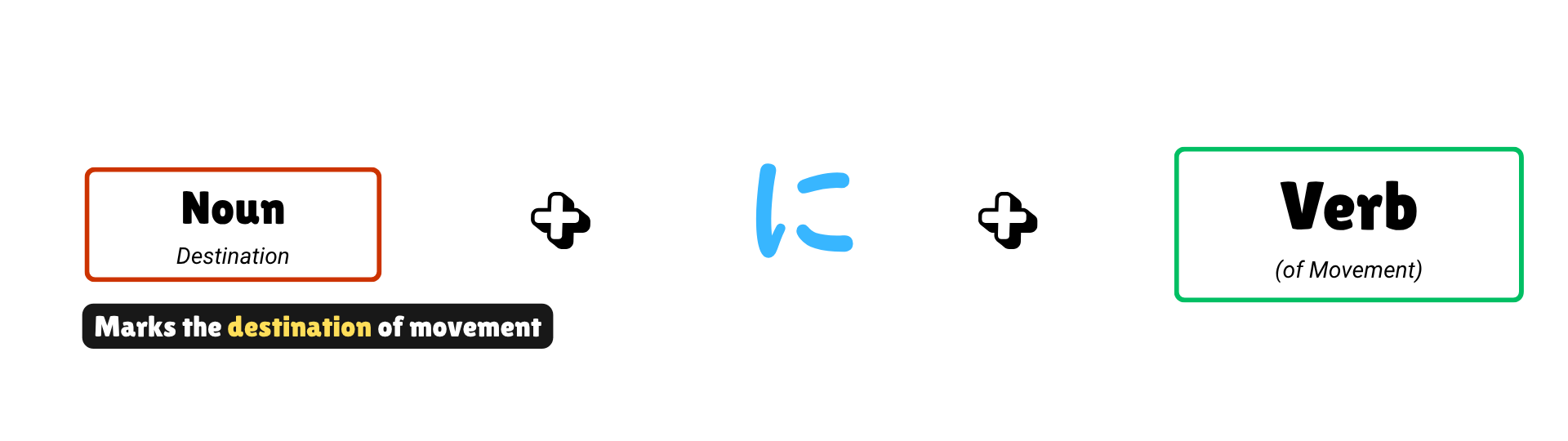
The particle に (ni) is one of the most common and important particles in Japanese.
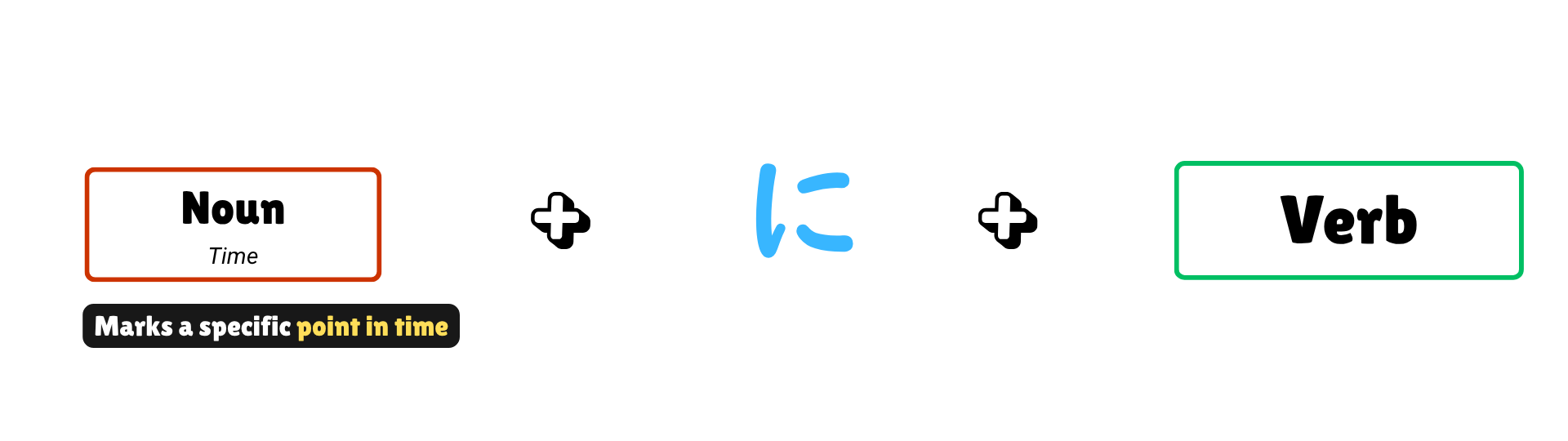
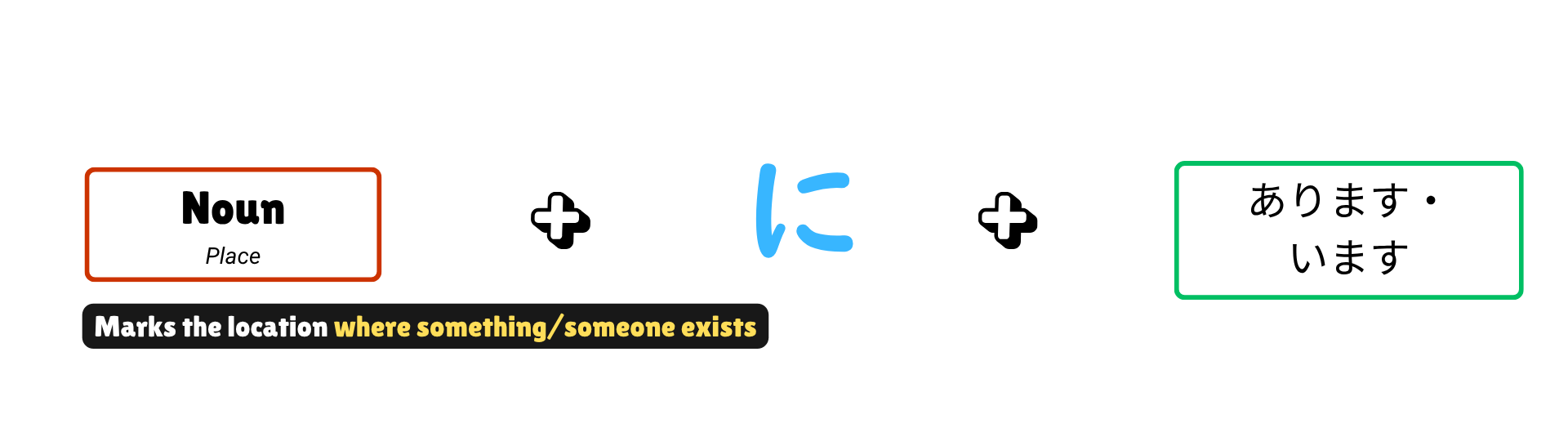
It marks destination, time, or location, basically, it answers questions like “where?” and “when?”
Think about sentences like:
“I live in Hokkaido.”
“I’ll come on Friday.”
“There’s a vending machine at the station.”
In all of these, に is doing the work!
It might seem small, but you’ll find it everywhere in Japanese conversations.
Shall we check it out?


Particle に vs で
Both can mark location, but the nuance is different.
に marks the existence or destination.
で marks the location of an action.
学校に 行きます。
がっこう に いきます。
gakkou ni ikimasu.
I go to school.
学校で べんきょうします。
がっこう で べんきょう します。
gakkou de benkyou shimasu.
I study at school.
💡 Tip :
Use に with specific times or dates:
9じに おきます。→ I wake up at 9.
きんようびに いきます。→ I’ll go on Friday.
❌ Don’t use に with relative time words like 今日 (きょう - kyou / today), 明日 (あした - ashita / tomorrow), 来年 (らいねん - rainen / next year).


まいにち7時30分に家を出ます。
まいにち しちじ さんじゅっぷん に いえ を でます。
mainichi shichi-ji sanjuppun ni ie wo demasu.
I leave home at 7:30 every day.
8時に まちあわせしよう。
はちじ に まちあわせ しよう。
hachi-ji ni machiawase shiyou.
Let’s meet at 8 o’clock.
駅に 自動はんばいきが あります。
えき に じどうはんばいき が あります。
eki ni jidouhanbaiki ga arimasu.
There is a vending machine at the station.
わたしの 家の となりに、としょかんがあります。
わたし の いえ の となり に、としょかん が あります。
watashi no ie no tonari ni, toshokan ga arimasu.
There is a library next to my house.
北海道に 住んでいます。
ほっかいどう に すんで います。
hokkaidou ni sunde imasu.
I live in Hokkaido.
学校に いきます。
がっこう に いきます。
gakkou ni ikimasu.
I go to school.
<Conversation example>
A: おなか、すいたね。ディナーどこにいきたい?
onaka suita ne. dinaa doko ni ikitai?
I’m hungry. Where do you want to go for dinner?
B: サイゼリヤにいきたい!
saizeriya ni ikitai!
I want to go to Saizeriya! (Saizeriya is a popular Japanese casual Italian restaurant chain known for its affordable prices.)

- Grammar Point: に (ni)
- JLPT Level: N5
- Meaning: In, at, on, to, for (destination, time, or location)
- Quick Explanation: The particle に is used to show a specific point in time, a place/location, or a destination/goal.
So that’s how we use に in Japanese!
It’s super handy for marking time, place, and destination, things you’ll use all the time in daily life.
日本のどこにいきたい?
にほんの どこ に いきたい?
nihon no doko ni ikitai?
Where would you like to go in Japan?
Now it’s your turn, make your own sentences with に!
When will you study Japanese? Where will you go this weekend? Try it out!
Your Sensei,
Hikari 👩🏻🏫
Get Hikari's JLPT Mock Exams & Preparation Lessons!
Whether you are studying to pass the JLPT or looking for a challenge in your learning journey, these courses are perfect for you!
Join my ニュースレター Newsletter 📩
You can expect an email from me once a week about Japanese culture.
Don't worry, your information will not be shared.
We hate SPAM. We will never sell your information, for any reason.