JLPT N5 - Grammar 🌟 なる naru

Seasons change, people change, even your Japanese skills will change, and all of that can be expressed with one simple word: なる (naru)!
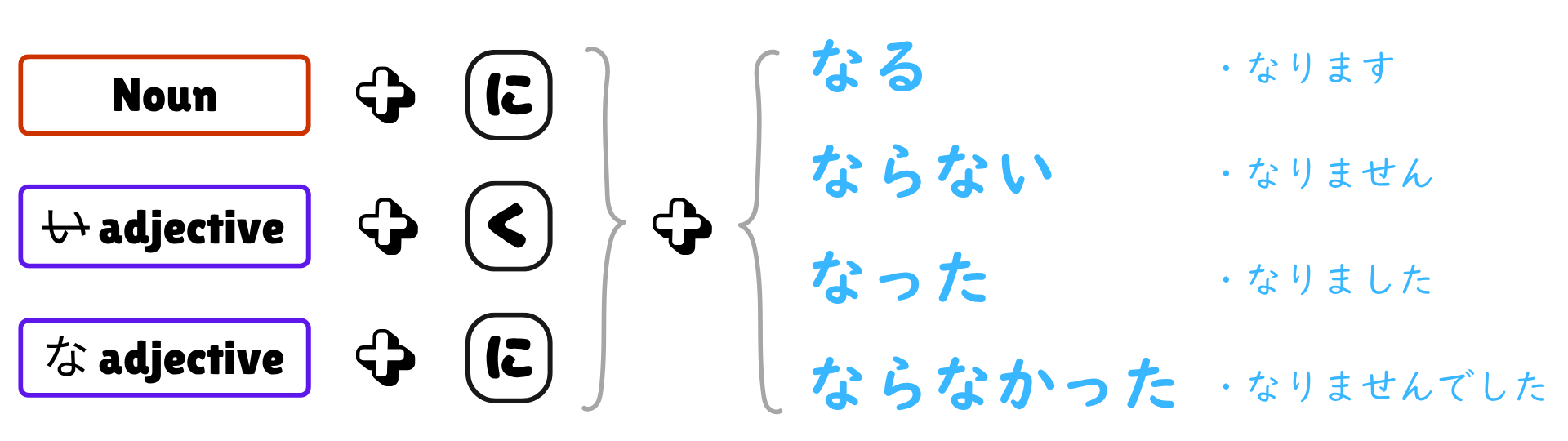
なる means “to become” and shows a change of state, when something or someone turns into a different condition or situation.
For example, the weather becomes warm, your room gets quiet, or you become better at Japanese (yes, you will!).
You might have already heard this word in one of the most famous anime quotes of all time from One Piece:
「海賊王に俺はなる!」
かいぞくおう に おれ は なる
kaizoku ou ni ore wa naru!
“I will become the Pirate King!”
It’s one of the most useful grammar patterns at the N5 level because it appears everywhere from describing the weather to talking about your goals, emotions, and even age.
Let’s learn how to use なる naturally and describe all kinds of changes in Japanese. Set sail for new grammar adventures!


する(suru) vs なる(naru)
Both する (suru) and なる (naru) can describe change, but they express different directions of action.
する (suru) shows an active or intentional change when someone decides to do something or makes something change.
It’s used when the subject (usually a person or animal) has will or control over the action.
It often takes an object, showing what is being changed.
部屋をきれいにする。
へや を きれい に する。
heya wo kirei ni suru.
I make the room clean.
This is an action done by someone, so it’s a voluntary change.
なる (naru), on the other hand, shows a natural or passive change when something becomes a new state on its own.
It’s often used for unintentional or natural changes, and can apply to people, objects, or even the weather.
春になる。
はる に なる。
haru ni naru.
It becomes spring.
Here, no one is doing the action directly. It just happens naturally.

もうすぐ春になる。
もうすぐ はる に なる。
mousugu haru ni naru.
It will become spring soon.
ひかり先生はラーメンを食べるといつも元気になります。
ひかり せんせい は らーめん を たべる と いつも げんき に なります。
hikari sensei ha raamen wo taberu to itsumo genki ni narimasu.
Hikari-sensei always feels better after eating ramen.
彼は日本語が上手になりました。
かれ は にほんご が じょうず に なりました。
kare ha nihongo ga jouzu ni narimashita.
He became good at Japanese.
イベントの途中で、天気が悪くなりました。
いべんと の とちゅう で、てんき が わるく なりました。
ibento no tochuu de, tenki ga waruku narimashita.
The weather became bad in the middle of the event.
先週、彼女は30歳になった。
せんしゅう、かのじょ は さんじゅっさい に なった。
senshuu, kanojo ha sanjussai ni natta.
She turned 30 last week.
<Conversation Example>
Speaker A:
将来、何になりたいの?
しょうらい、なに に なりたい の?
shourai, nani ni naritai no?
What do you want to be in the future?
Speaker B:
野球選手になる!
やきゅうせんしゅ に なる!
yakyu senshu ni naru!
I want to become a baseball player!

- Grammar Point: なる (naru)
- JLPT Level: N5
- Meaning: To become, to get, to turn into
- Quick Explanation: Use なる to express a change of state when something or someone turns into a different condition naturally or over time.
So that’s how we use なる!
It’s such a small word, but it lets you talk about big changes in the weather, in life, and even in yourself.
いま、あなたは何になりたいですか?
いま、あなた は なに に なりたい です か?
ima, anata ha nani ni naritai desu ka?
What do you want to become?
It could be something simple like
もっと健康になる
もっと けんこう に なる
motto kenkou ni naru
to become healthier
or something like
日本語がペラペラになる
にほんご が ぺらぺら に なる
nihongo ga perapera ni naru
to become fluent in Japanese!
No matter what your goal is, keep learning little by little, and you’ll definitely なります one step at a time.
Your Sensei,
Hikari 👩🏻🏫
Get Hikari's JLPT Mock Exams & Preparation Lessons!
Whether you are studying to pass the JLPT or looking for a challenge in your learning journey, these courses are perfect for you!
Join my ニュースレター Newsletter 📩
You can expect an email from me once a week about Japanese culture.
Don't worry, your information will not be shared.
We hate SPAM. We will never sell your information, for any reason.