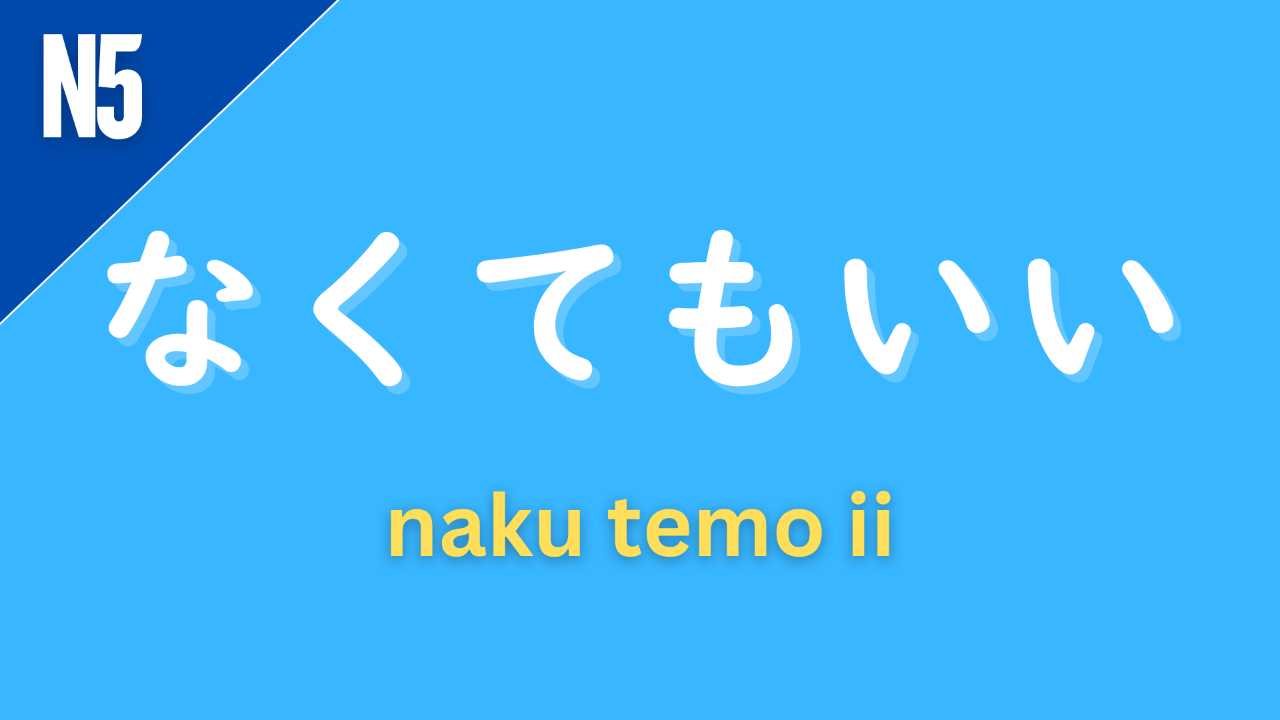
JLPT N5 - Grammar 🌟 なくてもいい naku temo ii
Have you ever felt relieved when someone tells you,
“You don’t have to do that,” or “It’s okay if you don’t”?
In English, it feels like a gentle permission like…
“You don’t have to go,”
“You don’t need to finish it today,”
“It’s okay if you don’t eat it.”
And in Japanese, we express that feeling with:
なくてもいい (naku temo ii)
It means “you don’t have to” or “it’s okay if you don’t.”
You’ll hear this expression all the time in daily life from friends, teachers, co-workers, or even in anime and dramas.
It’s soft, polite, and super useful for showing kindness, flexibility, and understanding.
Ready to learn how to use it naturally?
Let’s get started!


てもいい (temo ii) vs なければならない (nakereba naranai) vs なくてもいい (naku temo ii)
These three patterns all relate to permission and obligation, but each one expresses a very different level of freedom or necessity. Let’s break them down!
てもいい (temo ii) - You may, you’re allowed to
This expression gives permission.
It tells the listener that doing something is OK.
ここで写真をとってもいいですよ。
ここで しゃしん を とっても いい です よ。
koko de shashin wo tottemo ii desu yo.
You may take photos here.
Use it in daily life when letting someone know they’re allowed to do something.
なければならない (nakereba naranai) - You must, you have to
This one expresses strong obligation.
It means something must be done. There’s no choice.
明日は早く起きなければなりません。
あした は はやく おきなければ なりません。
ashita wa hayaku okinakereba narimasen.
I must wake up early tomorrow.
This is the strictest form very useful for rules, responsibilities, and necessities.
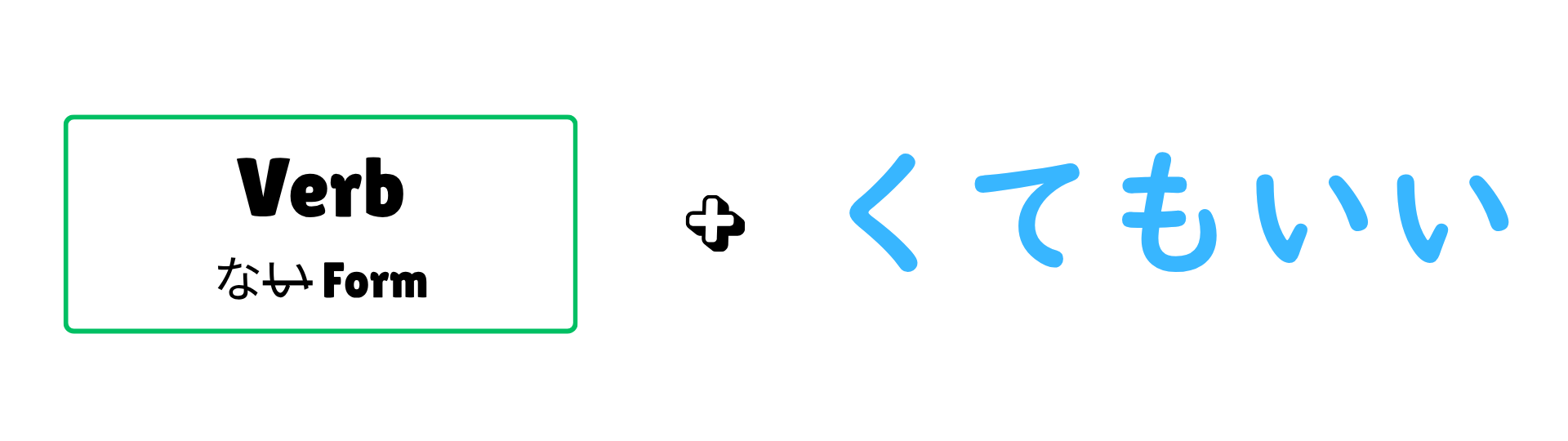
なくてもいい (naku temo ii) - You don’t have to, it’s okay not to
This expression removes pressure.
It tells someone that not doing something is perfectly fine.
好きじゃなかったら、食べなくてもいいですよ。
すきじゃ なかったら、たべなくても いい です よ。
sukija nakattara, tabenakutemo ii desu yo.
If you don’t like it, you don’t have to eat it.
Gentle, kind, and often used to give someone freedom.
💡 Quick Tip
てもいい (temo ii) - You may (permission)
なくてもいい (naku temo ii) - You don’t have to (no obligation)
なければならない (nakereba naranai) - You must (obligation)

そんなに心配しなくてもいいですよ。
そんなに しんぱい しなくても いい です よ。
sonna ni shinpai shinakutemo ii desu yo.
You don’t have to worry that much.
敬語じゃなくていいよ。
けいご じゃ なくて いい よ。
keigo ja nakute ii yo.
You don’t have to use polite speech.
お腹がいっぱいだったら、無理して食べなくてもいいよ。
おなか が いっぱい だったら、むりして たべなくても いい よ。
onaka ga ippai dattara, murishite tabenakutemo ii yo.
If you’re full, you don’t have to force yourself to eat.
走らなくていいです。ゆっくり歩いてください。
はしらなくて いい です。ゆっくり あるいて ください。
hashiranakute ii desu. yukkuri aruite kudasai.
You don’t have to run. Please walk slowly.
そんなに急いで予約しなくてもいいです。十分席はありますから。
そんなに いそいで よやく しなくても いい です。じゅうぶん せき は あります から。
sonna ni isoide yoyaku shinakutemo ii desu. jūbun seki wa arimasu kara.
You don’t have to rush to make a reservation. There are plenty of seats.

- Grammar Point: なくてもいい (naku temo ii)
- JLPT Level: N5
- Meaning: Don’t have to, it’s okay not to
- Quick Explanation: なくてもいい is used to say that something is not necessary. It gives permission not to do something very useful when you want to sound gentle, relaxed, or considerate in Japanese.
So that’s how we use なくてもいい!
It’s such a helpful expression when you want to speak politely and kindly. Especially when you want to relieve someone’s pressure or give them options.
完璧じゃなくてもいいから、日本語を話してみてね!
かんぺき じゃ なくても いい から、にほんごを はな して みて ね!
kanpeki ja nakutemo ii kara, nihongo wo hana shite mite ne!
It doesn’t have to be perfect, just try speaking Japanese!
Now it’s your turn! Make your own sentences to express that something is “not necessary” in Japanese!
Your Sensei,
Hikari 👩🏻🏫✨
Get Hikari's JLPT Mock Exams & Preparation Lessons!
Whether you are studying to pass the JLPT or looking for a challenge in your learning journey, these courses are perfect for you!
Join my ニュースレター Newsletter 📩
You can expect an email from me once a week about Japanese culture.
Don't worry, your information will not be shared.
We hate SPAM. We will never sell your information, for any reason.