JLPT N5 - Grammar 🌟 もう mou
Have you ever felt like you’ve reached your limit?
Or maybe you’ve already finished your tasks for the day and you’re ready to relax.
That’s where the super versatile word もう (mou) comes in.
It is one of the most common words you will hear in Japan.
But here is the tricky part. Depending on the situation, it can mean already, not anymore, more, or even express frustration like “Geez”.
Imagine you are waiting for a friend who is 30 minutes late. You might say, “もう!”.
Or imagine you just finished a delicious bowl of ramen and you are so full you cannot eat another bite. You would use もう there too.
Let’s explore how to use this multi talented word to express both your situation and your feelings naturally.
Ready? Here we go!


まだ (mada) vs もう (mou)
Both expressions are often translated using time related words, but they show opposite viewpoints about the same situation.
まだ (mada)
まだ focuses on an incomplete action or a state that continues.
It means “not yet” or “still,” and is used when something is expected to happen but has not happened so far, or when a situation has not changed.
まだ宿題を終えていません。
まだ しゅくだい を おえて いません。
mada shukudai wo oete imasen.
I haven’t finished my homework yet.
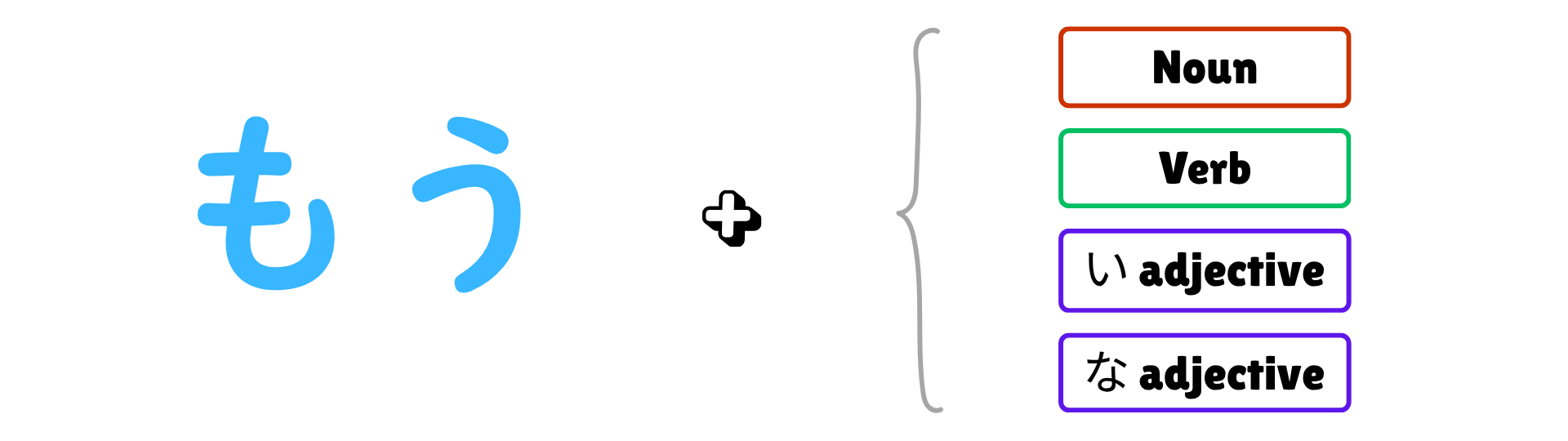
もう(mou)
もう focuses on a completed action or a state that has already been reached.
It is used when something is finished, no longer true, or has changed from before.
It can also express “anymore” when used with negative forms, or frustration when used alone.
もう宿題は終わりました。
もう しゅくだい は おわりました。
mou shukudai ha owarimashita.
I have already finished my homework.

もうお昼ごはんを食べましたか?
もう おひるごはん を たべました か?
mou ohirugohan wo tabemashita ka?
Have you already eaten lunch?
彼はもう帰りましたよ。
かれ は もう かえりました よ。
kare wa mou kaerimashita yo.
He has already gone home.
考えごとをして、気がついたらもう朝だった。
かんがえごと を して、き が ついたら もう あさ だった。
kangaegoto wo shite, ki ga tsuitara mou asa datta.
I was lost in thought, and before I knew it, it was already morning.
この時間になると、外はもう暗いですね。
この じかん に なる と、そと は もう くらい です ね。
kono jikan ni naru to, soto wa mou kurai desu ne.
At this time, it’s already dark outside, isn’t it?
もうあの店には二度と行きません。
もう あの みせ には にど と いきません。
mou ano mise ni wa nido to ikimasen.
I won’t go to that shop anymore.
お腹がいっぱいなので、もう食べられません。
おなか が いっぱい な ので、もう たべられません。
onaka ga ippai na node, mou taberaremasen.
I’m full, so I can’t eat anymore.
もう一度教えてください。
もう いちど おしえて ください。
mou ichido oshiete kudasai.
Please tell me one more time.
もう一人、私の友達が来ます。
もう ひとり、わたし の ともだち が きます。
mou hitori, watashi no tomodachi ga kimasu.
One more of my friends is coming.
もう!何回も言わせないで!
もう!なんかい も いわせないで!
mou! nankai mo iwasenaide!
Geez! Don’t make me say it over and over!
また失敗した…もう、いやになっちゃう!
また しっぱい した…もう、いや に なっちゃう!
mata shippai shita… mou, iya ni nacchau!
I failed again… Ugh, I’m so done with this!

- Grammar Point: もう (mou)
- JLPT Level: N5
- Meaning: Already, anymore, more, expressing irritation
- Quick Explanation: Use もう to talk about completed actions. With negative verbs, it means “not anymore.” With numbers or すこし, it means “more.” At the beginning of a sentence, it shows annoyance or frustration.
So that’s how we use もう.
It’s perfect for saying you’ve already finished something, asking for one more thing, or letting out a bit of frustration in everyday life.
もう遅いので、寝ましょう。
もうおそいので、ねましょう。
Mou osoi node, nemashou.
It’s already late, so let’s go to bed.
Next time you watch a drama, a vlog, or hear people chatting in Japanese, try listening carefully for もう. You might be surprised how often it pops up and how clearly you can recognize it now.
Your Sensei,
Hikari 👩🏻🏫✨
Get Hikari's JLPT Mock Exams & Preparation Lessons!
Whether you are studying to pass the JLPT or looking for a challenge in your learning journey, these courses are perfect for you!
Join my ニュースレター Newsletter 📩
You can expect an email from me once a week about Japanese culture.
Don't worry, your information will not be shared.
We hate SPAM. We will never sell your information, for any reason.