JLPT N5 - Grammar 🌟 も mo (particle)
The Japanese particle series continues!
Have you ever wanted to say “me too!” or “that as well” in Japanese?
Like when your friend says, “My favorite anime is Naruto,” and you want to jump in with “Me too!”
Or when you’re traveling and want to add something to your list, “I want to visit Tokyo, and Kyoto too!”
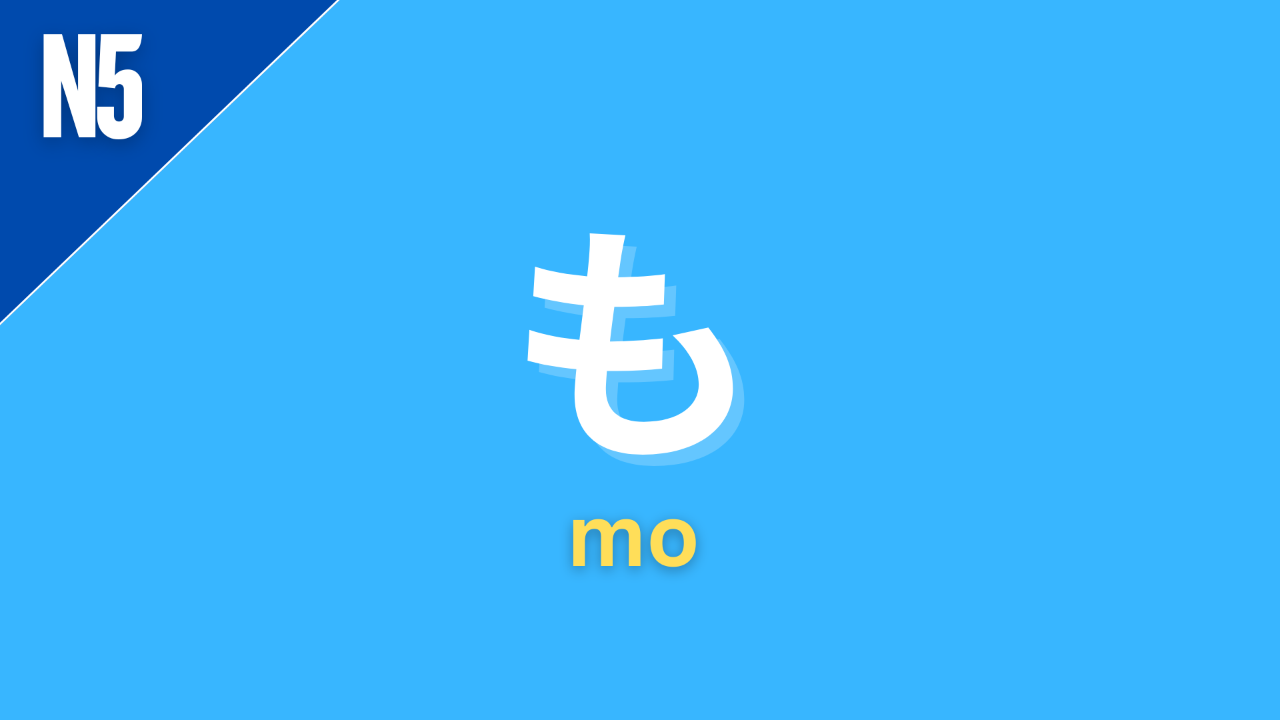
That’s when the super-useful particle も (mo) comes in.
It’s small, but you’ll use it all the time to add on, agree, or say “too, also, as well.”
Alright, let’s take a closer look!



The particle も (mo) can replace は (ha), が (ga), or を (wo) in a sentence.
Which one it replaces depends on what you want to emphasize in your sentence.
<は (ha) → も (mo)>
は (ha) = shows the topic of the sentence
も (mo) = adds “this topic too”
わたしは 学生です。
わたしはがくせいです。
watashi ha gakusei desu.
I am a student.
わたしも 学生です。
わたしもがくせいです。
watashi mo gakusei desu.
I am a student too.
💡 Here, you’re emphasizing that you are the same as someone else.
<が (ga) → も (mo) >
が (ga) = marks the subject
も (mo) = adds “this subject too”
犬が すきです。
いぬがすきです。
inu ga suki desu.
I like dogs.
犬も すきです。
いぬもすきです。
inu mo suki desu.
I like dogs too.
💡 In a conversation, maybe someone was already talking about liking other animals.
By saying 犬もすきです(inu mo suki desu), you’re adding the information that you like dogs as well.
<を (wo) → も (mo) >
を (wo) = marks the object
も (mo) = adds “this object too”
パンを 食べました。
ぱんをたべました。
pan wo tabemashita.
I ate bread.
パンも 食べました。
ぱんもたべました。
pan mo tabemashita.
I ate bread too.
💡 In a conversation, maybe you already mentioned eating other foods.
By saying パンも食べました(pan mo tabe mashita), you’re adding the extra detail that you ate bread as well.

今日は さむいですね。明日も さむいみたいです。
きょうはさむいですね。あしたもさむいみたいです。
kyou ha samui desu ne. ashita mo samui mitai desu.
It’s cold today. It looks like it’ll be cold tomorrow too.
日本りょうりも、タイりょうりも 好きです。
にほんりょうりも、たいりょうりもすきです。
nihon ryouri mo, Tai ryouri mo suki desu.
I like Japanese food, and Thai food too.
大阪で、おこのみやきを食べました。あと、たこやきも 食べました。
おおさかで、おこのみやきをたべました。あと、たこやきもたべました。
Osaka de, okonomiyaki wo tabemashita. ato, takoyaki mo tabemashita.
In Osaka, I ate okonomiyaki. I also ate takoyaki.
みんなができるなら、私も 出来るはず!
みんなができるなら、わたしもできるはず!
minna ga dekiru nara, watashi mo dekiru hazu!
If everyone can do it, I should be able to do it too!
これも あれも、どれも すてきだね!
これも、あれも、どれも、すてきだね!
kore mo are mo, dore mo sutekii da ne!
This, that, and all of them are attractive!
<Conversation>
A: 紅茶 より、緑茶 が すきです。
こうちゃより、りょくちゃがすきです。
koucha yori, ryokucha ga suki desu.
I like green tea more than black tea.
B: 私も!
わたしも!
watashi mo!
Me too!

- Grammar Point: も (mo)
- JLPT Level: N5
- Meaning: Too, also, as well
- Quick Explanation: も is used to show that something is the same or added to what was already mentioned.
Think of it as the way to say “me too,” “that too,” or “also” in Japanese.
So that’s how we use も in Japanese!
It’s short and simple, but it’s your best friend when you want to say “me too,” “that too,” or “also.”
私はみんなと日本語の勉強をするのがだいすきです。あなたもそう思いますか?
わたしはみんなとにほんごのべんきょうをするのがだいすきです。あなたもそうおもいますか?
watashi ha minna to nihongo no benkyou wo suru no ga daisuki desu. anata mo sou omoimasu ka?
I love studying Japanese together with everyone. Do you feel the same way too?
Now it’s your turn, try making your own sentences with も.
What do you “also” like, or what would you “also” do in Japan?
Your Sensei,
Hikari 👩🏻🏫✨
Get Hikari's JLPT Mock Exams & Preparation Lessons!
Whether you are studying to pass the JLPT or looking for a challenge in your learning journey, these courses are perfect for you!
Join my ニュースレター Newsletter 📩
You can expect an email from me once a week about Japanese culture.
Don't worry, your information will not be shared.
We hate SPAM. We will never sell your information, for any reason.