JLPT N5 - Grammar 🌟 まだ mada
Have you ever had a moment when someone asked you something like,
“Are you ready?” “Did you finish?” or “Has it started yet?”
And you thought…
“Hmm… not yet.” or “It’s still going on.”
That’s when まだ (mada) becomes your best friend!
まだ is a super basic N5 word, but don’t let that fool you.
It carries two very important ideas in Japanese: “still” and “not yet.”
And guess what?
You already use these ideas all the time. Still studying, still waiting, not yet finished, not yet arrived… yep, that’s everyday life.
But まだ doesn’t stop there.
Depending on the sentence, it can also quietly add a feeling like “only” or “just” especially when talking about time or experience.
You’ll hear まだ everywhere. When talking about time, progress, waiting, or things that haven’t happened yet.
It’s one of those small words that instantly makes your Japanese sound natural and real.
So!
Want to express still and not yet more naturally in Japanese?
Let’s take a closer look at まだ and level up your daily nihongo!


もう (mou) vs まだ (mada)
These two words are often taught together because they describe opposite ideas about time and progress.
もう (mou) - Already, anymore
もう focuses on completion or change.
Something is already done, or something is no longer true.
もう宿題をしました。
もうしゅくだいをしました。
mou shukudai wo shimashita.
I’ve already done my homework.
もう宿題をしていません。
もうしゅくだいをしていません。
mou shukudai wo shite imasen.
I’m not doing homework anymore.
まだ (mada) - Still, not yet
まだ focuses on continuation or something not finished yet.
Something is still happening, or something has not happened so far
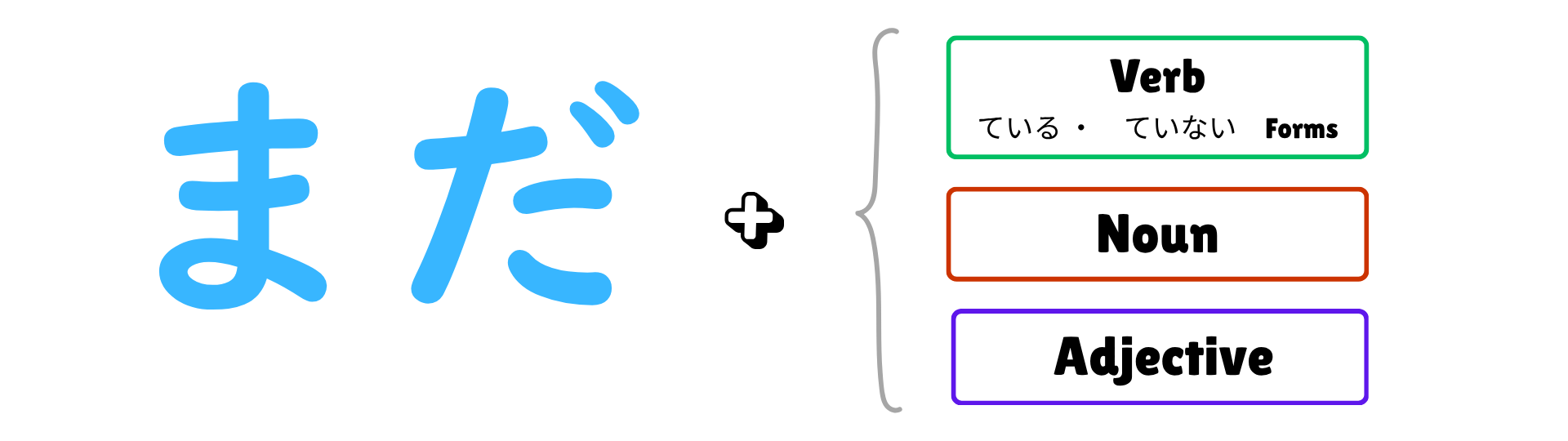
It often appears with the 〜ている / 〜ていない form.
まだ宿題をしています。
まだしゅくだいをしています。
mada shukudai wo shite imasu.
I’m still doing my homework.
まだ宿題をしていません。
まだしゅくだいをしていません。
mada shukudai wo shite imasen.
I haven’t done my homework yet.

まだ雨がふっています。
まだ あめ が ふって います。
mada ame ga futte imasu.
It’s still raining.
急いでいるのに、バスはまだ来ていません。
いそいで いる の に、ばす は まだ きて いません。
isoide iru noni, basu ha mada kite imasen.
I’m in a hurry, but the bus hasn’t come yet.
彼はまだ寝ています。
かれ は まだ ねて います。
kare ha mada nete imasu.
He is still sleeping.
そのアニメはとても人気ですが、私はまだ見ていません。
その あにめ は とても にんき です が、わたし は まだ みて いません。
sono anime ha totemo ninki desu ga, watashi ha mada mite imasen.
That anime is very popular, but I haven’t watched it yet.
練習しましたが、まだ難しいです。
れんしゅう しました が、まだ むずかしい です。
renshuu shimashita ga, mada muzukashii desu.
I practiced, but it’s still difficult.
彼女はまだ有名ではない。
かのじょはまだゆうめいではない。
kanojo wa mada yuumei de wa nai.
She is not famous yet.
彼女はまだ学生です。
かのじょ は まだ がくせい です。
kanojo ha mada gakusei desu.
She is still a student.
私は日本に来てまだ1ヶ月です。
わたし は にほん に きて まだ いっかげつ です。
watashi ha nihon ni kite mada ikkagetsu desu.
It’s only been one month since I came to Japan.

- Grammar Point: まだ (mada)
- JLPT Level: N5
- Meaning: Still, not yet, only, just
- Quick Explanation: まだ is used to talk about things that are continuing or not finished yet.
In positive sentences, it often means “still.” In negative sentences, it usually means “not yet.” And when talking about time or experience, it can also quietly express a feeling like “only.”
So that’s how we use まだ!
It’s a small word, but it shows up everywhere iin daily conversations, questions, answers, and casual comments about progress or waiting.
まだ完璧じゃなくても大丈夫。少しずつでいいんだよ。
まだ かんぺき じゃ なくて も だいじょうぶ。すこし ずつ で いい ん だ よ。
mada kanpeki ja nakute mo daijoubu. sukoshi zutsu de ii n da yo.
It’s okay if you’re not perfect yet. Little by little is just fine.
Try using まだ the next time something is still happening, not finished yet, or feels “only just” done.
Your Japanese will sound more natural, and more you.
Your Sensei,
Hikari 👩🏻🏫✨
Get Hikari's JLPT Mock Exams & Preparation Lessons!
Whether you are studying to pass the JLPT or looking for a challenge in your learning journey, these courses are perfect for you!
Join my ニュースレター Newsletter 📩
You can expect an email from me once a week about Japanese culture.
Don't worry, your information will not be shared.
We hate SPAM. We will never sell your information, for any reason.