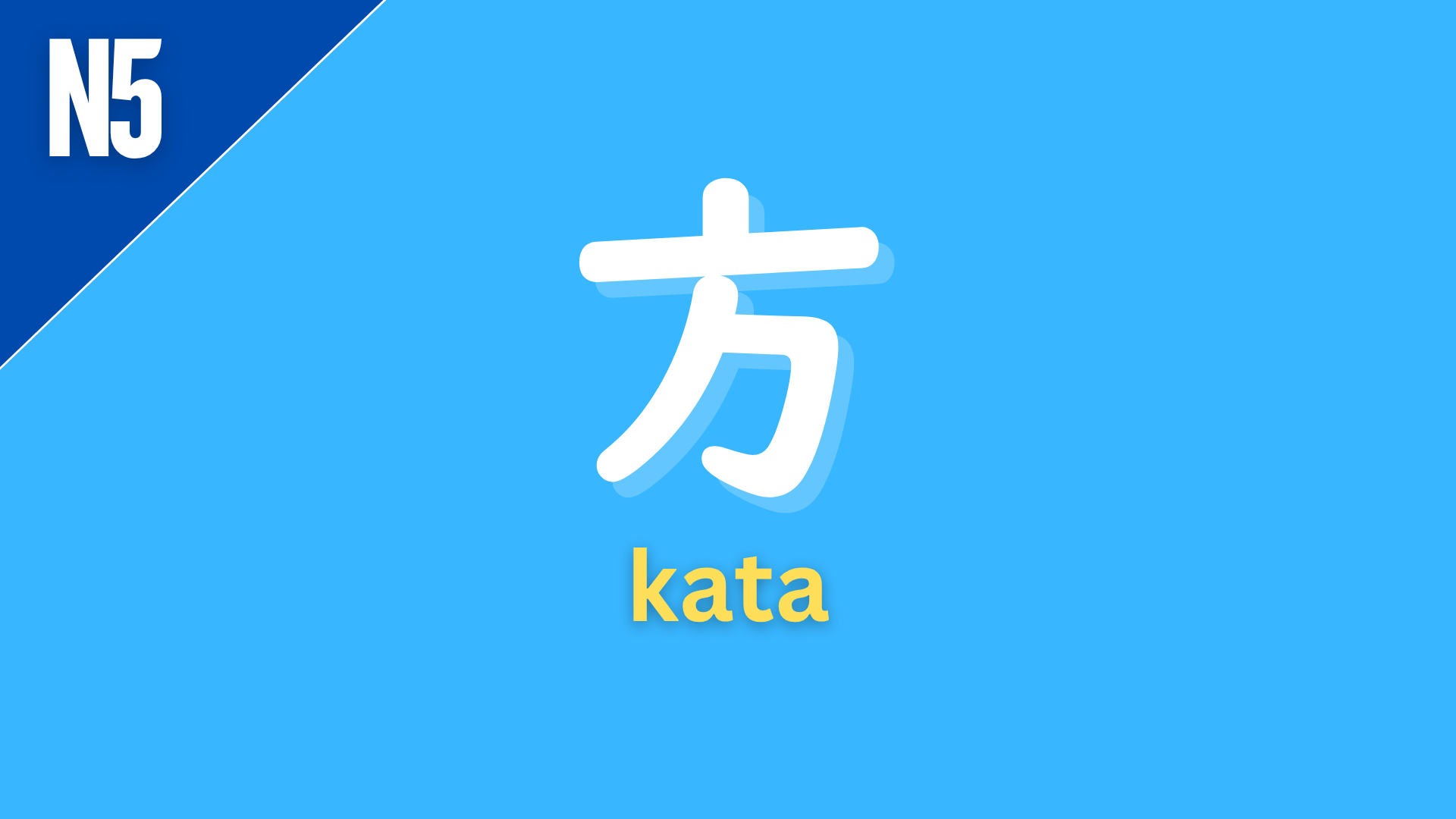
JLPT N5 - Grammar 🌟 方 kata
Have you ever wanted to say something like this in Japanese?
“How do you write this kanji?”
“How do you make this dish?”
“What’s the best way to study Japanese?”
In English, we often say how to or the way to do something.
In Japanese, there’s a super useful and very common expression that does exactly that.
That expression is 方(かた / kata).
方 is used to talk about how to do something the method, the steps, or even someone’s personal style.
From asking for directions, to learning kanji, to talking about someone’s way of thinking,
方 shows up everywhere in daily Japanese.
Once you learn this pattern, you’ll be able to ask clearer questions, give better explanations,
and sound much more natural in Japanese.
So, let’s learn how 方 works, and how to use it smoothly in real conversations.

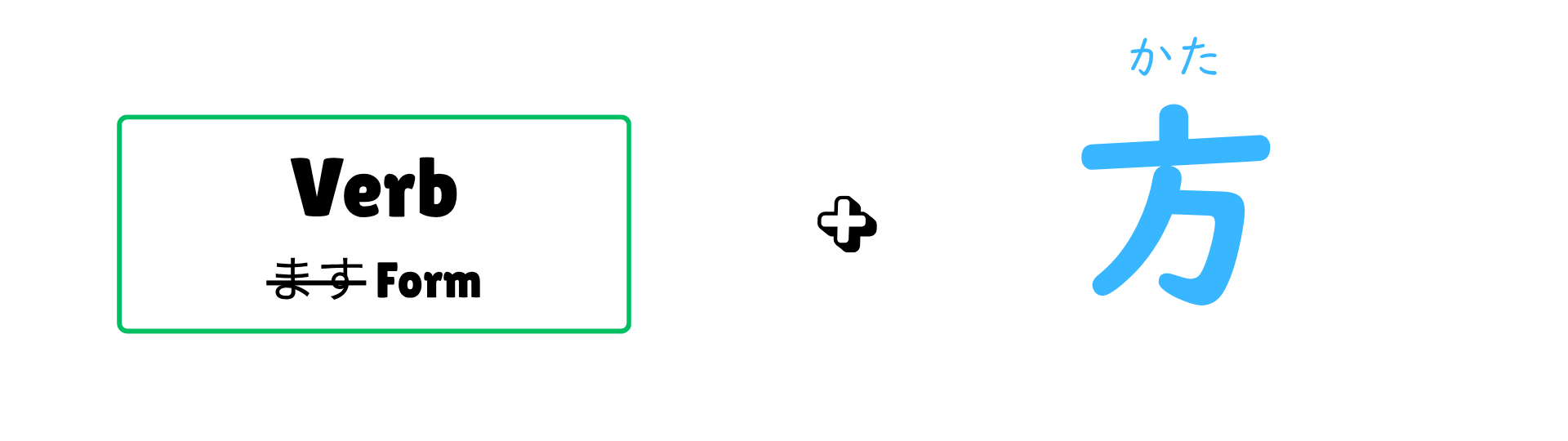

How to use 方 (kata) with “Noun + する”
For verbs that follow “ [Noun] + する” pattern (like 勉強する (benkyou suru) or 運転する (unten suru)), we don't attach 方 (kata) directly to the noun. Instead, we change する to し方(しかた shikata) and connect it with the particle の.
[Noun] + の + し方(しかた)
勉強する - 勉強のしかた
べんきょうする - べんきょう の しかた
benkyou suru - benkyou no shikata
To study - How to study
運転する - 運転のしかた
うんてんする - うんてん の しかた
unten suru - unten no shikata
To drive - How to drive
This sounds more natural and is very commonly used in daily conversation and explanations.
Particle rule : Using 方 (kata) in a sentence
When you use 方, the verb placed before 方 turns into a noun meaning “the way of doing something.”
Because of this, the object marker を usually changes to の.
漢字を 書きます。
かんじ を かきます。
kanji wo kakimasu.
I write kanji.
漢字の 書き方。
かんじ の かきかた。
kanji no kakikata.
The way to write kanji.
This particle change is very important, so be sure to pay attention to it when using 方 (kata).

この漢字の読み方を教えてください。
この かんじ の よみかた を おしえて ください。
kono kanji no yomikata wo oshiete kudasai.
Please tell me how to read this kanji.
駅への行き方を教えてもらえますか?
えき へ の いきかた を おしえて もらえます か?
eki he no ikikata wo oshiete moraemasu ka?
Could you tell me how to get to the station?
チケットの買い方がわからない。
ちけっと の かいかた が わからない。
chiketto no kaikata ga wakaranai.
I don’t know how to buy a ticket.
彼女の笑い方が大好きです。
かのじょ の わらいかた が だいすき です。
kanojo no waraikata ga daisuki desu.
I love the way she laughs.
昔の人の生き方に影響を受けた。
むかし の ひと の いきかた に えいきょう を うけた。
mukashi no hito no ikikata ni eikyou wo uketa.
I was influenced by the way people lived in the past.
母においしいカレーの作り方を教わりました。
はは に おいしい かれー の つくりかた を おそわりました。
haha ni oishii karee no tsukurikata wo osowarimashita.
I learned how to make delicious curry from my mother.
日本でのごみの出し方は複雑でめんどうくさいです。
にほん で の ごみ の だしかた は ふくざつ で めんどうくさい です。
nihon de no gomi no dashikata ha fukuzatsu de mendoukusai desu.
The way garbage is sorted and thrown away in Japan is complicated and troublesome.
彼は説明のしかたがとても上手です。
かれ は せつめい の しかた が とても じょうず です。
kare ha setsumei no shikata ga totemo jouzu desu.
He is very good at the way he explains things.

- Grammar Point: 方 (かた / kata)
- JLPT Level: N5
- Meaning: The way of doing something, how to do something
- Quick Explanation: 方 is used to talk about how to do an action, including methods, steps, and even someone’s personal style or way of thinking.
So that’s how we use 方!
It’s a very practical expression that helps you ask questions, give explanations, and describe “the way” things are done in Japanese.
勉強のしかたがわからない人は、私のコースをチェックしてみてね!
べんきょう の しかた が わからない ひと は、わたし の こーす を ちぇっく して みて ね!
benkyou no shikata ga wakaranai hito ha, watashi no koosu wo chekku shite mite ne!
If you’re not sure how to study, try checking out my course!
Now, it’s your turn!
Try making your own sentence using 方.
Think about something you want to learn “how to do” in Japanese. Even a simple sentence is perfect.
Your Sensei,
Hikari 👩🏻🏫✨
Get Hikari's JLPT Mock Exams & Preparation Lessons!
Whether you are studying to pass the JLPT or looking for a challenge in your learning journey, these courses are perfect for you!
Join my ニュースレター Newsletter 📩
You can expect an email from me once a week about Japanese culture.
Don't worry, your information will not be shared.
We hate SPAM. We will never sell your information, for any reason.