JLPT N5 - Grammar 🌟 か ka (question particle)
Here we go again with another tiny but mighty Japanese particle!
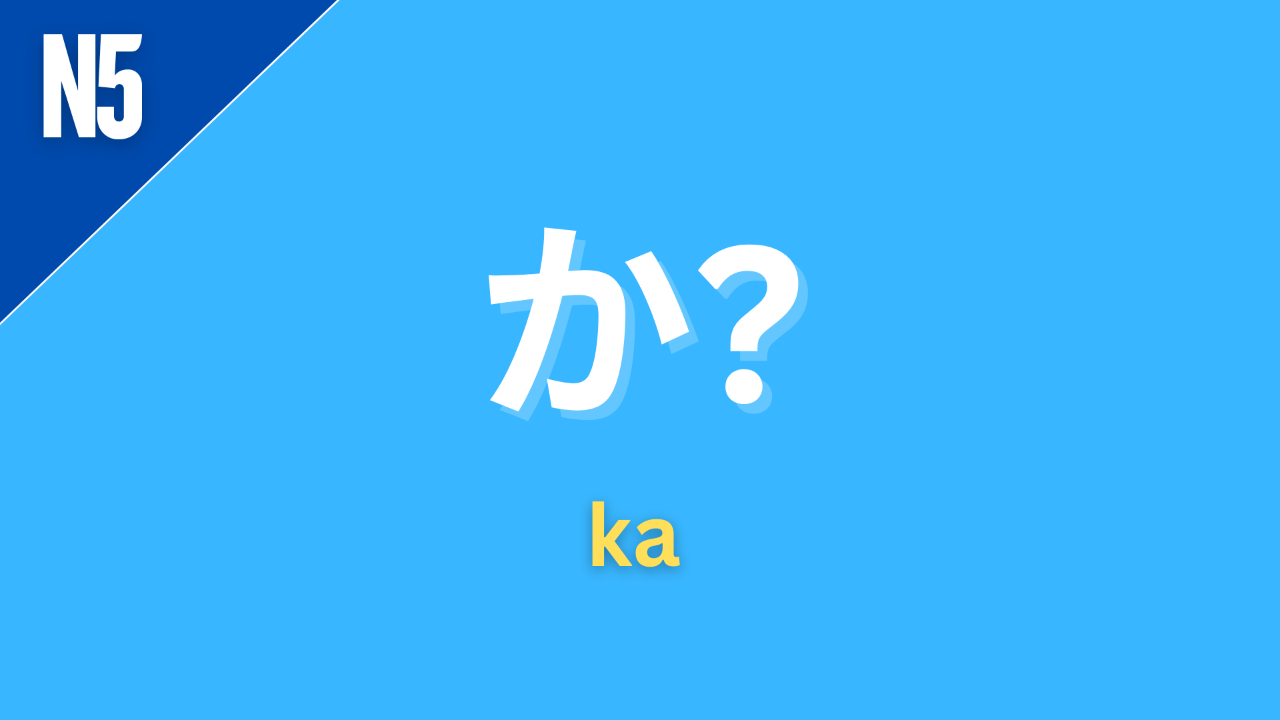
If you’ve ever heard Japanese questions ending with か (ka), like
「元気ですか」(Genki desu ka?) or 「これは何ですか」(Kore ha nan desu ka?),
you’ve already met one of the most important building blocks of Japanese conversation.
In English, we use tone to ask questions, just raising our voice a little at the end.
But in Japanese, we simply add か to the end of a sentence. Easy, right?
It’s an N5 grammar point, and once you master it, you can start making questions confidently, polite, simple, and clear!
Shall we dive in?



Don’t confuse it with the “or” か (ka)!
The か (ka) we’re learning here is the question particle, used to make a sentence into a question.
There’s another か (ka) that means “or”, used to show a choice between two (or more) options.
That’s a different grammar point.
Example (different か - “or”):
コーヒーか紅茶をください。
こーひー か こうちゃ を ください。
koohii ka koucha wo kudasai.
Coffee or tea, please.
Example (today’s か - question):
コーヒーにしますか。
こーひー に します か。
koohii ni shimasu ka?
Will you have coffee? / Would you like coffee?
💡 Tip:
Question か always appears at the end of a sentence.
Choice か appears between words (e.g. 「AかB」).
If you remember this simple position rule, you’ll never mix them up!
Casual vs. Formal
In casual speech, people often drop か and simply use rising intonation, especially with friends.
「行く?iku?」 instead of 「行きますか。iki masuka?」- Will you go?
「元気?genki?」instead of 「元気ですか。genki desuka?」- Are you doing well?
The formal か sounds polite and clear, while the casual version feels more natural and friendly in conversation.

これは何ですか。
これは なん です か。
kore ha nan desu ka?
What is this?
名前はなんですか。
なまえ は なん です か。
namae ha nan desu ka?
What’s your name?
日本人ですか。
にほんじん です か。
nihonjin desu ka?
Are you Japanese?
明日来ますか。
あした きます か。
ashita kimasu ka?
Will you come tomorrow?
ひかり先生はどこですか。
せんせい は どこ です か。
Hikari sensei ha doko desu ka?
Where is Hikari-sensei?
宿題、やっていないんですか。
しゅくだい、やって いない ん です か。
shukudai, yatte inai n desu ka?
You haven’t done your homework?
<Conversational Example>
A: 今日の映画、面白かったですか。
きょう の えいが、おもしろかった です か?
kyou no eiga, omoshirokatta desu ka?
Was today’s movie interesting?
B: はい、すごく面白かったです!
はい、すごく おもしろかった です!
hai, sugoku omoshirokatta desu!
Yes, it was really fun!

- Grammar Point: か (ka)
- JLPT Level: N5
- Meaning: Question particle
- Quick Explanation: Add か to the end of a sentence to make it a question.
So that’s how we use か!
It’s one of the simplest but most important grammar points, once you master it, you can start asking questions like a native!
日本語の勉強は、楽しいですか。
にほんご の べんきょうは、たのしい です か。
nihongo no benkyou, tanoshii desu ka?
Is studying Japanese fun for you?
Now it’s your turn, try making your own questions with か, and don’t be shy to start real conversations in Japanese!
Your Sensei,
Hikari 👩🏻🏫
Get Hikari's JLPT Mock Exams & Preparation Lessons!
Whether you are studying to pass the JLPT or looking for a challenge in your learning journey, these courses are perfect for you!
Join my ニュースレター Newsletter 📩
You can expect an email from me once a week about Japanese culture.
Don't worry, your information will not be shared.
We hate SPAM. We will never sell your information, for any reason.