JLPT N5 - Grammar 🌟 い (i) -adjectives
If you want to make your Japanese sound more natural and colorful, mastering adjectives is a must!
In Japanese, there are two main types of adjectives: い-adjectives and な-adjectives.
In this article, we’ll focus on い-adjectives, the ones that always end with い and are super common in daily conversation.
They’re simple, but very expressive, you can describe how things look, feel, and taste with just one word!
Let’s explore how い-adjectives work, their patterns, forms, and how you can make your Japanese sound more natural and alive!
Shall we start?


Irregular adjective: 「いい」(ii – good)
This one’s special, it doesn’t follow the regular い-adjective pattern.
When you change its form, the stem becomes よ (yo) instead of い (i)!
Present / Future:いい(ii) - It’s good.
Negative:よくない(yokunai) - It’s not good.
Past:よかった(yokatta) - It was good.
Past Negative:よくなかった(yokunakatta) - It wasn’t good.
い-adjectives → Noun
い-adjectives can also be turned into nouns!
This is super useful when you want to talk about the quality or degree of something.
For い-adjectives, change the final 「い」 to 「さ」.
Example:
「やさしい yasashii」 → 「やさしさ yasashisa」 - kindness
母のやさしさ
はは の やさしさ
haha no yasashisa
My mother’s kindness
い-adjectives → Adverb
い-adjectives can also become adverbs.
This helps you describe how something is done, like “quickly,” “happily,” or “clearly.”
For い-adjectives, change the final 「い」 to 「く」.
Example:
「やさしい yasashii」 → 「やさしく yasashiku」- kindly / gently
いぬの頭をやさしくなでる
いぬ の あたま を やさしく なでる
inu no atama wo yasashiku naderu
To gently pat a dog’s head


今日は 寒い です。
きょう は さむい です。
kyou ha samui desu.
It’s cold today.
この店は 新しい です。
この みせ は あたらしい です。
kono mise ha atarashii desu.
This shop is new.
この学校には楽しい思い出がたくさんあります。
このがっこうにはたのしいおもいでがたくさんあります。
kono gakkou niha tanoshii omoide ga takusan arimasu.
I have many happy memories of this school.
あのコンビニの肉まんはあまり 美味しくない ね。
あの こんびに の にくまん は あまり おいしくない ね。
ano konbini no nikuman ha amari oishikunai ne.
The meat buns at that convenience store aren’t very tasty, huh?
この映画は 面白くない です。
この えいが は おもしろくない です。
kono eiga ha omoshirokunai desu.
This movie isn’t interesting.
日本旅行は 楽しかった よ!
にほん りょこう は たのしかった よ!
nihon ryokou ha tanoshikatta yo!
My trip to Japan was fun!
その店のスタッフは 優しかった です。
その みせ の すたっふ は やさしかった です。
sono mise no sutaffu ha yasashikatta desu.
The staff at that shop were kind.
昨日買ったシャツは 安くなかった です。
きのう かった しゃつ は やすくなかった です。
kinou katta shatsu ha yasukunakatta desu.
The shirt I bought yesterday wasn’t cheap.
昨日の天気は 良くなかった。
きのう の てんき は よくなかった。
kinou no tenki ha yokunakatta.
The weather yesterday wasn’t good.

- Grammar Point: い (i) -adjectives
- JLPT Level: N5
- Meaning: Descriptive adjectives that end with い, used to describe states, feelings, or qualities
- Quick Explanation: い-adjectives are one of the two main types of adjectives in Japanese.
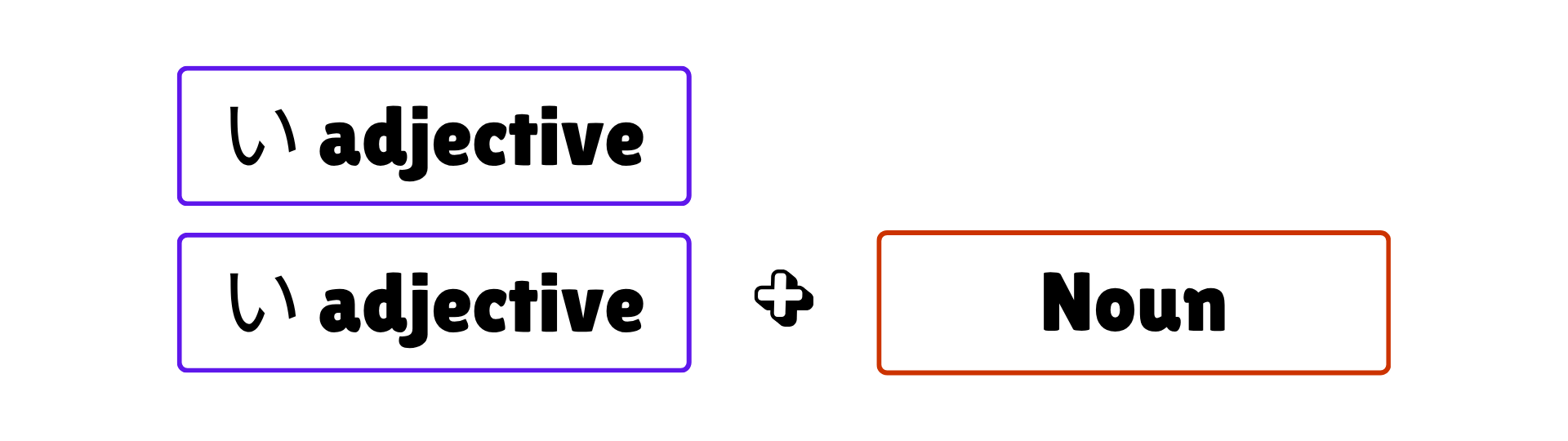
They always end with い (i) and can directly modify nouns.
By changing the ending, you can express tense (past/present) and polarity (positive/negative).
So that’s how we use い-adjectives!
They’re short but powerful, letting you express feelings, impressions, and descriptions with ease.
Just by changing the ending, you can talk about the past, make something negative, or even add contrast.
Now it’s your turn! Try using the い-adjectives you learned today to describe your mood or your favorite things in Japanese!
Your Sensei,
Hikari 👩🏻🏫
Get Hikari's JLPT Mock Exams & Preparation Lessons!
Whether you are studying to pass the JLPT or looking for a challenge in your learning journey, these courses are perfect for you!
Join my ニュースレター Newsletter 📩
You can expect an email from me once a week about Japanese culture.
Don't worry, your information will not be shared.
We hate SPAM. We will never sell your information, for any reason.