JLPT N5 - Grammar 🌟 へ he (particle)

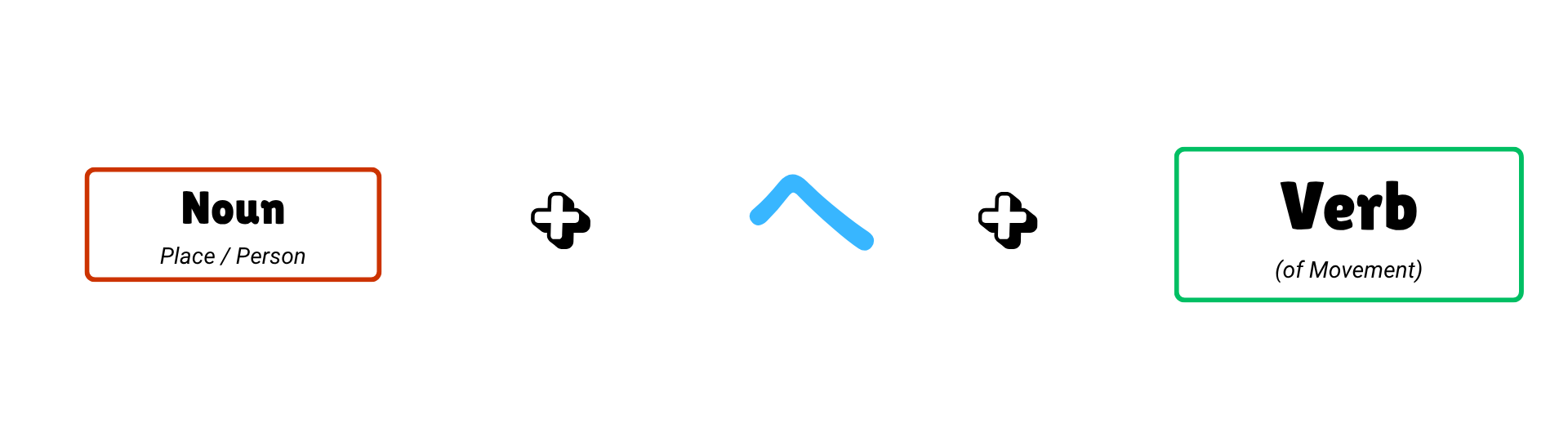
The particle へ (he) is another key particle in Japanese, and it has a very clear job: it marks direction or destination.
Basically, it answers the question “where to?”
Think about sentences like…
“I go to Australia.”
“I wrote a letter to my family.”
“I moved to Tokyo for work.”
In all of these, へ is showing movement toward a place or a person.
It’s small but powerful, and once you notice it, you’ll hear it everywhere, from daily conversations to announcements at the train station.
Shall we check it out?


へ (he) vs に (ni) vs で (de)
The particle へ (he) is similar to the particles に (ni) and で (de).
All three can relate to locations, but the nuance changes depending on the action.
へ (he) : direction or destination
にほん へ いきます。
nihon he ikimasu.
I go to Japan.
👉 Focuses on the movement toward the place.
に (ni) : state, condition, or destination
にほん に すんでいます。
nihon ni sundeimasu.
I live in Japan.
👉 A state/condition exists at that location.
で (de) : where an action takes place
にほん で はたらきます。
nihon de hatarakimasu.
I work in Japan.
👉 The action happens there.
💡 Extra Tip:
Even if you use に instead of へ (like にほんに いくnihon ni iku - I go to Japan), you’ll still be understood!
But knowing へ helps you sound more natural and adds flexibility to your Japanese.

家族へ 手紙を 書きました。
かぞく へ てがみ を かきました。
kazoku he tegami wo kakimashita.
I wrote a letter to my family.
先生へ 質問の メールを 送ります。
せんせい へ しつもん の めーる を おくります。
sensei he shitsumon no meeru wo okurimasu.
I will send a question email to my teacher.
ランチは、ラーメン屋へ 行きます。
らんち は、らーめんや へ いきます。
ranchi ha, raamenya he ikimasu.
For lunch, I’ll go to a ramen shop.
仕事のために、東京へ 引っ越します。
しごと の ため に、とうきょう へ ひっこしました。
shigoto no tame ni, toukyou he hikkoshimashita.
I moved to Tokyo for work.
<Conversation example>
A. 週末は どこへ 行きますか。
しゅうまつ は どこ へ いきますか。
shuumatsu ha doko he ikimasu ka.
Where will you go on the weekend?
B. 美術館へ 行きます。
びじゅつかん へ いきます。
bijutsukan he ikimasu.
I’ll go to the art museum.

- Grammar Point: へ (he)
- JLPT Level: N5
- Meaning: To (direction / destination)
- Quick Explanation: The particle へ shows direction or destination. It’s written as “へ(he)” but pronounced “え(e).” Often interchangeable with に, but へ emphasizes the movement toward a place.
So that’s how we use the particle へ in Japanese!
It may be small, but it’s super handy for showing where you’re heading, whether it’s writing a text to someone, going to the park, or the supermarket.
あなたは先週末、どこへ行きましたか?
あなた は せんしゅうまつ、どこ へ いきました か?
anata ha senshuumatsu, doko he ikimashita ka?
Where did you go last weekend?
Now it’s your turn! Where will you go using へ? Try making your own sentence!
Your Sensei,
Hikari 👩🏻🏫
Get Hikari's JLPT Mock Exams & Preparation Lessons!
Whether you are studying to pass the JLPT or looking for a challenge in your learning journey, these courses are perfect for you!
Join my ニュースレター Newsletter 📩
You can expect an email from me once a week about Japanese culture.
Don't worry, your information will not be shared.
We hate SPAM. We will never sell your information, for any reason.