JLPT N5 - Grammar 🌟 がいます / がいる ga imasu / ga iru

You step into your favorite lovely cafe in Tokyo.
Soft jazz is playing, and the aroma of freshly brewed coffee tickles your nose. Then, wait, there’s a fluffy black cat outside the window. Another one is walking toward you...
You notice someone trying to take a photo of the cat with their phone. Oh, it’s your friend! You wave and call out, “Hey! I’m here!”
Now you’re describing what’s around you, who is there: the cats, your friend, maybe even the friendly barista who remembers your order from yesterday.
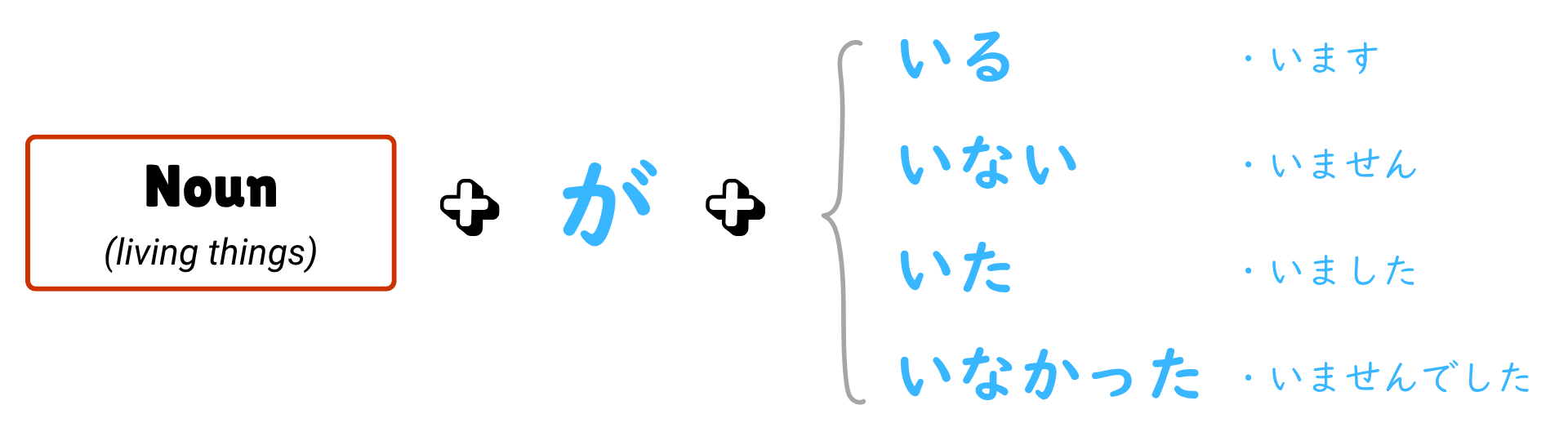
In Japanese, when we talk about living things, people and animals, we use がいます / がいる (ga imasu / ga iru) to say “there is/are” or even “I have” (like “I have a child” or “I have a dog”).
By the end of this lesson, you’ll be able to point out who’s in the room, introduce the important beings in your life, and answer questions like “Where are you now?”, all naturally, just like a local.
Ready to meet the cats… and the grammar? Let’s go!


があります(ga arimasu) vs がいます (ga imasu)
Both があります and がいます mean “there is” or “there are,” but they’re used for different types of things.
があります (ga arimasu) is used when you talk about non-living things, objects, places, ideas, or events.
These are things that exist, but don’t move or breathe, have no eyes.
カフェがあります。
かふぇ が あります。
kafe ga arimasu.
There is a cafe.
花があります。
はながあります。
hana ga arimasu.
There are flowers.
Flowers are living things, but cannot move by themselves, and do not have eyes. So in such case, we use があります(ga arimasu).
がいます (ga imasu), on the other hand, is used for living things, people and animals.
They move, breathe, and sometimes ignore you when you call them.
ねこがいます。
neko ga imasu.
There is a cat.
先生がいます。
せんせい が います。
sensei ga imasu.
There is a teacher.


公園に 子どもが います。
こうえん に こども が います。
kouen ni kodomo ga imasu.
There are children in the park.
京都には たくさんの 観光客が いる。
きょうと には たくさん の かんこうきゃく が いる。
kyouto ni ha takusan no kankoukyaku ga iru.
There are many tourists in Kyoto.
祖母の家には インコが いました。
そぼ の いえ には いんこ が いました。
sobo no ie ni ha inko ga imashita.
There was a parakeet at my grandmother’s house.
動物園に ライオンが いた。
どうぶつえん に らいおん が いた。
doubutsuen ni raion ga ita.
There was a lion in the zoo.
その レストランには お客さんが いませんでした。
その れすとらん には おきゃくさん が いません でした。
sono resutoran ni ha okyakusan ga imasen deshita.
There were no customers in that restaurant.

- Grammar Point: がいる、がいます (ga iru, ga imasu)
- JLPT Level: N5
- Meaning: There is, to be (for living things)
- Quick Explanation: Use がいます when talking about living things, people, animals, or anything that moves or breathes. It shows existence, or even ownership.
So that’s how we use がいます! It’s one of the first steps to describing your world in Japanese.
家に犬がいます。
いえに いぬが います。
ie ni inu ga imasu.
There is a dog in the house.
Now it’s your turn! try making your own sentences using がいます, and describe the people or animals that make your world feel alive!
Your Sensei,
Hikari 👩🏻🏫
Get Hikari's JLPT Mock Exams & Preparation Lessons!
Whether you are studying to pass the JLPT or looking for a challenge in your learning journey, these courses are perfect for you!
Join my ニュースレター Newsletter 📩
You can expect an email from me once a week about Japanese culture.
Don't worry, your information will not be shared.
We hate SPAM. We will never sell your information, for any reason.