JLPT N5 - Grammar 🌟 でしょう deshou
Have you ever wanted to say something like this in Japanese?
“I think it will rain today.”
“This cake is good, right?”
“I told you already, didn’t I?”
In English, these all sound a bit different. But in Japanese, one very polite and flexible word can cover all of them.
That word is でしょう (deshou).
でしょう is used when you’re not stating something too strongly.
You’re guessing, checking, or gently expressing your opinion, and you want to sound soft, polite, and considerate.
You’ll hear it everywhere, like daily conversation, weather forecasts, TV shows, and polite speech.
Let’s break down how でしょう works, step by step.
Are you ready? Let’s explore it together!


だろう (darou) vs でしょう (deshou)
Both だろう and でしょう are used to express guesses or seek agreement, but the key difference is politeness.
だろう (darou)
だろう is casual and often used among friends or in informal speech.
It sounds more direct and sometimes a little rough.
明日は雨が降るだろう。
あした は あめ が ふる だろう。
ashita ha ame ga furu darou.
It’ll probably rain tomorrow.
Use だろう in casual situations or inner thoughts.
でしょう (deshou)
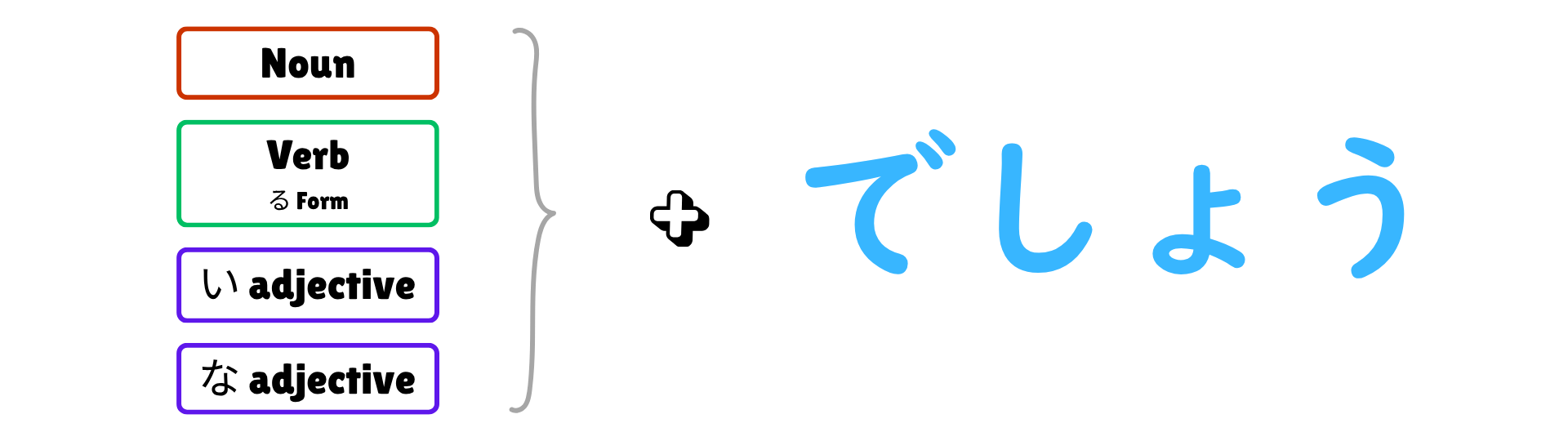
でしょう is the polite version. It sounds gentle, thoughtful, and considerate of the listener.
明日は雨が降るでしょう。
あした は あめ が ふる でしょう。
ashita ha ame ga furu deshou.
It will probably rain tomorrow.
Use でしょう when you want to sound polite, careful, or professional.
💡 Quick Tip (for agreement):
When asking for agreement (でしょう? deshou?), using it with someone senior can sound a little pushy.

彼はもうすぐ来るでしょう。
かれ は もうすぐ くる でしょう。
kare ha mousugu kuru deshou.
He will probably come soon.
ひらがなもカタカナも、練習すればもっと上手く書けるでしょう。
ひらがな も かたかな も、れんしゅう すれば もっと うまく かける でしょう。
hiragana mo katakana mo, renshuu sureba motto umaku kakeru deshou.
If you practice, you’ll probably be able to write both hiragana and katakana better.
犯人はあの男でしょう。
はんにん は あの おとこ でしょう。
hannin ha ano otoko deshou.
The culprit is probably that man.
彼はまだ学生でしょう?
かれ は まだ がくせい でしょう?
kare ha mada gakusei deshou?
He’s still a student, right?
このテストはかなり難しいでしょう。
この てすと は かなり むずかしい でしょう。
kono tesuto ha kanari muzukashii deshou.
This test is probably quite difficult.
昨日は祝日だったから、バイト、忙しかったでしょう?
きのう は しゅくじつ だった から、ばいと、いそがしかった でしょう?
kinou ha shukujitsu datta kara, baito, isogashikatta deshou?
Yesterday was a holiday, so your part-time job was busy, right?
彼女なら、きっと大丈夫でしょう。
かのじょ なら、きっと だいじょうぶ でしょう。
kanojo nara, kitto daijoubu deshou.
If it’s her, she’ll probably be fine.
この問題は簡単でしょう。
このもんだいはかんたんでしょう。
kono mondai wa kantan deshou.
This problem is probably easy.

- Grammar Point: でしょう (deshou)
- JLPT Level: N5
- Meaning: I think, it seems, probably, right?
- Quick Explanation: でしょう is used to express probability, ask for agreement, or make a soft, polite statement.
The meaning changes depending on intonation:
Falling tone (↓) → a guess or prediction
Rising tone (↑) → confirmation or “right?”
So that’s how we use でしょう! ✨It’s a very Japanese way of speaking, saying what you think, while still leaving space for the other person’s feelings or opinion.
今日はとても暑いでしょう。
きょうはとてもあついでしょう。
Kyou wa totemo atsui deshou.
It will probably be very hot today.
Now, it’s your turn!
Try making your own sentence with でしょう, about the weather, a test, or something you think is probably true.
You don’t need to be perfect.
Little by little, your Japanese will sound more natural, more polite, and more like real Japanese!
Your Sensei,
Hikari 👩🏻🏫✨
Get Hikari's JLPT Mock Exams & Preparation Lessons!
Whether you are studying to pass the JLPT or looking for a challenge in your learning journey, these courses are perfect for you!
Join my ニュースレター Newsletter 📩
You can expect an email from me once a week about Japanese culture.
Don't worry, your information will not be shared.
We hate SPAM. We will never sell your information, for any reason.