JLPT N5 - Grammar 🌟 で de (particle)
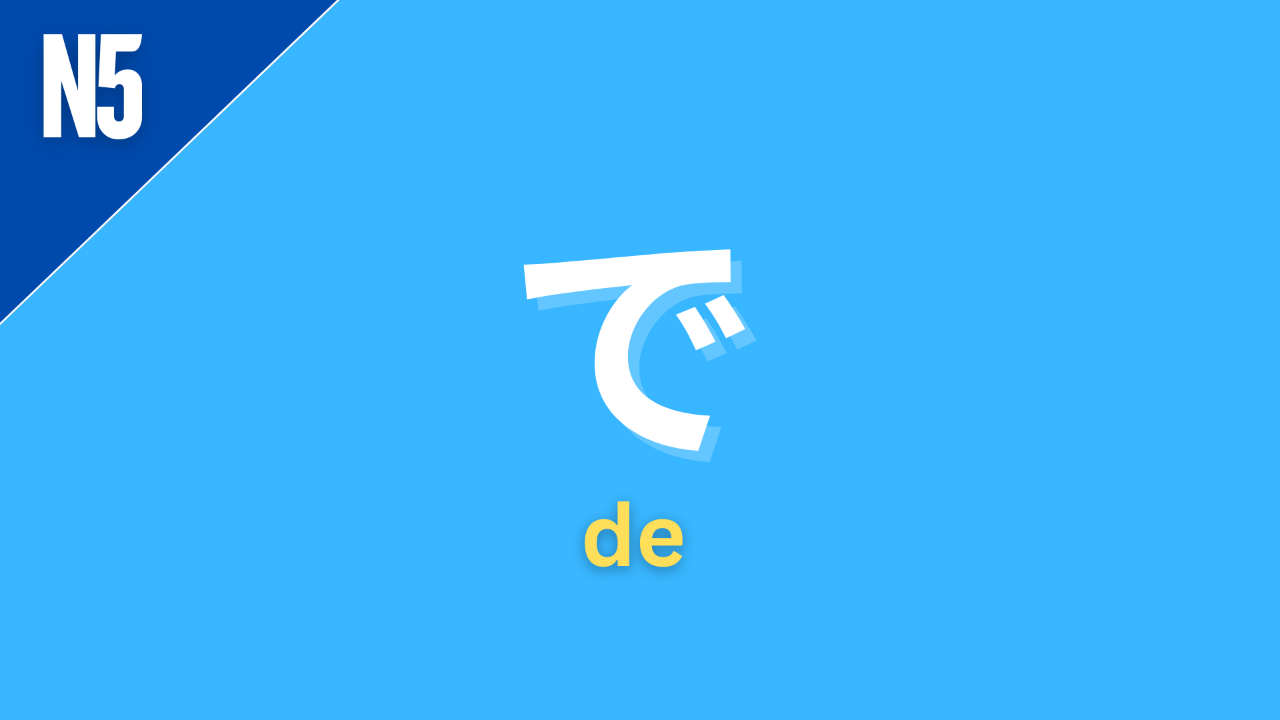
Ready for another must-know particle?
If に(ni) shows where something exists or where you go, then で(de) shows where something happens or how it happens.
Think of situations like:
“I study at the library.”
“I came by train.”
“I wrote this with a pen.”
“I’ll explain this in Japanese.” 🇯🇵
That’s the power of で!
It marks the place of action, the means, or the method you use. Super simple, but you’ll use it every single day in Japanese conversation.
Let’s check it out!



The particle で (de) is one of the most frequently used particles in Japanese, and also one of the most confusing for learners. While it is often introduced early as “the particle for where an action happens,” that explanation barely scratches the surface.
In reality, で is a versatile particle that expresses conditions, means, context, and circumstances under which an action takes place. Let me breakdown all the different nuances this particle can convey:
1️⃣ Using で (de) to show where an action happens
The most familiar usage of で (de) is to indicate the place where an action takes place. When something dynamic happens, such as eating, studying, or working, で (de) marks the location of that activity.
学校で勉強する
がっこうでべんきょうする
gakkou de benkyou suru
To study at school
レストランで食べる
れすとらんでたべる
resutoran de taberu
To eat at a restaurant
The key nuance is that で (de) implies action, not simple existence. This is why Japanese clearly distinguishes between に (ni) and で (de). Saying 学校にいる (gakkou NI iru) describes being at school, while 学校で勉強する (gakkou DE benkyou suru) emphasizes the activity taking place there. A helpful guideline is that に is used for being, and で is used for doing.
2️⃣Using で (de) to express means, method, or tools
Another major function of で (de)is to indicate how an action is carried out or what is used to perform it. In this sense, で (de) often corresponds to “by,” “with,” or “in” in English, depending on context.
日本語で話す
にほんごではなす
nihongo de hanasu
To speak in Japanese
バスで行く
ばすでいく
basu de iku
To go by bus
ペンで書く
ぺんでかく
pen de kaku
To write with a pen
Here, で (de) marks the medium or tool that enables the action. This explains the difference between 日本語を話す (nihongo wo hanasu) and 日本語で話す (nihongo de hanasu) . The first treats Japanese as the object being spoken, while the second highlights Japanese as the means of communication.
3️⃣Using で (de) to indicate cause or reason
The particle で (de) is also commonly used to express cause, especially when the cause is objective or situational. This usage often appears with weather, health, accidents, or unavoidable circumstances.
雨で試合が中止になった
あめでしあいがちゅうしになった
ame de shiai ga chuushi ni natta
The game was canceled due to rain
病気で会社を休んだ
びょうきでかいしゃをやすんだ
byouki de kaisha o yasunda
I took the day off work because of illness
Compared to から (kara), which often expresses personal reasoning or explanation, で (de) sounds neutral and factual. It describes a condition that naturally resulted in an outcome rather than a subjective justification.
4️⃣Using で (de) to define context, scope, or framework
In many sentences, で (de) defines the context or category within which something is evaluated. It does not refer to a physical place but instead sets a conceptual boundary.
クラスで一番背が高い
くらすでいちばんせがたかい
kurasu de ichiban se ga takai
The tallest in the class
日本で人気がある
にほんでにんきがある
nihon de ninki ga aru
Popular in Japan
In these cases, で (de) creates a frame of reference and tells the listener that the statement applies within a specific group, place, or topic.
5️⃣Using で (de) to describe state or condition
Another important nuance of で (de) is its ability to describe the state or condition under which an action happens. This usage often appears with nouns or な adjectives.
一人で暮らす
ひとりでくらす
hitori de kurasu
To live alone
裸足で歩く
はだしであるく
hadashi de aruku
To walk barefoot
In these cases, で (de) functions similarly to an adverb, describing the condition surrounding the action.
6️⃣Using で (de) to express limits, amounts, or conditions
The particle で (de) frequently appears with numbers, prices, time spans, and group sizes to indicate the conditions under which something occurs or is possible.
三人で行く
さんにんでいく
sannin de iku
To go as a group of three
百円で買える
ひゃくえんでかえる
hyakuen de kaeru
Can be bought for one hundred yen
一日で終わる
いちにちでおわる
ichinichi de owaru
To finish within one day
This usage does not mean exactly at a specific number. Instead, で (de) expresses a boundary or limit that makes the action possible.
7️⃣Using で (de) to indicate material or composition
When describing how something is made, で (de) can indicate the material used.
木で作る
きでつくる
ki de tsukuru
To make something out of wood
紙でできている
かみでできている
kami de dekite iru
Made of paper
The nuance here is that で focuses on the material used in the process, rather than emphasizing transformation from raw material. This contrasts with the particle から, which highlights a change from an original form.
8️⃣Using で (de) to express role or capacity
In more formal or contextual situations, で (de) can mark the role or capacity in which someone acts.
先生で働く
せんせいではたらく
sensei de hataraku
To work as a teacher
Here, で highlights the function or position used to perform the action.
Particle で(de) vs に (ni)
Both can mark location, but the nuance is different.
で marks where an action happens.
に marks where something exists or the destination.
図書館で勉強します。
としょかん で べんきょう します。
toshokan de benkyou shimasu.
I study in the library.
図書館に学生がいます。
としょかん に がくせい が います。
toshokan ni gakusei ga imasu.
There are students in the library.


朝ごはんは、ホテルで食べます。
あさごはん は、ほてる で たべます。
asagohan ha hoteru de tabemasu.
I eat breakfast at the hotel.
浅草で着物を着て写真をとりたい。
あさくさ で きもの を きて しゃしん を とりたい。
asakusa de kimono wo kite shashin wo toritai.
I want to wear a kimono and take pictures in Asakusa.
京都には、しんかんせんで行きました。
きょうと に は、しんかんせん で いきました。
kyouto ni ha shinkansen de ikimashita.
I went to Kyoto by shinkansen.
とほで家に帰りました。
とほ で いえ に かえりました。
toho de ie ni kaerimashita.
I walked home.
スマホでしゃしんをとります。
すまほ で しゃしん を とります。
sumaho de shashin wo torimasu.
I take pictures with my smartphone.
日本の観光地を、インスタで調べた。
にほんの かんこうちを、いんすた で しらべた。
nihon no kankouchi wo, insuta de shirabeta.
I looked up Japanese tourist spots on Instagram.
木で いすを作りました。
き で いす を つくりました。
ki de isu wo tsukurimashita.
I made a chair out of wood.
きのう買った毛糸で、てぶくろを作るつもりです。
きのう かった けいと で、てぶくろ を つくる つもり です。
kinou katta keito de, tebukuro wo tsukuru tsumori desu.
I plan to make gloves with the yarn I bought yesterday.
日本語で話します。
にほんご で はなします。
nihongo de hanashimasu.
I speak in Japanese.
このメニューは、日本語と英語で書いてあります。
この めにゅー は、にほんご と えいご で かいて あります。
kono menyuu ha, nihongo to eigo de kaite arimasu.
This menu is written in Japanese and English.
そのサービスは、5,000円で利用できます。
その さーびす は、ごせんえん で りよう できます。
sono saabisu ha gosen-en de riyou dekimasu.
You can use that service for 5,000 yen.
その仕事は、1時間でできます。
その しごと は、いちじかん で できます。
sono shigoto ha ichijikan de dekimasu.
That job can be done in one hour.
かれは、ケガで休みです。
かれ は、けが で やすみ です。
kare ha kega de yasumi desu.
He is absent because of an injury.
大雨で電車がおくれています。
おおあめ で でんしゃ が おくれて います。
ooame de densha ga okurete imasu.
The train is delayed because of heavy rain.

- Grammar Point: で (de)
- JLPT Level: N5
- Meaning: At, in, on, by, with, via
- Quick Explanation: The particle で marks the place where an action happens, or the means, method, or tool used to perform an action. You’ll also see it used with transportation, language, and materials.
So that’s how we use で in Japanese!
It’s super versatile, you’ll use it for places, tools, materials, languages, reasons, and more.
日本語で自分の意見をいってみましょう!
にほんご で じぶん の いけん を いって みましょう!
nihongo de jibun no iken wo itte mimashou!
Let’s try expressing your own opinion in Japanese!
Try making your own sentences with で!
Where will you go, how will you get there, or what tool will you use?
Your Sensei,
Hikari 👩🏻🏫
Get Hikari's JLPT Mock Exams & Preparation Lessons!
Whether you are studying to pass the JLPT or looking for a challenge in your learning journey, these courses are perfect for you!
Join my ニュースレター Newsletter 📩
You can expect an email from me once a week about Japanese culture.
Don't worry, your information will not be shared.
We hate SPAM. We will never sell your information, for any reason.