JLPT N4 - Grammar 🌟 ようになる you ni naru
Have you ever looked back and realized you can do something now that felt impossible just a few months ago?
When you first started studying Japanese, kanji probably looked like mysterious symbols. But little by little, you started recognizing them, and before you knew it, you could actually read them.
That kind of “before and after” change is a huge part of learning a language.
In Japanese, there is a perfect grammar pattern to express this kind of change.
ようになる (you ni naru) !
This expression means “to reach the point where” or “to come to be able to.”
It is used to highlight growth, new abilities, and changes in habits over time.
Let’s learn how to use ようになる to talk about your progress and celebrate how far you have come.

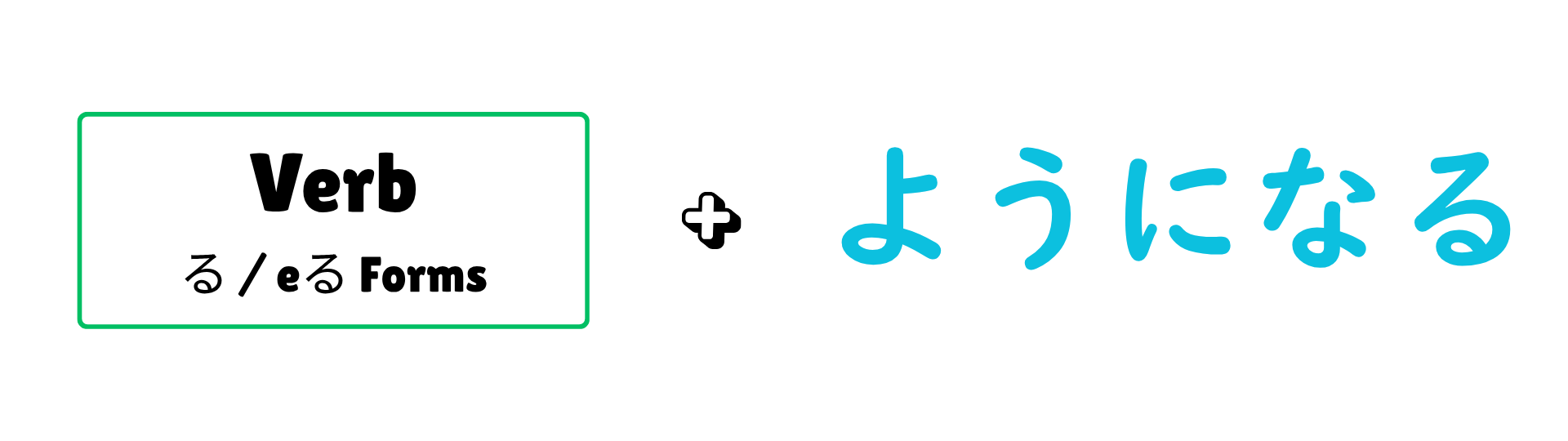
Note: the eる form refers to the "Potential Form"

なくなる (nakunaru) vs なる (naru) vs ようになる (you ni naru)
These expressions all describe change, but they focus on different directions and word types.
なくなる (nakunaru)
なくなる is the opposite of ようになる. It describes a negative change, when something stops or disappears.
忙しくて、本を読まなくなりました。
いそがしくて、ほん を よまなく なりました。
isogashikute, hon wo yomanaku narimashita.
I stopped reading books because I’m busy.
なる (naru)
なる is used with adjectives or nouns, not verbs.
日本語が上手になりました。
にほんご が じょうず に なりました。
nihongo ga jouzu ni narimashita.
My Japanese improved.
ようになる (you ni naru)
ようになる is used with verbs to show a gradual change in ability or behavior.
漢字が読めるようになりました。
かんじ が よめる よう に なりました。
kanji ga yomeru you ni narimashita.
I became able to read kanji.
This is the go-to pattern for saying “I can do something now.”

日本に来てから、生の魚が食べられるようになりました。
にほん に きて から、なま の さかな が たべられる よう に なりました。
nihon ni kite kara, nama no sakana ga taberareru you ni narimashita.
Since coming to Japan, I’ve become able to eat raw fish.
一人暮らしを始めて、自分で料理を作るようになりました。
ひとりぐらし を はじめて、じぶん で りょうり を つくる よう に なりました。
hitorigurashi wo hajimete, jibun de ryouri wo tsukuru you ni narimashita.
After starting to live alone, I began cooking for myself.
道路が整備されて、車で5分で行けるようになりました。
どうろ が せいび されて、くるま で 5ふん で いける よう に なりました。
douro ga seibi sarete, kuruma de go-fun de ikeru you ni narimashita.
The roads were improved, and now it’s possible to get there in five minutes by car.
毎日練習したら、5キロは走れるようになるよ!
まいにち れんしゅう したら、5きろ は はしれる よう に なる よ!
mainichi renshuu shitara, go-kiro wa hashireru you ni naru yo!
If you practice every day, you’ll be able to run 5 km!
アニメを字幕なしで見られるようになりたい。
あにめ を じまく なし で みられる よう に なりたい。
anime wo jimaku nashi de mirareru you ni naritai.
I want to become able to watch anime without subtitles.
あなたの国では、何歳からお酒が飲めるようになりますか?
あなた の くに では、なんさい から おさけ が のめる よう に なります か?
anata no kuni de wa, nansai kara osake ga nomeru you ni narimasu ka?
In your country, from what age can people drink alcohol?

- Grammar Point: ようになる (you ni naru)
- JLPT Level: N4
- Meaning: To reach the point where, to come to be able to
- Quick Explanation: Use ようになる with verbs to describe changes in ability, habits, or behavior over time.
So that’s how we use ようになる!
It’s a very positive expression that highlights growth and progress, whether big or small.
日本語で楽しく話せるようになりたいですか?
にほんご で たのしく はなせる よう に なりたい です か?
nihongo de tanoshiku hanaseru you ni naritai desu ka?
Do you want to reach the point where you can enjoy speaking Japanese?
Now it’s your turn!
Try making your own sentences using ようになる and imagine the future version of yourself you are working toward.
Your Sensei,
Hikari 👩🏻🏫✨
Get Hikari's JLPT Mock Exams & Preparation Lessons!
Whether you are studying to pass the JLPT or looking for a challenge in your learning journey, these courses are perfect for you!
Join my ニュースレター Newsletter 📩
You can expect an email from me once a week about Japanese culture.
Don't worry, your information will not be shared.
We hate SPAM. We will never sell your information, for any reason.