JLPT N4 - Grammar 🌟 ておく te oku
Are you the type of person who is always rushing around at the very last minute?
Or are you a “prepared-in-advance” person who has everything ready days before?
I’ll be honest…sometimes I’m a bit of a panic-mode Hikari too!
But in Japanese culture, being prepared is considered a superpower.
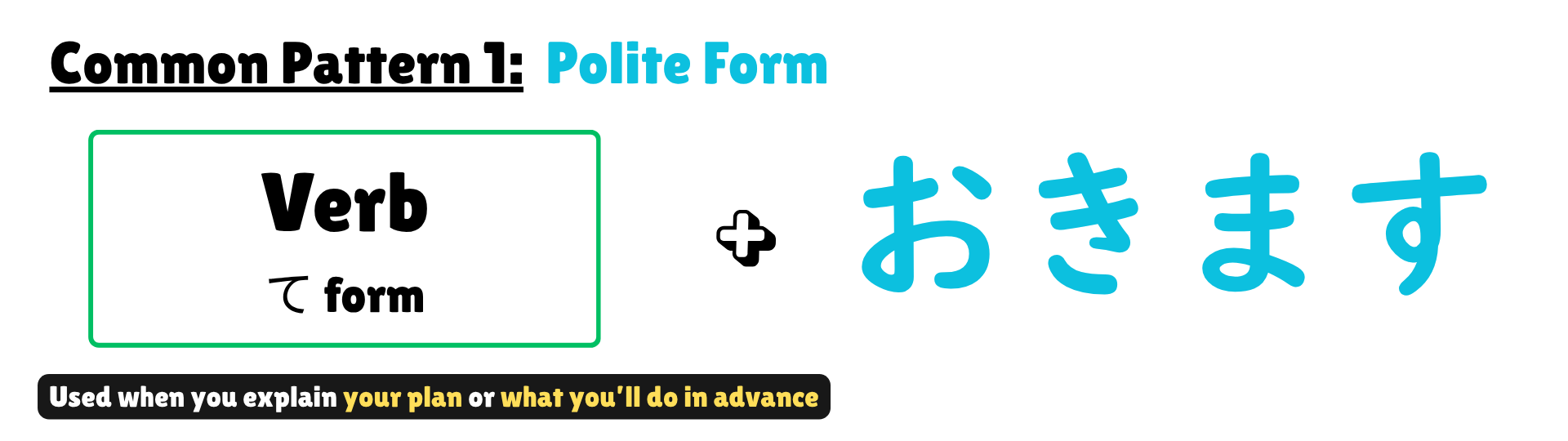
Whether you’re buying travel tickets early or cleaning your room before a party starts, there’s a perfect grammar pattern for that kind of preparation: ておく (te oku)
It means doing something in advance for a future purpose.
Think of it as giving a little gift to your future self. So they don’t have to panic later!
Let’s learn how to use this very practical grammar point and make your life (and your Japanese!) much smoother.



てある (te aru) vs ておく(te oku)
These two expressions can feel confusing because they both describe a “state,” but the focus is different.
てある (te aru)
This describes a situation where something has already been done, and the result remains.
窓が開けてある。
まど が あけてある。
mado ga akete aru.
The window is open (and has been left that way).
ておく(te oku)
This emphasizes doing something now to prepare for later.
暑いので、窓を開けておくね。
あつい の で、まど を あけておくね。
atsui no de, mado wo akete oku ne.
Since it’s hot, I’ll open the window (in advance / for a reason).
💡 Quick Tip:
In casual speech, ておく(te oku) often becomes とく (toku).
夕飯の材料、買っておくね!
ゆうはん の ざいりょう、かっておくね!
yuuhan no zairyou, katte oku ne!
I’ll buy the ingredients for dinner in advance!
↓
夕飯の材料、買っとくね!
ゆうはん の ざいりょう、かっとく ね!
yuuhan no zairyou, kattoku ne!
I’ll buy the ingredients for dinner in advance!

明日、旅行に行くので、切符を買っておきます。
あした、りょこう に いく ので、きっぷ を かっておきます。
ashita, ryokou ni iku node, kippu wo katteokimasu.
I’ll buy the tickets in advance since I’m going on a trip tomorrow.
パーティーの前に、部屋を掃除しておきました。
ぱーてぃー の まえ に、へや を そうじ しておきました。
paatii no mae ni, heya wo souji shiteokimashita.
I cleaned the room in advance before the party.
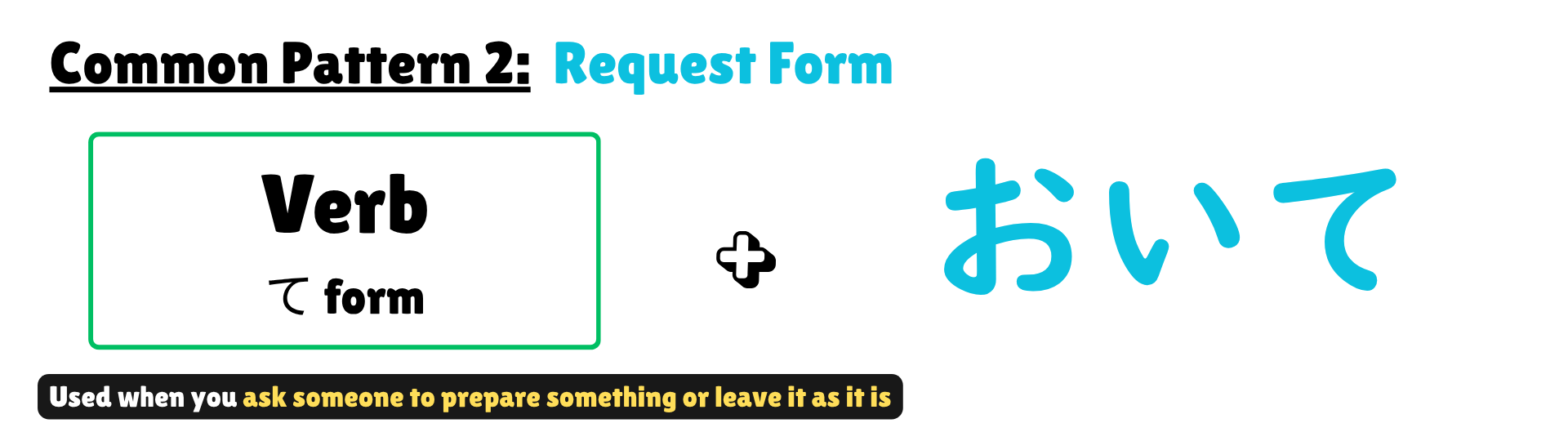
使ったら、元の場所に戻しておいてください。
つかったら、もと の ばしょ に もどしておいて ください。
tsukattara, moto no basho ni modoshiteoite kudasai.
Please put it back where it belongs.
まだ見ているので、テレビはつけておいてください。
まだ みて いる の で、てれび は つけて おいて ください。
mada mite iru no de, terebi ha tsukete oite kudasai.
I’m still watching it, so please leave the TV on.
料理をスムーズに作るために、野菜を切っておきました。
りょうり を すむーず に つくる ため に、やさい を きっておきました。
ryouri wo sumuuzu ni tsukuru tame ni, yasai wo kitteokimashita.
I cut the vegetables in advance to make cooking go smoothly.
包丁を使ったら、引き出しにしまっておくのがルールです。
ほうちょう を つかったら、ひきだし に しまって おく の が るーる です。
houchou wo tsukattara, hikidashi ni shimatte oku no ga ruuru desu.
After using a kitchen knife, the rule is to put it away in the drawer.
<Conversation Example>
A:え!また新しいゲーム買ったの?
え!また あたらしい げーむ かった の?
e! mata atarashii geemu katta no?
What?! You bought another new game?
B:そうなの、どうしてもやりたくて…。
そう なの、どうしても やりたくて…。
sou nano, doushitemo yaritakute…
Yeah… I really wanted to play it…
A:しょうがないなぁ。お母さんには秘密にしとく。でもあとで貸してね!
しょうがない なぁ。おかあさん に は ひみつ に しとく。でも あとで かして ね!
shouganai naa. okaasan ni ha himitsu ni shitoku. demo atode kashite ne!
Oh well… I’ll keep it a secret from your mom. But let me borrow it later, okay?

- Grammar Point: ておく(te oku)
- JLPT Level: N4
- Meaning: To do something in advance, to leave something as it is
- Quick Explanation: Use ておく when you do something now to prepare for a future situation, or to keep a certain state for a reason.
So that’s how we use ておく.
It’s the ultimate “planning ahead” grammar, and yes, it makes you sound very organized.
日本の文化や日本旅行を楽しむために、今のうちに勉強をしておきましょう。
にほん の ぶんか や にほんりょこう を たのしむ ため に、いま の うち に べんきょう を しておきましょう。
nihon no bunka ya nihon ryokou wo tanoshimu tame ni, ima no uchi ni benkyou wo shiteokimashou.
Let’s study in advance now so you can enjoy Japanese culture and your trip to Japan more.
Now it’s your turn!
Try making your own sentence using ておく, and think about what you can do now for your future self.
Your Sensei,
Hikari 👩🏻🏫✨
Get Hikari's JLPT Mock Exams & Preparation Lessons!
Whether you are studying to pass the JLPT or looking for a challenge in your learning journey, these courses are perfect for you!
Join my ニュースレター Newsletter 📩
You can expect an email from me once a week about Japanese culture.
Don't worry, your information will not be shared.
We hate SPAM. We will never sell your information, for any reason.