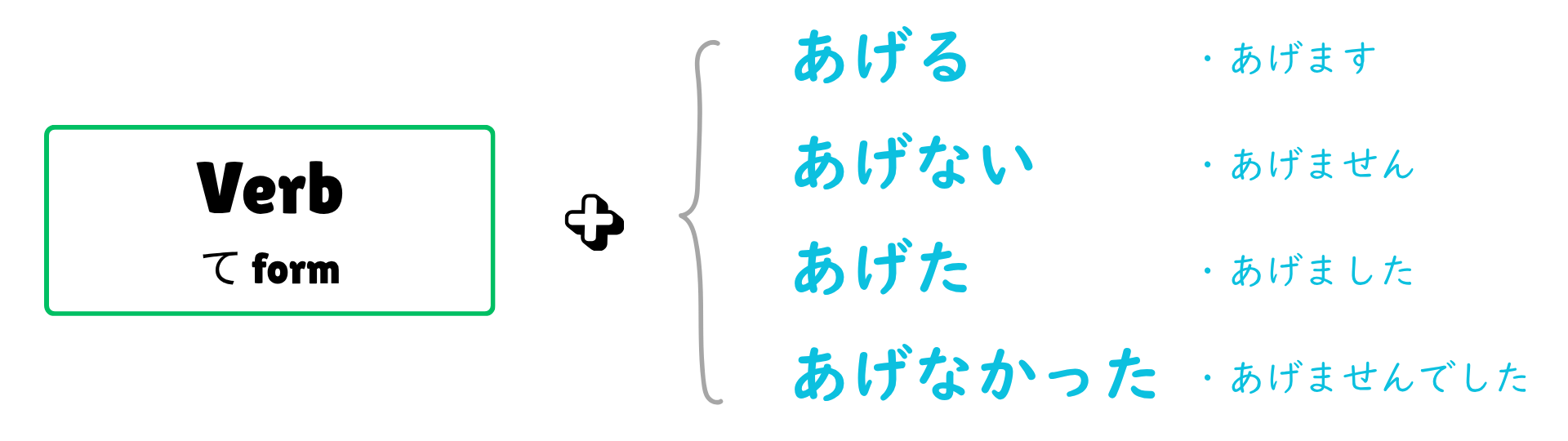
JLPT N4 - Grammar 🌟 てあげる te ageru

Imagine your friend is struggling to carry heavy bags, so you say,
“I’ll help you!”, and you actually do it.
Or picture this, it’s right before a big test.
You feel confident, but your friend looks on the verge of tears because they don’t understand something.
You smile and say, “Let’s study together! I’ll teach you the parts you don’t get!”
That’s exactly when we use てあげる (te ageru) in Japanese, when you do something kind or helpful for someone else.
It literally means “to do (something) and give it to someone,” but the real nuance is “to do a favor for someone.”
In Japanese, てあげる is mostly used when you help or do something for someone close to you or someone of lower status, like friends, family, or children.
If you use it toward your boss or someone above you, it might sound rude even if your intention is kind!
So let’s master how to use てあげる naturally and politely, so your Japanese sounds warm, kind, and full of care.
Ready to begin?


Politeness Tip : て差し上げる (te sashi ageru)
Remember, てあげる is usually used when you’re helping someone close to you or someone of lower status, like friends, family, or children.
When you’re talking about doing something for a boss, teacher, or customer, use て差し上げる (てさしあげる / te sashiageru) instead to sound polite and respectful.
Example:
お客様にご案内して差し上げました。
おきゃくさま に ごあんない して さしあげました。
okyakusama ni goannai shite sashiagemashita.
I guided the customer (politely).
てもらう (te morau) vs てくれる (te kureru) vs てあげる (te ageru)
These three expressions all describe giving and receiving actions, but the key difference lies in who benefits from the action.
てもらう means to receive someone’s favor.
It focuses on you (or someone close to you) receiving kindness or help from someone else.
友達に宿題を手伝ってもらった。
ともだち に しゅくだい を てつだって もらった。
tomodachi ni shukudai wo tetsudatte moratta.
My friend helped me with my homework.
てくれる means someone does something for me (or for us).
It emphasizes the other person’s kindness and is often used to show appreciation.
友達が宿題を手伝ってくれた。
ともだち が しゅくだい を てつだって くれた。
tomodachi ga shukudai wo tetsudatte kureta.
My friend helped me with my homework.
💡 Quick Tip:
Use てもらう when you receive help.
Use てくれる when someone kindly helps you.
Use てあげる when you help someone else.

今度、うちの犬を見せてあげる!
こんど、うち の いぬ を みせて あげる!
kondo, uchi no inu wo misete ageru!
Next time, I’ll show you my dog!
ピーマンが嫌いなら、私が食べてあげる!
ぴーまん が きらい なら、わたし が たべて あげる!
piiman ga kirai nara, watashi ga tabete ageru!
If you don’t like green peppers, I’ll eat them for you!
意地悪するなら、部屋の掃除、手伝ってあげない。
いじわるするなら、部屋の掃除、てつだってあげない。
ijiwaru suru nara, haya no souji, i tetsudatte agenai.
If you’re going to be mean, I won’t help you clean your room.
友達の宿題を手伝ってあげた。
ともだち の しゅくだい を てつだって あげた。
tomodachi no shukudai wo tetsudatte ageta.
I helped my friend with their homework.
妹にプレゼントを買ってあげました。
いもうと に ぷれぜんと を かって あげました。
imouto ni purezento wo katte agemashita.
I bought a present for my little sister.
家族に日本旅行の写真を見せてあげた。
かぞく に にほん りょこう の しゃしん を みせて あげた。
kazoku ni nihon ryokou no shashin wo misete ageta.
I showed my family the photos from my trip to Japan.

- Grammar Point: てあげる (te ageru)
- JLPT Level: N4
- Meaning: To do something for someone, to do a favor for someone
- Quick Explanation: Use てあげる when you do something kind or helpful for another person.
It literally means “to do (something) and give it to someone,” showing your goodwill or support. It’s often used between friends, family, or people of equal or lower status, but remember, not for your boss or above you.
So that’s how we use てあげる!
It’s a beautiful way to express kindness in Japanese, a little word that can make your language sound warm, caring, and natural.
By the way, you can even use it playfully or as a joke!
For example, when you’re at a cafe with a friend…
美味しそうなケーキ食べてるね!その一番大きい いちご、代わりに食べてあげようか?
おいしそう な けーき たべてる ね!その いちばん おおきい いちご、かわり に たべて あげよう か?
oishisou na keeki tabeteru ne! sono ichiban ookii ichigo, kawari ni tabete ageyou ka?
That cake looks so good! How about I eat the biggest strawberry for you?
Now it’s your turn! Try making your own sentences with てあげる, and think about situations where you’d do something nice (or funny!) for someone else.
Your Sensei,
Hikari 👩🏻🏫
Get Hikari's JLPT Mock Exams & Preparation Lessons!
Whether you are studying to pass the JLPT or looking for a challenge in your learning journey, these courses are perfect for you!
Join my ニュースレター Newsletter 📩
You can expect an email from me once a week about Japanese culture.
Don't worry, your information will not be shared.
We hate SPAM. We will never sell your information, for any reason.