JLPT N4 - Grammar 🌟 たら tara

Have you ever wanted to say “if…” or “when/after…” in Japanese?
Maybe you’re talking with someone and want to say,
“When I get home, I’ll call you.”
Or after pushing through a big project, you’re thinking,
“When this project is finished, I’m taking paid leave and going on a hot spring trip!”
And maybe you’re making weekend plans and say,
“If the weather is nice, let’s make a bento and go on a picnic!”
Then today’s grammar, たら (tara), is exactly what you need!
It’s one of the most versatile and commonly used conditional forms in everyday Japanese. And you’ll hear it everywhere, from casual conversations to anime scenes.
The cool thing about たら is that it can express both ideas “if” and “when/after”, depending on the situation. Once you get the feel for it, it becomes super natural to use in your own conversations.
Let’s take a closer look at たら so you can start using it confidently! Let’s go!


と (to) vs たら (tara)
Both と and たら can describe what happens “when” something occurs. But their nuance is very different.
と (to)
と is used when one action always leads to another, like a rule, a natural reaction, or something that happens every time under the same conditions. It feels automatic and predictable.
桜が咲くと、春を感じます。
さくら が さく と、はる を かんじます。
sakura ga saku to, haru wo kanjimasu.
When cherry blossoms bloom, it always feels like spring.
Here, blooming - feeling spring is a natural, expected connection.
たら (tara)
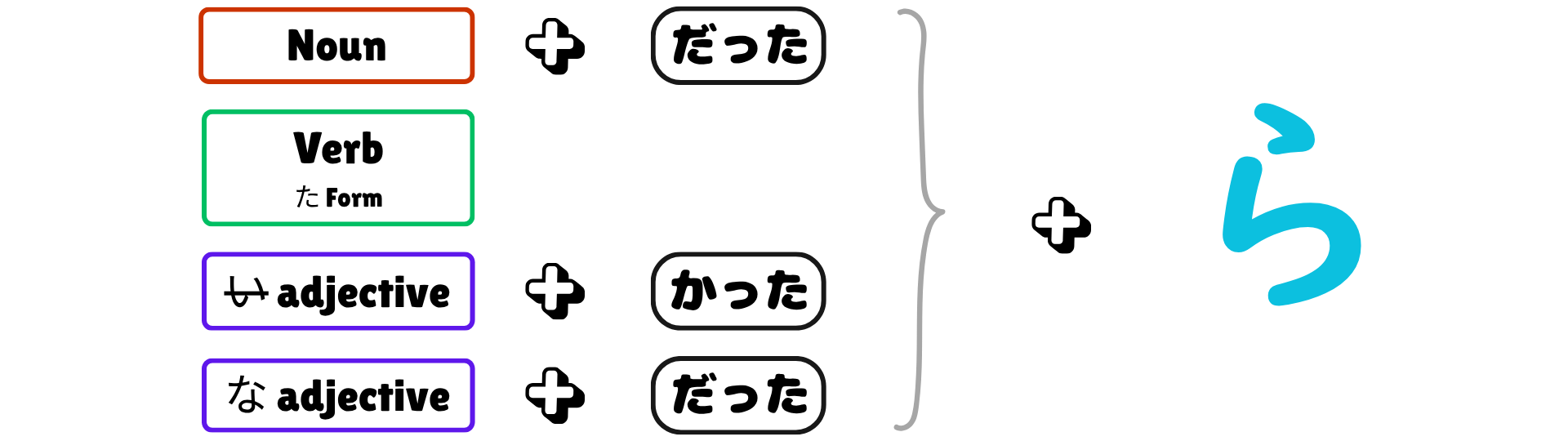
たら is much more flexible. It can mean if, when, or after, depending on context.
Use たら when the result depends on the situation, your intention, or timing. Not something automatic or universal.
仕事が終わったら 散歩します。
しごと が おわった ら さんぽ します。
shigoto ga owatta ra sanpo shimasu.
When I finish work, I’ll take a walk.

家に帰ったら、まず手を洗います。
いえ に かえった ら、まず て を あらいます。
ie ni kaetta ra, mazu te wo araimasu.
When I get home, I wash my hands first.
家に着いたら、連絡してください。
いえ に ついた ら、れんらく して ください。
ie ni tsuita ra, renraku shite kudasai.
When you arrive home, please contact me.
雨だったら、このイベントは中止です。
あめ だった ら、この いべんと は ちゅうし です。
ame datta ra, kono ibento ha chuushi desu.
If it’s rainy, this event will be canceled.
明日が休みだったら、一緒に映画を見に行きませんか?
あした が やすみ だった ら、いっしょ に えいが を みに いきません か?
ashita ga yasumi datta ra, issho ni eiga wo mini ikimasen ka?
If tomorrow is a day off, would you like to go watch a movie together?
もう少し安かったら、買いたいです。
もうすこし やすかった ら、かいたい です。
mou sukoshi yasukatta ra, kaitai desu.
If it were a little cheaper, I’d want to buy it.
身体がきつかったら、無理しないでね。
からだ が きつかった ら、むり しないで ね。
karada ga kitsukatta ra, muri shinaide ne.
If your body feels tired, don’t push yourself, okay?
部屋が静かだったら、もっと集中できるのに。
へや が しずか だった ら、もっと しゅうちゅう できる のに。
heya ga shizuka datta ra, motto shuuchuu dekiru noni.
If the room were quiet, I could focus more.
彼が有名だったら、みんな知っているはずです。
かれ が ゆうめい だった ら、みんな しっている はず です。
kare ga yuumei datta ra, minna shitteiru hazu desu.
If he were famous, everyone would know him.

- Grammar Point: たら (tara)
- JLPT Level: N4
- Meaning: If, when, after
- Quick Explanation: たら is one of the most flexible conditional forms in Japanese.
It can mean “if” (for something that may or may not happen), “when” (for something that naturally will happen), or “after” (when one action finishes and the next begins).
So that’s how we use たら!
It’s perfect for expressing plans, conditions, and natural sequences, whether you’re talking about what you’ll do after something happens, or what you’ll do if a certain situation occurs.
新しい日本語を覚えたら、どんどん 使ってみよう!
あたらしい にほんご を おぼえた ら、どんどん つかってみよう!
atarashii nihongo wo oboeta ra, dondon tsukatte miyou!
When you learn new Japanese, go ahead and use it more and more!
Now it’s your turn! Try making your own sentences with たら and express natural “if / when / after” ideas just like a native speaker!
Your Sensei,
Hikari 👩🏻🏫✨
Get Hikari's JLPT Mock Exams & Preparation Lessons!
Whether you are studying to pass the JLPT or looking for a challenge in your learning journey, these courses are perfect for you!
Join my ニュースレター Newsletter 📩
You can expect an email from me once a week about Japanese culture.
Don't worry, your information will not be shared.
We hate SPAM. We will never sell your information, for any reason.