JLPT N4 - Grammar 🌟 それでも sore demo
Have you ever wanted to do something meaningful, even when everyone around you gently tells you not to?
Imagine this.
You’re planning a solo trip to Japan.
No tour. No travel partner. Just you, exploring Japan on your own.
When you tell people, the reactions are almost always the same.
“Japan alone?”
“Isn’t it far?”
“What if something happens?”
They’re not against your dream. They’re worried.
Traveling alone in a foreign country isn’t easy.
There are language barriers, unfamiliar rules, and unexpected problems.
You understand all of that.
And still, this trip means something special to you.
You’ve been researching, saving money, and imagining yourself walking through train stations, ordering food, and discovering places by yourself.
You didn’t plan this lightly.
So yes, there are reasons not to go. You acknowledge every concern.
But still, you want to go!
In Japanese, this feeling, calmly accepting the difficulties, yet choosing not to give up, is expressed with one powerful word:
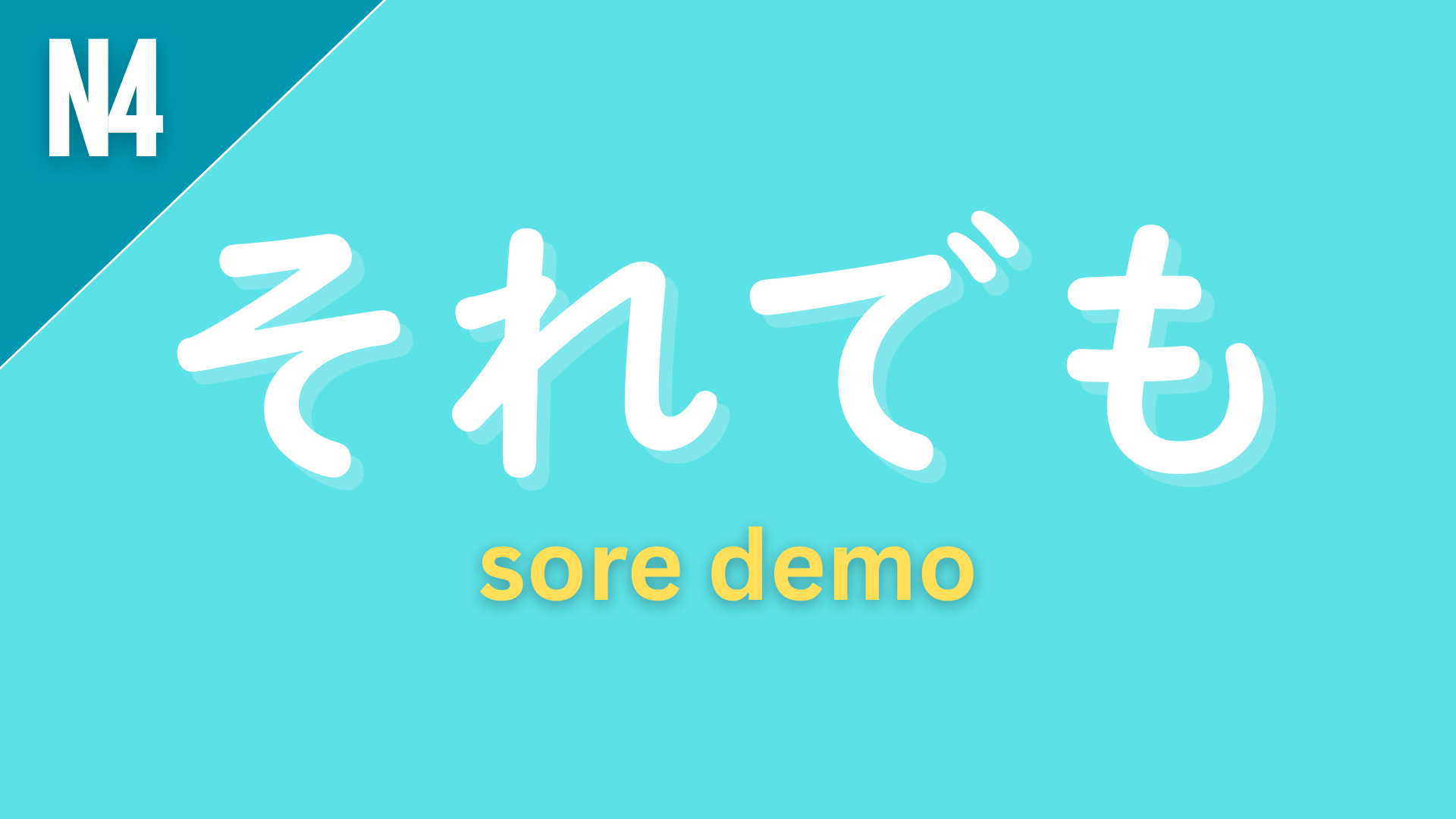
それでも (sore demo).
それでも means “but still” or “even so.” It shows quiet determination and strong resolve.
Let’s learn how to use それでも to express this thoughtful, brave decision in natural Japanese.



でも(demo) / しかし(shikashi) vs それでも (soredemo)
Both でも (demo)/ しかし (shikashi) and それでも (soredemo) are used to show contrast in Japanese, but they express different levels of resistance and intention.
でも(demo) / しかし(shikashi) - But, however (simple contrast)
でも (casual) and しかし (more formal) are used to simply introduce an opposing idea.
They don’t strongly emphasize struggle, determination, or surprise. They just say, “on the other hand.”
雨が降っています。でも、行きます。
あめ が ふって います。でも、いきます。
ame ga futte imasu. demo, ikimasu.
It’s raining, but I’ll go.
This sounds neutral and factual.
Use でも (demo) / しかし (shikashi) when you just want to add contrast, without emotional weight.
それでも (soredemo) - Even so, despite that (resistance or persistence)
それでも goes a step further.
It clearly shows that the previous situation is a strong reason for something not to happen, and yet, the outcome or feeling does not change.
It is often used in three main patterns.
① Strong intention / not giving up (Best)
The speaker acknowledges difficulty but shows determination.
雨が降っています。それでも、行きます。
あめがふっています。それでも、いきます。
ame ga futte imasu. sore demo, ikimasu.
It’s raining. Even so, I’m going.
Here, それでも (soredemo) implies:
“I know this is not ideal. But I’ve decided.”
② Action in difficulty or adversity
Something is hard, painful, or discouraged by others. But the action continues.
周りに反対されました。それでも、留学しました。
まわりにはんたいされました。それでも、りゅうがくしました。
mawari ni hantai sare mashita. sore demo, ryuugaku shimashita.
People were against it. Even so, I studied abroad.
The focus is on continuing despite resistance.
③ Unchanged or disappointing result (Negative / Worst)
それでも (soredemo) is also used when effort was made, but the result did not improve or stayed negative.
In this case, the nuance is closer to:
“I tried / I expected more. But the outcome didn’t change.”
一生懸命勉強しました。それでも、試験に落ちました。
いっしょうけんめい べんきょう しました。それでも、しけん に おちました。
isshoukenmei benkyou shimashita. soredemo, shiken ni ochimashita.
I studied really hard. Even so, I failed the exam.
Here, それでも (soredemo) expresses disappointment, frustration, or resignation, not determination.

家族は反対しました。それでも、私は日本に住みたいです。
かぞく は はんたい しました。それでも、わたし は にほん に すみたい です。
kazoku ha hantai shimashita. soredemo, watashi ha nihon ni sumitai desu.
My family was against it. Even so, I want to live in Japan.
走るのはとても苦しいです。それでも、フルマラソンを完走したいです。
はしる の は とても くるしい です。それでも、ふるまらそん を かんそう したい です。
hashiru no ha totemo kurushii desu. soredemo, furu marason wo kansou shitai desu.
Running is very tough. Even so, I want to finish a full marathon.
昨日はよく眠れませんでした。それでも、仕事に行かなければなりません。
きのう は よく ねむれません でした。それでも、しごと に いかなければ なりません。
kinou ha yoku nemuremasen deshita. soredemo, shigoto ni ikanakereba narimasen.
I couldn’t sleep well last night. Even so, I have to go to work.
薬を飲みました。それでも、熱はなかなか下がりません。
くすり を のみました。それでも、ねつ は なかなか さがりません。
kusuri wo nomimashita. soredemo, netsu ha nakanaka sagarimasen.
I took medicine. Even so, my fever won’t go down easily.
何度も説明しました。それでも、彼は理解してくれません。
なんど も せつめい しました。それでも、かれ は りかい して くれません。
nando mo setsumei shimashita. soredemo, kare ha rikai shite kuremasen.
I explained it many times. Even so, he doesn’t understand.
彼、また浮気したんだ。それでも…別れられないんだよね…。
かれ、また うわき した んだ。それでも…わかれられない んだ よね…。
kare, mata uwaki shita nda. soredemo… wakareranai nda yone…
He cheated again. Even so… I can’t leave him…

- Grammar Point: それでも (sore demo)
- JLPT Level: N4
- Meaning: Even so, but still, nevertheless
- Quick Explanation: それでも is used when the result, decision, or feeling goes against what would normally be expected from the situation before it.
So that’s how we use それでも!
It’s a very Japanese way to express determination, persistence, or emotional contrast , “I know it’s hard, even so, this is how I feel / what I’ll do.”
JLPTの勉強をしていると、不安になったりするよね。それでも一歩でも進もうとしているあなたはすごいよ!
JLPT の べんきょう を して いる と、ふあん に なったり する よね。それでも いっぽ でも すすもう と して いる あなた は すごい よ!
jlpt no benkyou wo shite iru to, fuan ni nattari suru yo ne. soredemo ippo demo susumou to shite iru anata wa sugoi yo!
When you’re studying for the JLPT, it’s natural to feel anxious sometimes. Even so, the fact that you’re trying to move forward, even one step is amazing!
Now, it’s your turn!
Try making your own sentence with それでも about a challenge, a tough situation, or something you didn’t give up on.
Your Sensei,
Hikari 👩🏻🏫✨
Get Hikari's JLPT Mock Exams & Preparation Lessons!
Whether you are studying to pass the JLPT or looking for a challenge in your learning journey, these courses are perfect for you!
Join my ニュースレター Newsletter 📩
You can expect an email from me once a week about Japanese culture.
Don't worry, your information will not be shared.
We hate SPAM. We will never sell your information, for any reason.