JLPT N4 - Grammar 🌟 そんなに sonna ni
Have you ever felt like someone was exaggerating a little, or that a situation wasn’t as extreme as they made it sound?
Or maybe you’ve been surprised by how strongly someone reacted to something?
In Japanese, one very natural way to express this sense of degree, “that much,” “so much,” or “like that”, is with そんなに (sonna ni).
It’s an N4-level adverb that lets you talk about how big, intense, strong, or surprising something is.
You’ll hear it constantly in everyday conversations, especially when you want to say that something is “not that big of a deal,” when you’re surprised by someone’s reaction, or when you want to confirm how strong or intense something really is.
Let’s explore そんなに together!

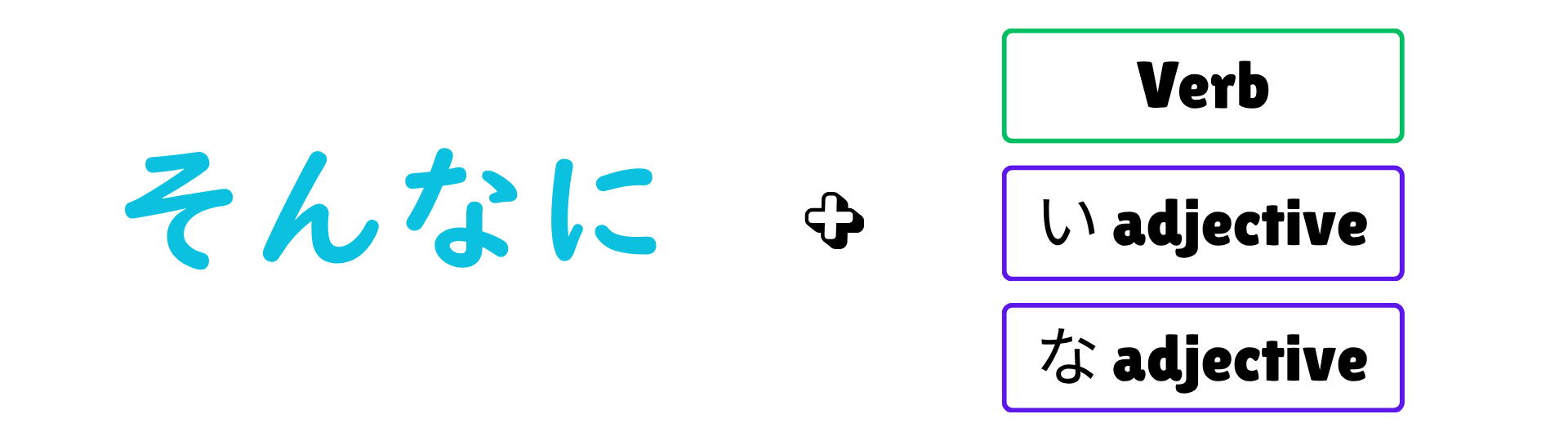

💡 Common Usage Patterns:
It can be used in both positive and negative sentences, but it appears especially often with negatives.
💡 こんなに (konna ni) vs そんなに (sonna ni) vs あんなに (anna ni)
When talking about degree in Japanese, そんなに (sonna ni) often appears together with こんなに (konna ni) and あんなに (anna ni). They all mean “this much / that much,” but the nuance depends on distance, physical, emotional, or conversational.
こんなに (konna ni) - “this much,” close to the speaker
Used when talking about something the speaker personally feels, experiences, or is physically near.
こんなに暑いの?
konna ni atsui no?
It’s THIS hot? (I feel it right now.)
そんなに - “that much,” related to the listener or the topic
Used when referring to the listener’s situation, or something already mentioned in the conversation.
そんなに心配しなくてもいいよ。
sonna ni shinpai shinaku temo ii yo.
You don’t have to worry that much.
あんなに (anna ni) - “that much (over there),” distant or extreme
Used for things far from both people, or situations that feel very intense or surprising.
あんなに人が並んでいるなんてびっくり!
anna ni hito ga narande iru nante bikkuri!
I can’t believe there are THAT many people in line!
💡 Quick Tip
こんなに(konna ni) - close to me (the speaker)
そんなに(sonna ni) - close to you (the listener) or the topic
あんなに(anna ni) - far from both / surprising / extreme
The distance rules for こんなに(konna ni) / そんなに(sonna ni) / あんなに(anna ni) are the same as これ(kore) / それ(sore) / あれ(are).

そんなに急がなくても大丈夫ですよ。
そんなに いそがなくて も だいじょうぶ です よ。
sonna ni isoganakute mo daijoubu desu yo.
You don’t have to rush that much.
そんなに笑うなんて、よっぽどあのテレビ、面白かったんだね。
そんなに わらう なんて、よっぽど あの てれび、 おもしろかった んだ ね。
sonna ni warau nante, yoppo do ano terebi, omoshirokatta n da ne.
You laughed that much? That TV show must have been really funny.
今朝はそんなに寒くないから散歩に行こう。
けさ は そんなに さむく ない から さんぽ に いこう。
kesa ha sonna ni samuku nai kara sanpo ni ikou.
It’s not that cold this morning, so let’s go for a walk.
昨日の試験はそんなに難しくない問題ばかりだった。
きのう の しけん は そんなに むずかしく ない もんだい ばかり だった。
kinou no shiken ha sonna ni muzukashiku nai mondai bakari datta.
Yesterday’s exam was full of questions that weren’t that difficult.
このレストラン、そんなに有名じゃないけど、料理は最高だよ。
この れすとらん、そんなに ゆうめい じゃ ない けど、りょうり は さいこう だ よ。
kono resutoran, sonna ni yuumei ja nai kedo, ryouri ha saikou da yo.
This restaurant is not that famous, but the food is amazing.
その文房具、そんなに便利だとは知らなかった。
その ぶんぼうぐ、そんなに べんり だ と は しらなかった。
sono bunbougu, sonna ni benri da to ha shiranakatta.
I didn’t realize this stationary was that useful.

- Grammar Point: そんなに (sonna ni)
- JLPT Level: N4
- Meaning: So much, that much, like that
- Quick Explanation: そんなに is an adverb used to express degree, often based on what the listener thinks or said. It can mean “that much,” “so (much),” or “to that extent,” and is frequently used in both neutral and surprised reactions.
So that’s how we use そんなに!
It’s the perfect expression for reacting naturally in Japanese, whether you’re saying something isn’t as extreme as someone thinks, showing surprise at their reaction, or checking the actual degree of something.
そんなに急がなくて大丈夫。
そんなに いそがなくて だいじょうぶ。
sonna ni isoga nakute daijoubu.
You don’t have to rush that much.
Now it’s your turn! try making your own sentences with そんなに and express natural degrees and reactions just like a native speaker!
Your Sensei,
Hikari 👩🏻🏫✨
Get Hikari's JLPT Mock Exams & Preparation Lessons!
Whether you are studying to pass the JLPT or looking for a challenge in your learning journey, these courses are perfect for you!
Join my ニュースレター Newsletter 📩
You can expect an email from me once a week about Japanese culture.
Don't worry, your information will not be shared.
We hate SPAM. We will never sell your information, for any reason.