JLPT N4 - Grammar 🌟 さ sa (-ness, -ity)
Have you ever wanted to talk about the weight of your luggage, the height of a mountain, or the importance of learning Japanese?
In English, we often add endings like “-ness” or “-ity” to adjectives to turn them into nouns.
In Japanese, we have a super handy tool for that: さ (sa).
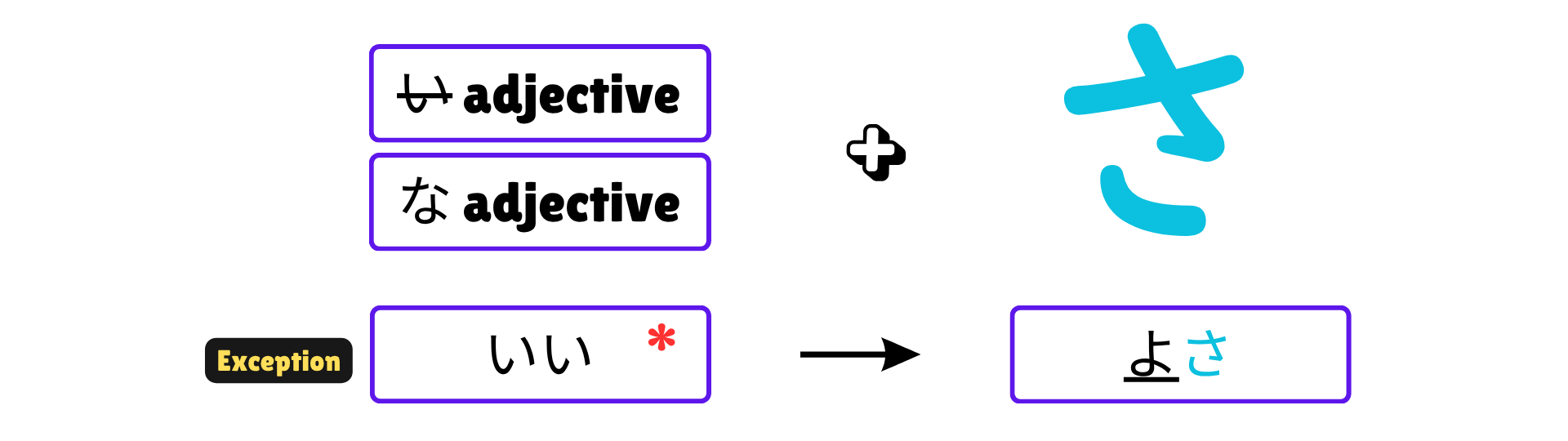
Think of さ as a suffix that turns an adjective into a measurable idea.
It is mainly used to express the degree or amount of a quality in an objective way.
From the sweetness of a cake to the convenience of living in Tokyo, さ is about to become a very useful part of your vocabulary!
Let’s learn how to level up your Japanese by turning adjectives into nouns.
Ready? Let’s go!


み (mi) vs さ (sa)
Both み and さ turn adjectives into nouns, but they focus on very different things.
み (mi)
み is subjective and focuses on feeling, depth, or emotional quality.
It is often used to express how something feels to a person rather than something you can measure.
この映画には深みがあります。
この えいが に は ふかみ が あります。
kono eiga ni ha fukami ga arimasu.
This movie has depth.
さ (sa)
さ is objective and focuses on degree, amount, or something measurable.
It is often used when you want to talk about facts, numbers, or clear conditions.
Think of it as something you can measure with a ruler or a scale.
この海の深さは105メートルです。
この うみ の ふかさ は ひゃくご めーとる です。
kono umi no fukasa ha hyakugo meetoru desu.
The depth of this sea is 105 meters.
💡 Usage Tip
If you are talking about numbers, levels, or objective qualities, use さ.
If you want to express emotion, impression, or inner feeling, み sounds more natural.

この部屋の広さは、どのくらいありますか。
この へや の ひろさ は、どのくらい あります か。
kono heya no hirosa ha, donokurai arimasu ka.
How much spaciousness does this room have.
この荷物の重さを測ってください。
この にもつ の おもさ を はかって ください。
kono nimotsu no omosa wo hakatte kudasai.
Please measure the weight of this luggage.
日本の夏の暑さには、本当におどろきました。
にほん の なつ の あつさ に は、ほんとう に おどろきました。
nihon no natsu no atsusa ni ha, hontou ni odorokimashita.
I was truly surprised by the intensity of the heat in Japanese summers.
健康の大切さは病気になってからわかります。
けんこう の たいせつさ は びょうき に なって から わかります。
kenkou no taisetsusa ha byouki ni natte kara wakarimasu.
You realize the importance of health only after you get sick.
テストに落ちた悔しさで、一晩中泣きました。
てすと に おちた くやしさ で、ひとばんじゅう なきました。
tesuto ni ochita kuyashisa de, hitobanjyuu nakimashita.
I cried all night from the frustration of failing the test.
このチームのよさは、みんなが仲が良いことです。
この ちーむ の よさ は、みんな が なか が いい こと です。
kono chiimu no yosa ha, minna ga naka ga ii koto desu.
The goodness of this team is that everyone gets along well.

- Grammar Point: さ (sa) (-ness, -ity)
- JLPT Level: N4
- Meaning: Turning adjectives into nouns
- Quick Explanation: Use さ when you want to change an adjective into a noun and talk about degree, amount, or an objective quality.
So that’s how we use さ.
By turning adjectives into nouns, you can talk about feelings, numbers, and ideas in a much more precise way.
日本語の面白さ、わかってきたかな?
にほんご の おもしろさ、わかって きた かな?
nihongo no omoshirosa, wakatte kita kana?
Are you starting to see how interesting Japanese is?
If you are, that’s a great sign!
Keep noticing these small patterns, and your Japanese will keep growing naturally!
Your Sensei,
Hikari 👩🏻🏫✨
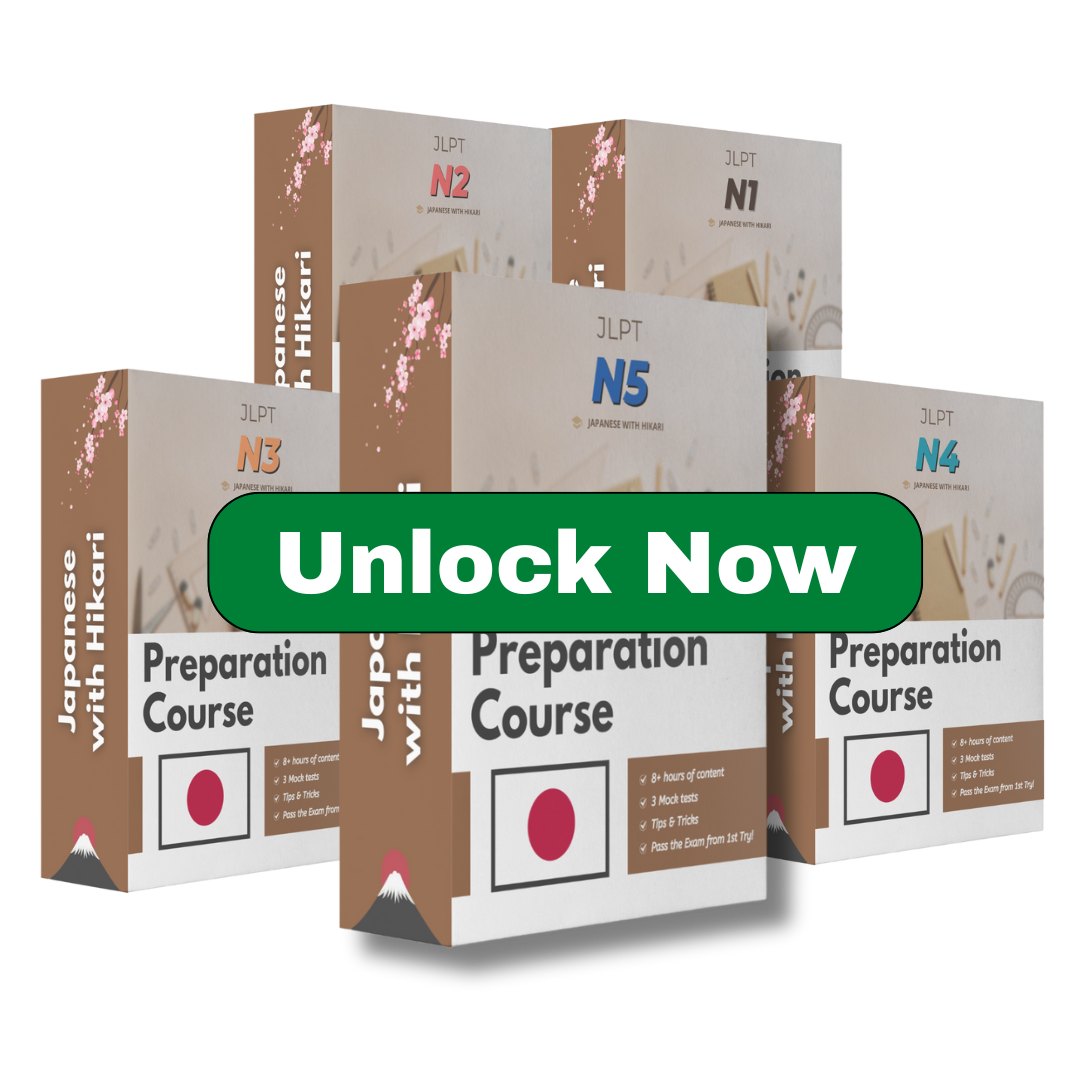
Get Hikari's JLPT Mock Exams & Preparation Lessons!
Whether you are studying to pass the JLPT or looking for a challenge in your learning journey, these courses are perfect for you!
Join my ニュースレター Newsletter 📩
You can expect an email from me once a week about Japanese culture.
Don't worry, your information will not be shared.
We hate SPAM. We will never sell your information, for any reason.