JLPT N4 - Grammar 🌟 に気がつく ni ki ga tsuku

Have you ever walked out of your house and suddenly thought,
“Oh no… I forgot my phone!”
That exact moment, when you realize something, is what we describe in Japanese using に気がつく (にきがつく / ni ki ga tsuku).
It means “to notice,” “to realize,” or “to become aware of” something.
It’s an N4 grammar point that’s super common in daily life, whether you suddenly remember a mistake, realize someone’s feelings, or notice that the season has changed.
Let’s learn how to use に気がつく naturally so you can describe those “aha!” moments in Japanese!

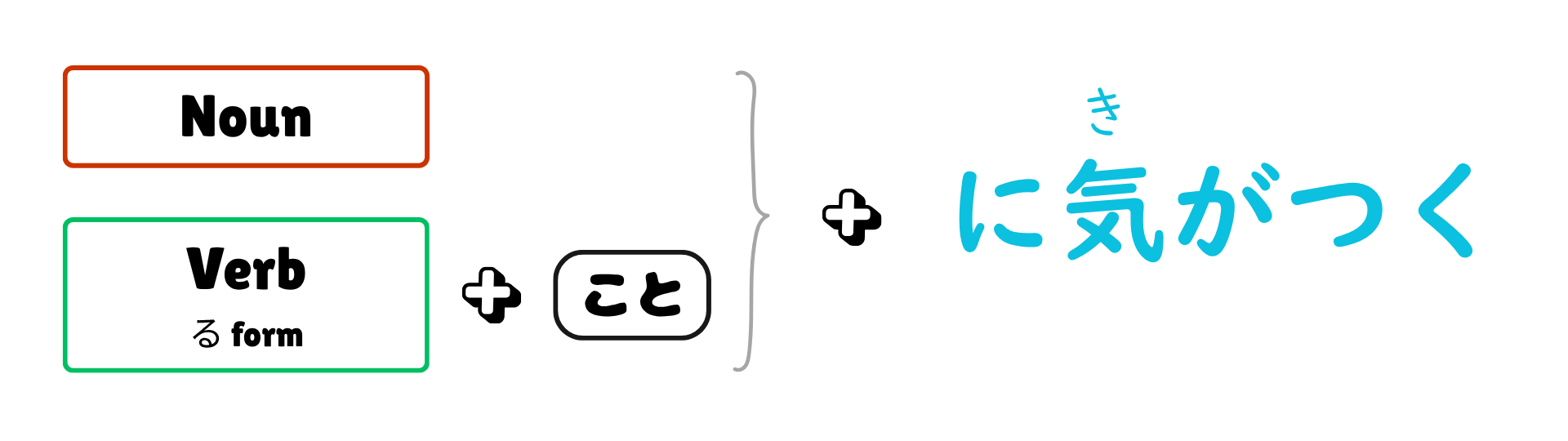

気づく (kidzuku) vs に気がつく(ni ki ga tsuku)
Both 気づく (kidzuku) and に気がつく(ni ki ga tsuku) mean “to notice” or “to realize,” and they’re often interchangeable. However, there’s a slight nuance difference between them.
気づく (kidzuku) sounds a bit more direct and spontaneous.
It’s used when you suddenly notice something.
に気がつく(ni ki ga tsuku) feels slightly softer and more reflective.
It’s used when you become aware of something gently or unexpectedly.
You can think of 気づく(kidzuku) as a flash of awareness, while に気がつく(ni ki ga tsuku) feels more emotional or thoughtful. Like you gradually tuned in to something.

忘れ物に気がついた。
わすれもの に き が ついた。
wasuremono ni ki ga tsuita.
I noticed I forgot something.
授業中、先生の間違いに気がついた。
じゅぎょうちゅう、せんせい の まちがい に き が ついた。
jugyouchuu, sensei no machigai ni ki ga tsuita.
I noticed the teacher’s mistake during class.
勉強に集中しすぎて、何も食べていないことに気がつかなかった。
べんきょう に しゅうちゅう しすぎて、なにも たべていない こと に き が つかなかった。
benkyou ni shuuchuu shisugite, nanimo tabeteinai koto ni ki ga tsukanakatta.
I was so focused on studying that I didn’t realize I hadn’t eaten anything.
あの日以来、彼の態度が変わったことに気がついた。
あのひ いらい、かれ の たいど が かわった こと に き が ついた。
ano hi irai, kare no taido ga kawatta koto ni ki ga tsuita.
I noticed that his attitude had changed since that day.

- Grammar Point: 〜に気がつく (~ni ki ga tsuku)
- JLPT Level: N4
- Meaning: To notice, to realize, to become aware of
- Quick Explanation: Use に気がつく when you notice or realize something like a mistake, a change, or something you forgot.
So that’s how we use に気がつく!
It’s the perfect expression for those little “aha!” moments when you finally notice something or realize what’s going on.
Learning to use に気がつく will help you sound more natural and sensitive in Japanese. Like someone who really pays attention to details and people’s feelings.
庭の花が咲いていたことに気がついた。
にわのはながさいていたことにきがついた。
niwa no hana ga saite ita koto ni ki ga tsuita.
I noticed that the flowers in the garden had bloomed.
Now it’s your turn!
What did you notice today? Try making your own sentence with に気がつく and share your “aha!” moment in Japanese!
Your Sensei,
Hikari 👩🏻🏫
Get Hikari's JLPT Mock Exams & Preparation Lessons!
Whether you are studying to pass the JLPT or looking for a challenge in your learning journey, these courses are perfect for you!
Join my ニュースレター Newsletter 📩
You can expect an email from me once a week about Japanese culture.
Don't worry, your information will not be shared.
We hate SPAM. We will never sell your information, for any reason.