JLPT N4 - Grammar 🌟 なさる nasaru
Have you ever found yourself in a situation where you wanted to sound extra respectful to your boss, a teacher, or even a customer, but you weren't sure how to upgrade the simple verb “する” (to do)?
Maybe you want to ask, “What will you do?” or “Did you play golf last weekend?” to someone you really respect. Using “します” is okay, but if you want to sound like a polite Japanese pro, it’s time to meet your new sophisticated friend: なさる (nasaru).
As one of the most fundamental expressions in Japanese honorifics (敬語 / けいご・keigo), なさる is a must-know for any learner! It is the honorific (尊敬語 / そんけいご・sonkeigo) version of “する.” It’s used to describe the actions of someone above you, never your own! Think of it as putting a tiny crown on the person you are talking to.
Let’s dive into how to use this elegant verb to make your Japanese sound graceful and professional!
Ready? Here we go!


How to Change する (suru) to なさる (nasaru)
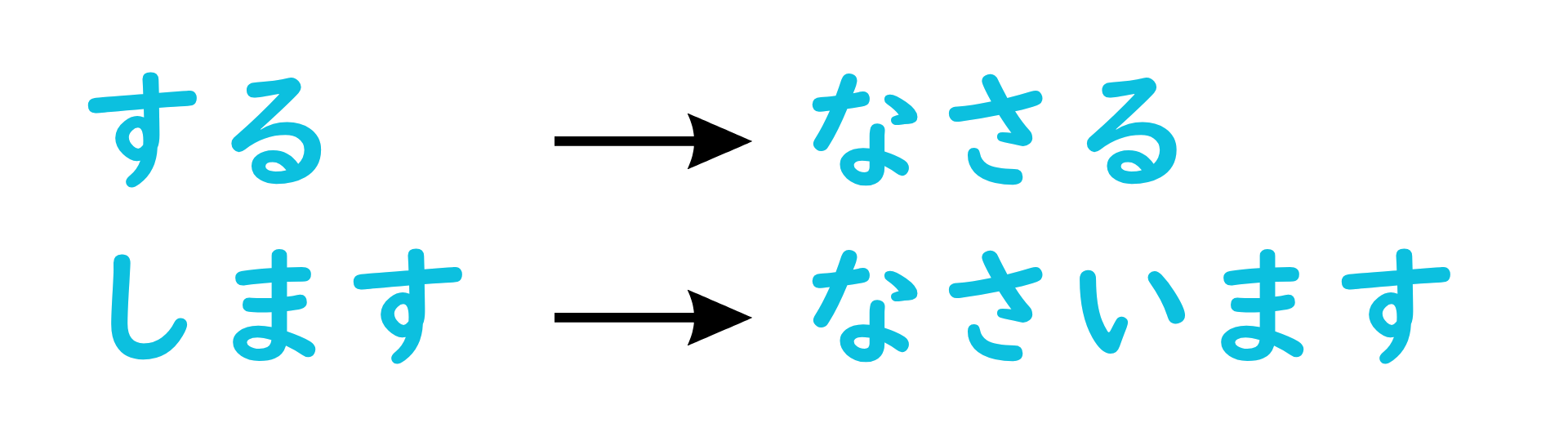
なさる is the honorific version of する.
To show respect, simply replace the form of する with the corresponding form of なさる.
1. Dictionary Form : する (suru) → なさる (nasaru)
Used in plain form sentences.
社長は 週末は いつも ゴルフを する。 → 社長は 週末は いつも ゴルフを なさる。
しゃちょう は しゅうまつ は いつも ごるふ を する。 → しゃちょう は しゅうまつ は いつも ごるふ を なさる。
shachou ha shuumatsu ha itsumo gorufu wo suru. → shachou ha shuumatsu ha itsumo gorufu wo nasaru.
The company president usually plays golf on weekends.
2. Polite Form:します (shimasu) → なさいます (nasai masu)
This is the most common form used in business or formal situations.
何を しますか? → 何を なさいますか?
なに を します か? → なに を なさいます か?
nani wo shimasu ka? → nani wo nasaimasu ka?
What will you do? / What are you doing?
3. て-form:して (shite) → なさって (nasatte)
Used to connect sentences or form polite expressions.
ゆっくり してください。 → ゆっくり なさって ください。
ゆっくり してください。 → ゆっくり なさって ください。
yukkuri shite kudasai. → yukkuri nasatte kudasai.
Please take your time.
💡Quick Tip:
なさる is used for someone else's actions, not your own.
Never say “わたしは ゴルフを なさいます(watashi ha gorufu wo nasai masu)” unless you want to sound like a very confused queen or king!

明日は、何時ごろに帰宅なさる予定ですか?
あした は、なんじ ごろ に きたく なさる よてい です か?
ashita ha nanji goro ni kitaku nasaru yotei desu ka?
About what time do you plan to return home tomorrow?
そんなに無理をなさらないでください。
そんな に むり を なさらないで ください。
sonna ni muri wo nasaranaide kudasai.
Please do not overdo it.
お飲み物は、コーヒーと紅茶、どちらになさいますか?
おのみもの は、こうひい と こうちゃ、どちら に なさいます か?
onomimono ha koohii to koocha, dochira ni nasaimasu ka?
Would you like coffee or tea?
課長は、SNSなどは一切なさいません。
かちょう は、えすえぬえす など は いっさい なさいません。
kachou ha esu enu esu nado ha issai nasaimasen.
The section manager does not use social media at all.
準備ができましたら、こちらに移動なさってください。
じゅんび が できましたら、こちら に いどう なさって ください。
junbi ga dekimashitara, kochira ni idou nasatte kudasai.
Once you are ready, please move over here.
どうぞ、お気になさらないでください。
どうぞ、おき に なさらないで ください。
douzo, oki ni nasaranaide kudasai.
Please do not worry about it.

- Grammar Point: なさる (nasaru)
- JLPT Level: N4
- Meaning: To do (honorific)
- Quick Explanation: なさる is the honorific version of する. It is a fundamental keigo expression used to show respect toward someone else's actions.
So that’s how we use なさる.
It might feel a little formal at first, but using it correctly shows that you truly understand Japanese culture and respect. Whether you are asking about someone's weekend or confirming a business schedule, なさる makes you sound graceful and professional.
みなさん、本当によく勉強なさっていますね!
みなさん、ほんとう に よく べんきょう なさって います ね!
minasan, hontou ni yoku benkyou nasatte imasu ne!
Everyone, you are truly studying very hard!
Keep up the wonderful work. I am very proud of you!
Your Sensei,
Hikari 👩🏻🏫✨
Get Hikari's JLPT Mock Exams & Preparation Lessons!
Whether you are studying to pass the JLPT or looking for a challenge in your learning journey, these courses are perfect for you!
Join my ニュースレター Newsletter 📩
You can expect an email from me once a week about Japanese culture.
Don't worry, your information will not be shared.
We hate SPAM. We will never sell your information, for any reason.