JLPT N4 - Grammar 🌟 なら nara
If you asked me,
“I want to visit Japan, but where do you recommend?”
I’d probably answer something like this:
“If it’s your first trip to Japan, then Tokyo or Osaka area is the easiest to explore.”
“If it’s your second time or more, then I’d love for you to experience the snowy landscapes of northern areas in winter, or the dynamic nature of Shikoku: the sea, the mountains, and the breathtaking rivers.”
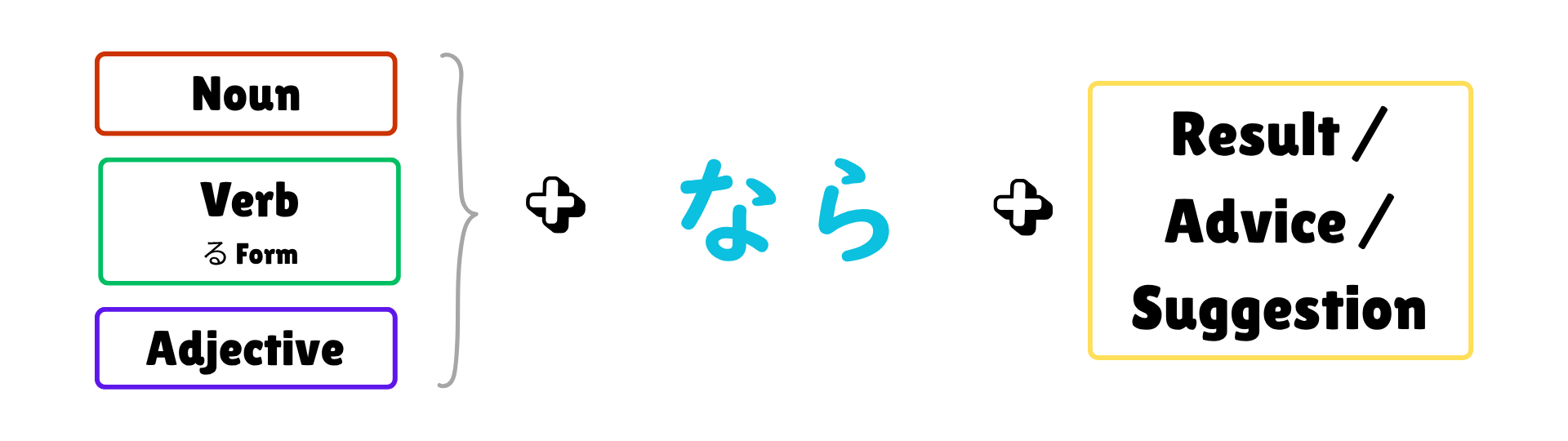
In Japanese, this useful pattern: “if it’s ~, then… / as for ~…” is expressed with なら (nara).
It’s a simple word, but it opens the door to giving advice, making suggestions, and sounding extra natural in conversations.
So… shall we dive in and explore how なら works?


たら (tara)
means “if / when” more general and often used for one-time conditions.
日本に行ったら、富士山を見たいです。
にほんにいったら、ふじさんをみたいです。
nihon ni ittara, fujisan wo mitai desu
If I go to Japan, I want to see Mt. Fuji.
と (to)
means “whenever / if,” used for things that happen automatically or naturally.
春になると、花がさきます。
はるになると、はながさきます。
haru ni naru to, hana ga sakimasu
When spring comes, flowers bloom.
💡 Tip:
Unlike もし〜たら (moshi ~ tara) or ば (ba), なら(nara) often responds to what the other person said.
It feels like: “As for that… then this.”

東京なら、おいしいラーメン屋がたくさんあります。
とうきょうなら、おいしいらーめんやがたくさんあります。
toukyou nara, oishii raamen-ya ga takusan arimasu
If it’s Tokyo, there are lots of delicious ramen shops.
東京ディズニーシーに 行くなら、朝早いほうがいいよ。
とうきょうでぃずにーしーにいくなら、あさはやいほうがいいよ。
toukyou dizunii shii iku nara, asa hayai hou ga ii yo
If you go to Tokyo DisneySea, it’s better to go early in the morning.
暑いなら、水をたくさん のんでください。
あついなら、みずをたくさんのんでください。
atsui nara, mizu wo takusan nonde kudasai
If it’s hot, please drink plenty of water.
沖縄料理なら、このレストランがおすすめです。
おきなわりょうりなら、このれすとらんがおすすめです。
okinawa ryouri nara, kono resutoran ga osusume desu
If it’s Okinawan food, this restaurant is recommended.
おすしを食べるなら、金沢に行くといいよ。
おすしをたべるなら、かなざわにいくといいよ。
osushi wo taberu nara, Kanazawa ni iku to ii yo
If you want to eat sushi, Kanazawa is a great place to go.
いそがしいなら、休んでください。
いそがしいなら、やすんでください。
isogashii nara, yasunde kudasai
If you’re busy, please take a rest.
元気なら、いっしょにハイキングをしましょう。
げんきなら、いっしょにはいきんぐをしましょう。
genki nara, issho ni haikingu wo shimashou
If you’re well, let’s go hiking together.
日本語を勉強するなら、ひかり先生がおすすめだよ!
にほんごをべんきょうするなら、ひかりせんせいがおすすめだよ!
nihongo o benkyou suru nara, hikari sensei ga osusume da yo!
If you’re going to study Japanese, Hikari-sensei is the best choice!

- Grammar Point: なら (nara)
- JLPT Level: N4
- Meaning: If, in the case that, as for
- Quick Explanation: なら is used to set a condition (if ~ then ~) or to highlight a topic (as for ~).
It often appears when responding to something the other person has said, making it feel conversational and natural.
So that’s how we use なら in Japanese!
It’s a super useful word for giving advice, making suggestions, or responding naturally in conversations.
Remember: なら often feels like you’re picking up the thread of what the other person just said, so it makes your Japanese sound smooth and interactive!
Your Sensei,
Hikari 👩🏻🏫
Get Hikari's JLPT Mock Exams & Preparation Lessons!
Whether you are studying to pass the JLPT or looking for a challenge in your learning journey, these courses are perfect for you!
Join my ニュースレター Newsletter 📩
You can expect an email from me once a week about Japanese culture.
Don't worry, your information will not be shared.
We hate SPAM. We will never sell your information, for any reason.