JLPT N4 - Grammar 🌟 かな kana

Have you ever talked to yourself in your head, like…
“I wonder if it’s going to rain today.”
or “Maybe I should study… or maybe take a nap first.”
In Japanese, we have a perfect little word for those soft, inner thoughts, かな (kana).
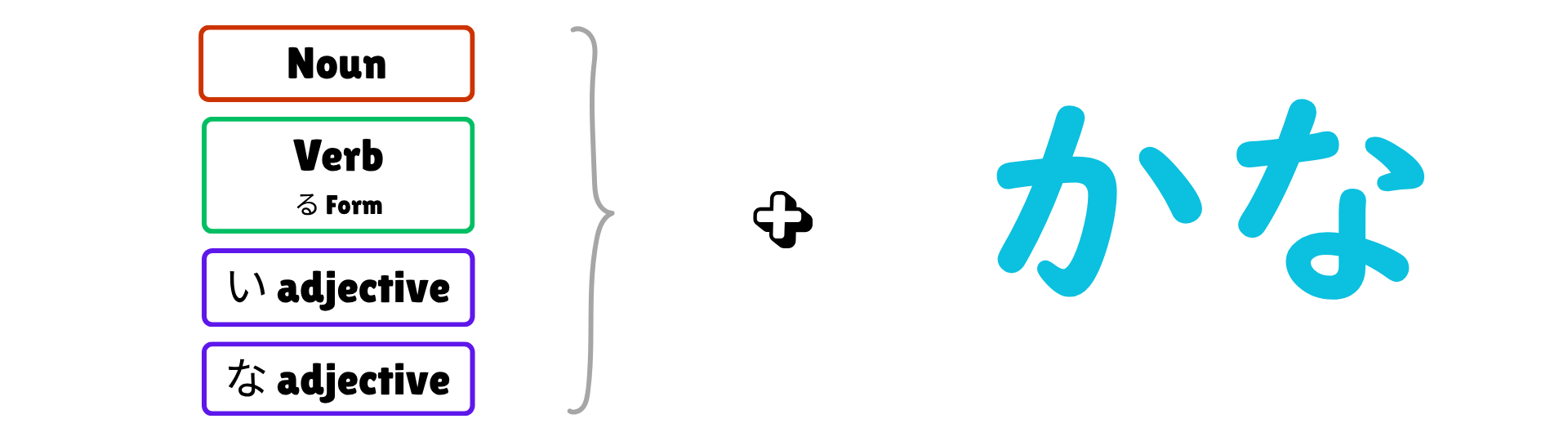
It’s an N4 grammar point that expresses gentle wondering, hesitation, or self-questioning,
not a direct question to someone else, but more like a quiet thought to yourself.
We use かな when we’re unsure, thinking out loud, or trying to ask something indirectly,
like a mix of curiosity, doubt, and a little bit of daydreaming.
Let’s take a closer look at かな,
one of the most natural ways to express your inner voice in Japanese!


か (ka) vs. かな (kana)
Both can show questions, but the nuance is very different.
か (ka) is for clear, direct questions - when you expect an answer from someone.
かな (kana) is for soft, internal wondering - when you’re thinking to yourself or asking indirectly.
明日、雨が降りますか?
あした、あめ が ふります か?
ashita, ame ga furimasu ka?
Will it rain tomorrow? (asking someone directly)
明日、雨が降るかな。
あした、あめ が ふる かな。
ashita, ame ga furu kana.
I wonder if it’ll rain tomorrow. (thinking to yourself)
かしら (kashira) vs. かな (kana)
かしら (kashira) also means “I wonder,” but it’s more feminine and elegant in tone,
often used by women or in written dialogue (like novels or drama scripts).
彼、もう来たかしら。
かれ、もう きた かしら。
kare, mou kita kashira.
I wonder if he’s arrived.
かな (kana) sounds more neutral and casual,
so it’s perfect for everyday conversation for anyone, male or female.
💡 Tip:
Adding a long vowel (かなあ / kanaa) makes it sound even more natural and emotional.

明日、雨が降るかな。
あした、あめ が ふる かな。
ashita, ame ga furu kana.
I wonder if it’ll rain tomorrow.
日本語のテスト、うまくいったかな。
にほんご の てすと、うまく いった かな。
nihongo no tesuto, umaku itta kana.
I wonder if I did well on my Japanese test.
この服、私に似合うかな。
この ふく、わたし に にあう かな。
kono fuku, watashi ni niau kana.
I wonder if this outfit looks good on me.
ちゃんと間に合うかな。
ちゃんと まにあう かな。
chanto maniauu kana.
I wonder if I’ll make it on time.
こんな時間に電話しても大丈夫かな。
こんな じかん に でんわ して も だいじょうぶ かな。
konna jikan ni denwa shite mo daijoubu kana.
I wonder if it’s okay to call at this hour.
今日、寒いかな。
きょう、さむいかな。
kyou, samui kana.
I wonder if today is cold.
あの人、元気かな。
あの ひと、げんき かな。
ano hito, genki kana.
I wonder how that person’s doing.

- Grammar Point: かな (kana)
- JLPT Level: N4
- Meaning: I wonder, should I, maybe
- Quick Explanation: Used at the end of a sentence to express your inner thoughts, hesitation, or curiosity.
It’s not a clear question, rather, it shows what you’re thinking quietly to yourself or asking indirectly.
So that’s how we use かな!
It’s one of the most natural ways to express what’s going on in your head, softly, kindly, and with a little bit of emotion.
「この文法、使えるかな?」って思ったら、ぜひチャレンジしてみてね!
「この ぶんぽう、つかえる かな?」って おもったら、ぜひ ちゃれんじ して みて ね!
"kono bunpou, tsukaeru kana?" tte omottara, zehi charenji shite mite ne!
If you ever think, “I wonder if I can use this grammar point,” just try it out!
Now it’s your turn, try making your own sentences with かな, and share your thoughts in Japanese!
Your Sensei,
Hikari 👩🏻🏫
Get Hikari's JLPT Mock Exams & Preparation Lessons!
Whether you are studying to pass the JLPT or looking for a challenge in your learning journey, these courses are perfect for you!
Join my ニュースレター Newsletter 📩
You can expect an email from me once a week about Japanese culture.
Don't worry, your information will not be shared.
We hate SPAM. We will never sell your information, for any reason.