JLPT N4 - Grammar 🌟 かどうか ka dou ka
Have you ever been in a situation where you’re just not sure? Maybe you’re wondering if your crush likes you, if that new ramen place is actually good, or if it’s going to rain during your long-awaited picnic.
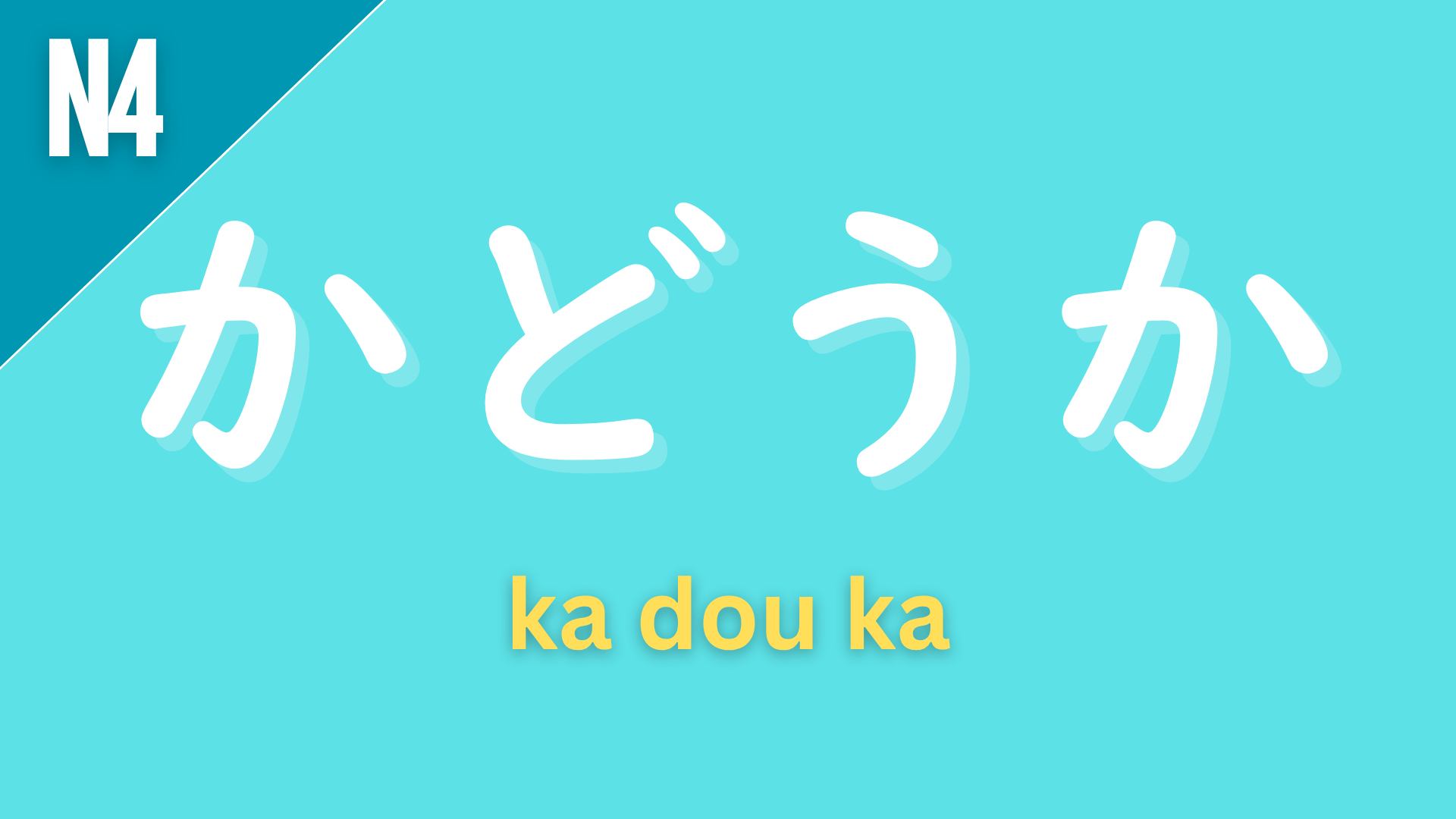
In English, we use "whether or not" to talk about these Yes-or-No possibilities. In Japanese, we have a super handy expression for exactly that: かどうか (ka dou ka).
Imagine you're invited to a karaoke party. Your friend asks, "Can you come?" and you're still checking your schedule. You’d say, "I'll let you know whether or not I can go."
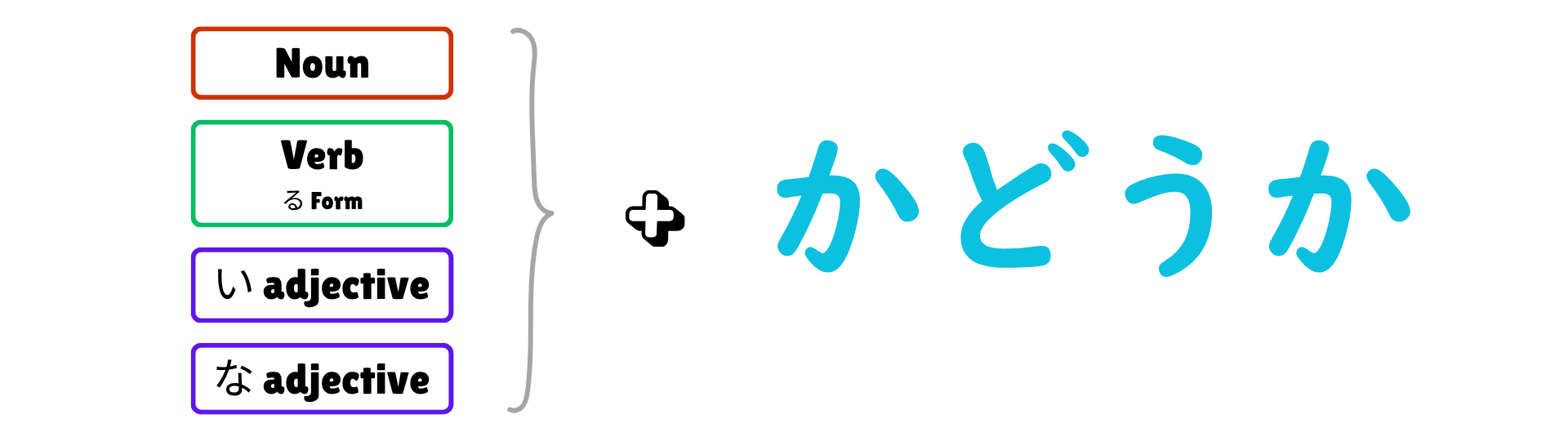
It’s an N4 level grammar point that helps you combine a Yes/No question into a larger sentence. Whether you’re double-checking facts or expressing doubt, this phrase makes your Japanese sound much more natural and sophisticated.
Ready to clear up the mystery of "whether or not"?
Let’s dive in!


か (ka) vs かどうか (ka douka)
You might wonder, “Can't I just use か?” Yes, you can. However, the nuance changes slightly.
か (ka)
Used when there is a question word like who, what, where, or when.
どこに行くか、教えてください。
どこに いく か、おしえて ください。
doko ni iku ka, oshiete kudasai.
Please tell me where you are going.
かどうか (ka douka)
Used specifically for Yes/No situations where there is no question word.
It feels more balanced because it considers both the “Yes” and “No” outcomes equally.
カラオケに行くかどうか、教えてください。
からおけ に いく かどうか、おしえて ください。
karaoke ni iku ka dou ka, oshiete kudasai.
Please let me know whether or not you will go to karaoke.

明日、雨が降るかどうか天気予報をチェックします。
あした、あめ が ふる かどうか てんきよほう を ちぇっく します。
ashita, ame ga furu ka dou ka tenki yohou o chekku shimasu.
I will check the weather forecast to see whether or not it will rain tomorrow.
鍵をかけたかどうか心配になって、家に戻りました。
かぎ を かけた かどうか しんぱい に なって、いえ に もどりました。
kagi o kaketa ka dou ka shinpai ni natte, ie ni modorimashita.
I became worried about whether or not I locked the door, so I went back home.
新しいメニューがこれでいいかどうか、店長に聞いてみよう。
あたらしい めにゅう が これ で いい かどうか、てんちょう に きいて みよう。
atarashii menyuu ga kore de ii ka dou ka, tenchou ni kiite miyou.
I will try asking the manager whether or not this new menu is okay.
昨日の海は冷たかったかどうか教えて。
きのう の うみ は つめたかった かどうか おしえて。
kinou no umi wa tsumetakatta ka dou ka oshiete.
Tell me whether or not the sea was cold yesterday.
好きな人が自分のことを好きかどうか、毎日考えてしまいます。
すき な ひと が じぶん の こと を すき かどうか、まいにち かんがえて しまいます。
suki na hito ga jibun no koto o suki ka dou ka, mainichi kangaete shimaimasu.
I end up thinking every day about whether or not the person I like likes me.
このアプリが便利だったかどうか、あとで報告してください。
この あぷり が べんり だった かどうか、あと で ほうこく して ください。
kono apuri ga benri datta ka dou ka, ato de houkoku shite kudasai.
Please report later whether or not this app was useful.
彼が独身かどうか、さりげなく友達に聞いてみようと思う。
かれ が どくしん かどうか、さりげなく ともだち に きいて みよう と おもう。
kare ga dokushin ka dou ka, sarigenaku tomodachi ni kiite miyou to omou.
I am thinking of casually asking my friend whether or not he is single.
犯人が彼女だったかどうかは、いまだにわかりません。
はんにん が かのじょ だった かどうか は、いまだに わかりません。
hannin ga kanojo datta ka dou ka wa, imada ni wakarimasen.
We still do not know whether or not she was the culprit.

- Grammar Point: かどうか (ka douka)
- JLPT Level: N4
- Meaning: Whether or not…
- Quick Explanation: Use this when you want to embed a Yes/No question into a sentence. It’s perfect for expressing uncertainty or asking for confirmation.
So that’s how we use かどうか!
It’s a powerful and flexible expression for navigating the “maybe” zones of life in Japanese. Whether you're checking a recipe, confirming the weather, or asking about a friend's plans, かどうか helps your speech sound smooth, clear, and polite.
自分の日本語が伝わるかどうか、勇気を出して誰かに話しかけてみてね!
じぶん の にほんご が つたわる かどうか、ゆうき を だして だれか に はなしかけて みて ね。
jibun no nihongo ga tsutawaru ka dou ka, yuuki o dashite dareka ni hanashikakete mite ne.
Whether or not your Japanese will come across, be brave and try speaking to someone!
Now it’s your turn!
Try making a sentence about something you're curious about using かどうか. Practice makes progress!
Your Sensei,
Hikari 👩🏻🏫✨
Get Hikari's JLPT Mock Exams & Preparation Lessons!
Whether you are studying to pass the JLPT or looking for a challenge in your learning journey, these courses are perfect for you!
Join my ニュースレター Newsletter 📩
You can expect an email from me once a week about Japanese culture.
Don't worry, your information will not be shared.
We hate SPAM. We will never sell your information, for any reason.