JLPT N4 - Grammar 🌟 はずだ / はずがない hazuda hazuganai
You know how Japanese people often speak kind of softly, without making strong statements?
Well sometimes you do want to sound sure, right?
Like when you’re thinking, “I’m sure that…” or “It must be true!”
Or maybe even, “No way, that can’t be right!”
For example…
You spot your friend’s favorite jacket by the door > “He must be here!”
Someone says, “That sushi costs 1 dollar” > “No way, that can’t be true!”
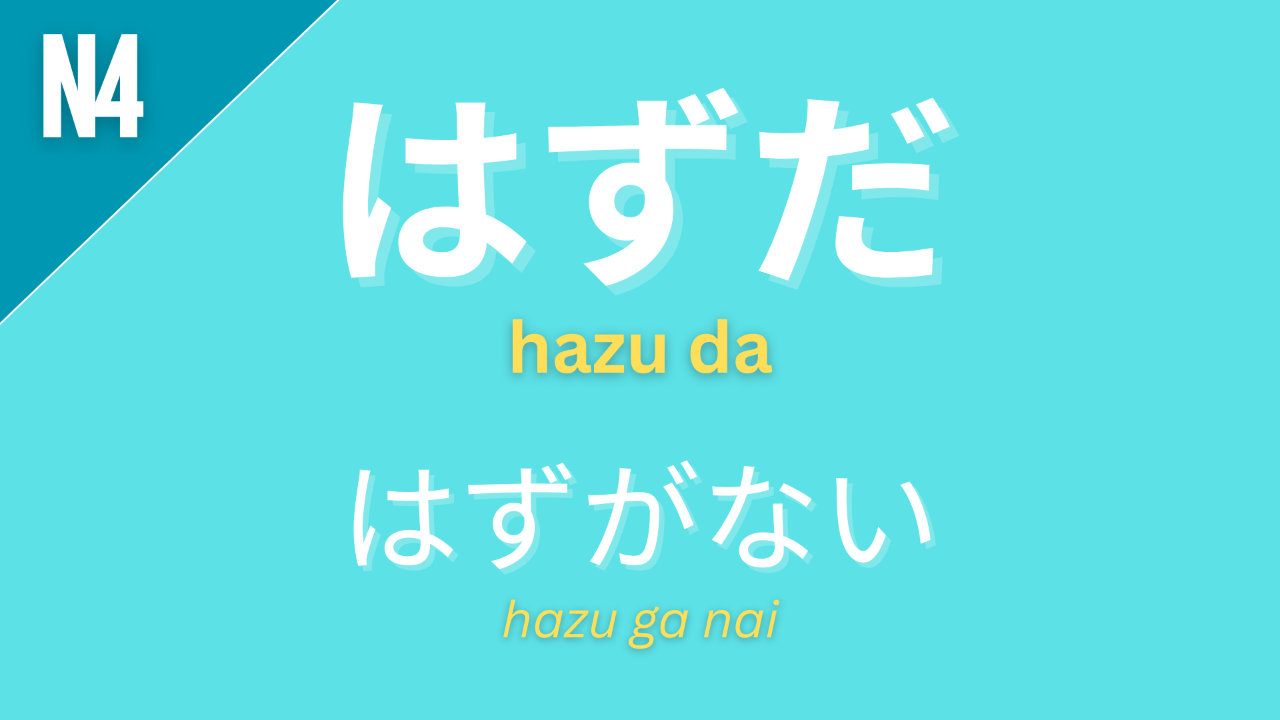
That’s when we use はずだ (hazu da) and its negative form はずがない (hazu ga nai).
They’re super handy for showing your logical expectations, like when something should be true, or when it feels totally impossible.
You’ll hear these a lot in daily life, and especially in mystery stories, whether it’s anime, dramas, or novels, like Detective Conan!
Ready to check it out?


に違いない (ni chigai nai) → must be
Stronger and more confident than はずだ(hazu da).
Compared to はずだ(hazu da), に違いない (ni chigai nai) feels more certain and less flexible.
これだけ証拠があるのだから、犯人はあの人に違いない。
これだけしょうこがあるのだから、はんにんはあのひとにちがいない。
kore dake shouko ga aru no dakara, hannin ha ano hito ni chigai nai.
With all this evidence, that person must be the criminal.

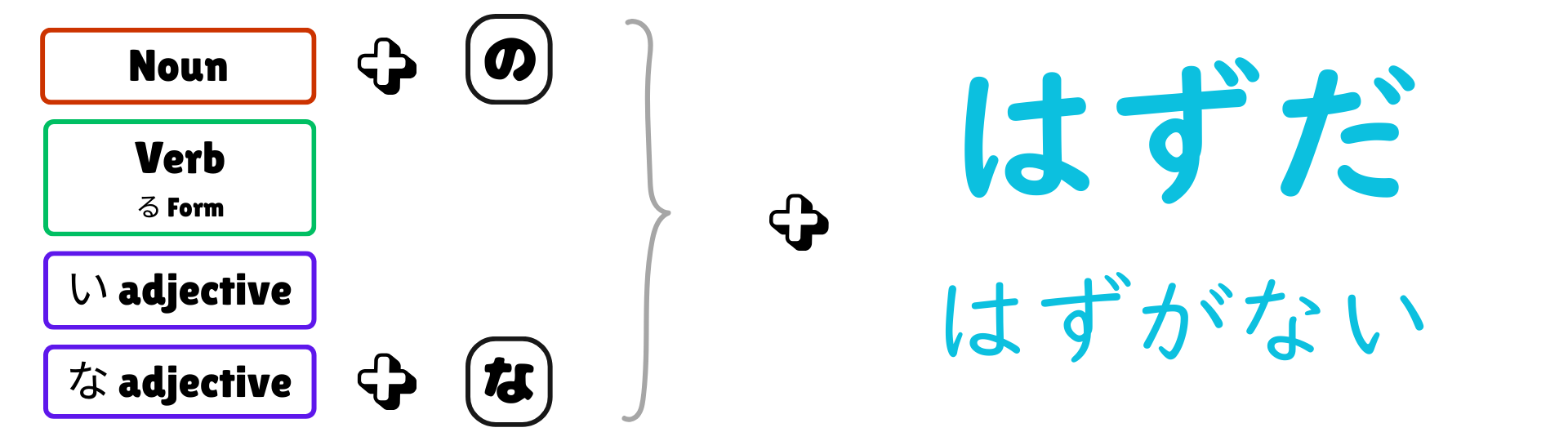
<Noun + の + はずだ / はずがない>
あの人が犯人のはずだ / はずがない。
あのひとがはんにんのはずだ / はずがない。
ano hito ga hannin no hazu da / hazu ga nai.
That person must be the criminal / There’s no way that person is the criminal.
<Verb + はずだ / はずがない>
かれは渋谷駅にいるはずだ / はずがない。
かれはしぶやえきにいるはずだ / はずがない。
kare ha Shibuya-eki ni iru hazu da / hazu ga nai.
He must be at Shibuya Station / There’s no way he’s at Shibuya Station.
<い-adjective + はずだ / はずがない>
かのじょはこの件について くわしいはずだ / はずがない。
かのじょはこのけんについてくわしいはずだ / はずがない。
kanojo ha kono ken ni tsuite kuwashii hazu da / hazu ga nai.
She must know a lot about this matter / There’s no way she knows about this matter.
<な-adjective + な + はずだ / はずがない>
このきのうは便利なはずだ / はずがない。
このきのうはべんりなはずだ / はずがない。
kono kinou ha benri na hazu da / hazu ga nai.
This feature must be useful / There’s no way this feature is useful.
今ごろ、田中さんは家にいるはずだ。
いまごろ、たなかさんはいえにいるはずだ。
ima goro, Tanaka-san ha ie ni iru hazu da.
By now, Mr. Tanaka must be at home.
このねだんで本物のダイヤのはずがないよ。
このねだんでほんもののだいやのはずがないよ。
kono nedan de honmono no daiya no hazu ga nai yo.
At this price, there’s no way it’s a real diamond.
私たちは親友なので、かのじょは何かあったら かならず そうだんしてくれるはずです。
わたしたちはしんゆうなので、かのじょはなにかあったらかならずそうだんしてくれるはずです。
watashitachi ha shinyuu na node, kanojo ha nanika attara kanarazu soudan shite kureru hazu desu.
Since we’re best friends, I’m sure She’ll talk to me if something happens.
あの店、今日は休みのはずがないよ。
あのみせ、きょうはやすみのはずがないよ。
ano mise, kyou ha yasumi no hazu ga nai.
There’s no way that shop is closed today.
<Conversation>
A: さとうさん、今日のミーティングに来ると思う?
さとうさん、きょうのみーてぃんぐにくるとおもう?
satou-kun, kyou no miityingu ni kuru to omou?
Do you think Mr. Sato will come to today’s meeting?
B: 来るはずだよ。きのう、出社するって言ってたし。
くるはずだよ。きのう、しゅっしゃするっていってたし。
kuru hazu da yo. Kinou, shussha suru tte itteta shi.
He must be coming. He said he’d come to the office yesterday.

- Grammar Point: はずだ (hazu da) / はずがない (hazu ga nai)
- JLPT Level: N4
- Meaning: はずだ : “It must be; It should be” / はずがない : “It cannot be; It’s impossible”
- Quick Explanation: はずだ expresses a logical expectation: something should be the case. はずがない is the negative form, showing strong denial: “no way that’s true.”
So that’s how we use はずだ and はずがない in Japanese!
They’re perfect for those moments when you want to say “It must be true!” or “No way, that can’t be right!”
コツコツと勉強すれば、日本語力は必ずつき、あなたの自信もそだつはずです。
こつこつとべんきょうすれば、にほんごりょくはかならずつき、あなたのじしんもそだつはずです。
kotsukotsu to benkyou sure ba, Nihongo-ryoku ha kanarazu tsuki, anata no jishin mo sodatsu hazu desu.
If you keep studying step by step, your Japanese skills must be improving, and your confidence must be too.
Now it’s your turn, try making your own sentences with はずだ and はずがない.
What must be true for you? Or what’s something that definitely can’t be true?
Your Sensei,
Hikari 👩🏻🏫✨
Get Hikari's JLPT Mock Exams & Preparation Lessons!
Whether you are studying to pass the JLPT or looking for a challenge in your learning journey, these courses are perfect for you!
Join my ニュースレター Newsletter 📩
You can expect an email from me once a week about Japanese culture.
Don't worry, your information will not be shared.
We hate SPAM. We will never sell your information, for any reason.