JLPT N4 - Grammar 🌟 始める hajimeru
Starting something new is always exciting, right?
Like when you first dive into studying Japanese, start a new job or part-time gig, pick up a fun hobby, or even just hit play on a brand-new anime episode, there’s always that fresh energy at the beginning!
In Japanese, the phrase you’ll want here is 始める (hajimeru).
It’s your go-to for saying “to start doing something,” and trust me, you’ll use it a lot.
I mean, I’ve started dieting many times for my health... but finishing them? Hmm, that’s another story.
Let’s get started!


始める (hajimeru) vs. 始まる (hajimaru)
始める(hajiMEru) is transitive > the subject actively starts something.
始まる(hajiMAru) is intransitive > something begins on its own.
新しい生活を始める
あたらしい せいかつ を はじめる
atarashii seikatsu wo hajimeru
to start a new life (the subject is actively making it happen)
新しい生活が始まる
あたらしい せいかつ が はじまる
atarashii seikatsu ga hajimaru
a new life begins (outside factors or the environment play a role)
新しい生活を始める (atarashii seikatsu wo hajiMEru) suggests that the subject is taking active steps to start a new life. On the other hand, 新しい生活が始まる (atarashii seikatsu ga hajiMAru) carries the nuance that outside factors or the surrounding environment also play a role.
A good example is seasonal changes. In Japan, people value this sense of seasonality, so this expression is often used. While it may sound as if the subject lacks initiative, for Japanese speakers it feels natural and is very commonly used!


赤ちゃんが歩き始めました。
あかちゃんが あるきはじめました。
akachan ga aruki hajime mashita.
The baby started walking.
外で雨が降り始めた。
そとで あめが ふりはじめた。
soto de ame ga furi hajimeta.
It is started to rain outside.
先生が合図したら子供たちが歌い始める。
せんせいが あいずしたら こどもたちが うたいはじめる。
sensei ga aizu shitara kodomo tachi ga utai hajimeru.
When the teacher gives the signal, the children start singing.
日本語の勉強を始めました。
にほんご の べんきょう を はじめました。
nihongo no benkyou wo hajimemashita.
I started studying Japanese.
来月から新しいバイトを始める予定です。
らいげつ から あたらしい ばいと を はじめる よてい です。
raigetsu kara atarashii baito wo hajimeru yotei desu.
I plan to start a new part-time job next month.
彼は急に走り始めました。
かれ は きゅうに はしり はじめました。
kare ha kyuu ni hashiri hajimemashita.
He suddenly started running.
健康のために先週からダイエットを始めたんです。ま、今年に入って、3回目なんだけどね(笑)
けんこう の ため に せんしゅう から だいえっと を はじめた ん です。 ま、ことし に はいって、さんかいめ なん だけどね (わらい)
kenkou no tame ni senshuu kara daietto wo hajimeta n desu. ma, kotoshi ni haitte, san-kaime nan dakedo ne (warai)
I started dieting last week for my health… though it’s already my third time this year (lol).
<Conversation Example>
A: 最近、何か新しいこと始めた?
さいきん、なにか あたらしい こと はじめた?
saikin, nanika atarashii koto hajimeta?
Have you started anything new recently?
B: ひかり先生のポッドキャスト聞き始めたよ!
ひかりせんせい の ぽっどきゃすと ききはじめた よ!
hikari sensei no poddo kyasuto kikihajimeta yo!
Yeah! I started listening to Hikari-sensei’s podcast!

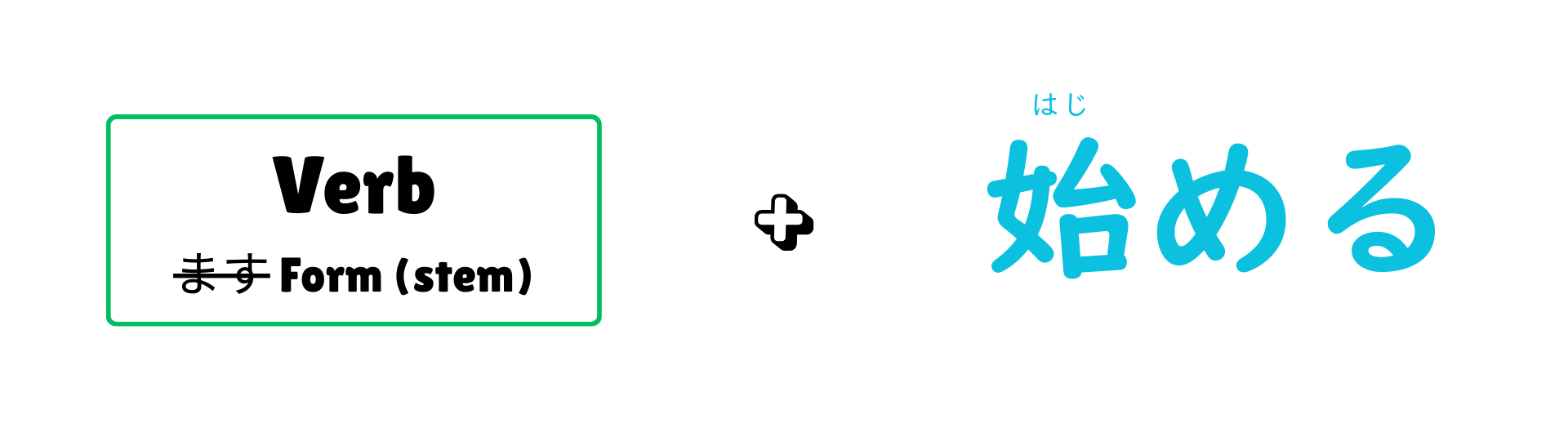
- Grammar Point: 始める (hajimeru)
- JLPT Level: N4
- Meaning: To start, to begin to
- Quick Explanation: Attach 始める to the stem of a verb to say “start doing” that action. Use it to talk about starting studies, habits, jobs, or any activity.
So that’s how we use 始める in Japanese!
最近、何か新しいことを始めましたか?
さいきん、 なにか あたらしい こと を はじめました か?
saikin, nanika atarashii koto wo hajimemashita ka?
Have you started anything new recently?
How about starting your Japanese output right away? I’m sure it’ll be a good start!
Your Sensei,
Hikari 👩🏻🏫
Get Hikari's JLPT Mock Exams & Preparation Lessons!
Whether you are studying to pass the JLPT or looking for a challenge in your learning journey, these courses are perfect for you!
Join my ニュースレター Newsletter 📩
You can expect an email from me once a week about Japanese culture.
Don't worry, your information will not be shared.
We hate SPAM. We will never sell your information, for any reason.