JLPT N4 - Grammar 🌟 ございます gozaimasu
Have you ever walked into a department store in Japan and felt like the staff were speaking a super-elegant version of Japanese?
You might hear things like 「ありがとうございます (Arigatou gozaimasu)」 every day, but do you know why we add that long, fancy word at the end?
Maybe you’ve wanted to sound more professional in a business meeting, or show extra respect to someone important, but you weren’t sure how to upgrade your です or あります.
That’s where ございます (gozaimasu) comes in!
It is the extra-polite version of あります (there is) or です (it is).
Using it makes you sound incredibly polished and professional. It’s like putting on a linguistic tuxedo for your Japanese!
Let’s learn how to use this beautiful expression to level up your politeness and impress everyone around you.
Ready? Here we go!

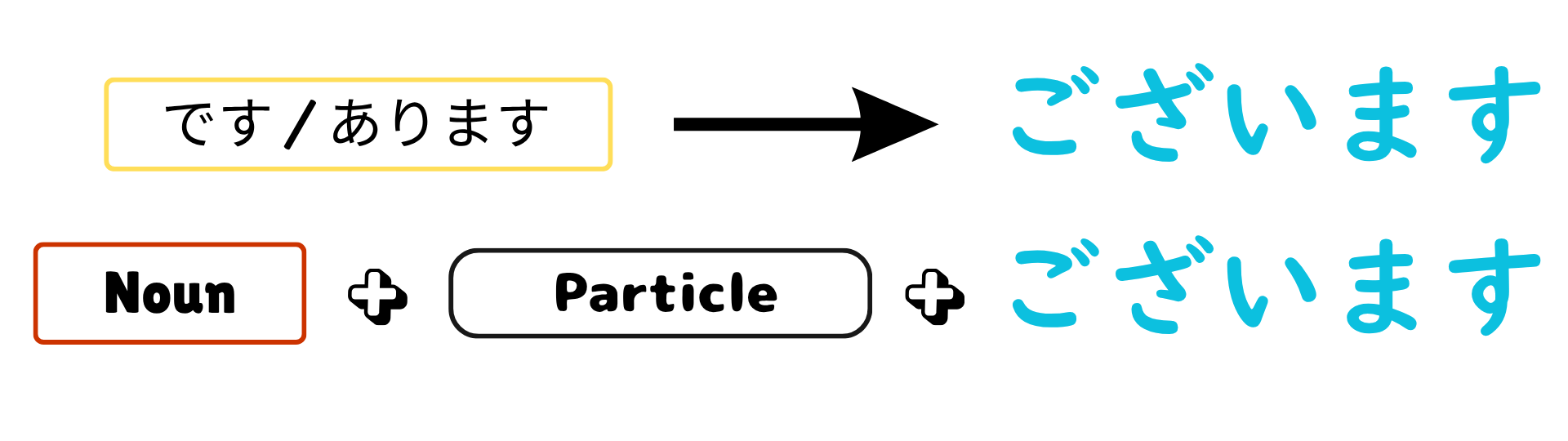

How to Upgrade です (desu) / あります (arimasu) to ございます (gozaimasu)
Let’s look at this step by step!
1. あります(arimasu) → ございます(gozaimasu)
ありません(arimasen) → ございません(gozaimasen) for things
<Casual / Polite>
ショーケースの中にケーキがあります。
しょーけーす の なか に けーき が あります。
sho-keesu no naka ni keeki ga arimasu.
There is a cake in the display case.
ショーケースの中にケーキはありません。
しょーけーす の なか に けーき は ありません。
sho-keesu no naka ni keeki wa arimasen.
There is no cake in the display case.
Let’s make it more polite!
<Very Polite>
ショーケースの中にケーキがございます。
しょーけーす の なか に けーき が ございます。
shookeesu no naka ni keeki ga gozaimasu.
There is a cake in the display case.
ショーケースの中にケーキはございません。
しょーけーす の なか に けーき は ございません。
shookeesu no naka ni keeki wa gozaimasen.
There is no cake in the display case.
2. です(desu) → でございます(de gozaimasu)
ではありません(deha arimasen)(じゃありません ja arimasen) → ではございません (deha gozaimasen) for statements
<Casual / Polite>
今日の会議は、私が進行役です。
きょう の かいぎ は、わたし が しんこうやく です。
kyou no kaigi ha, watashi ga shinkouyaku desu.
I am the facilitator for today’s meeting.
私は担当者ではありません。
わたし は たんとうしゃ では ありません。
watashi wa tantousha dewa arimasen.
I am not the person in charge.
Let’s make it more formal!
<Very Polite>
今日の会議、私が進行役でございます。
きょう の かいぎ、わたし が しんこうやく で ございます。
kyou no kaigi, watashi ga shinkouyaku de gozaimasu.
I am the facilitator for today’s meeting.
私は担当者ではございません。
わたし は たんとうしゃ では ございません。
watashi wa tantousha dewa gozaimasen.
I am not the person in charge.
⚠️ Tip: います does NOT become ございます
When talking about people, Japanese uses います, but います never changes to ございます. For people, おります is used instead, and it follows a different grammar pattern.
Fixed Phrases with ございます
In daily life and customer service, ございます often appears in fixed phrases.
In these cases, it’s best not to overthink the grammar. Instead of breaking them down word by word, just memorize them as they are!
ありがとうございます。
arigatou gozaimasu.
Thank you very much.
おはようございます。
ohayou gozaimasu.
Good morning. (polite)
おめでとうございます。
omedetou gozaimasu.
Congratulations.
申し訳ございません。
もうしわけ ございません。
moushiwake gozaimasen.
I’m very sorry. / I sincerely apologize.

こちら新作の抹茶スイーツでございます。
こちら しんさく の まっちゃ すいーつ で ございます。
kochira shinsaku no matcha suiitsu de gozaimasu.
This is our new matcha dessert.
何かご質問はございますか?
なにか ごしつもん は ございます か?
nanika goshitsumon wa gozaimasu ka?
Do you have any questions?
この階にはお手洗いはございません。2階と4階にございます。
この かい に は、おてあらい は ございません。にかい と よんかい に ございます。
kono kai ni wa, otearai wa gozaimasen. nikai to yonkai ni gozaimasu.
There is no restroom on this floor. They are located on the 2nd and 4th floors.
本日担当をいたします鈴木でございます。
ほんじつ たんとう を いたします すずき で ございます。
honjitsu tantou wo itashimasu Suzuki de gozaimasu.
I am Suzuki, and I will be in charge today. (very polite)
申し訳ございません、こちら立入禁止区域でございます。
もうしわけ ございません、こちら たちいり きんし くいき で ございます。
moushiwake gozaimasen, kochira tachiiri kinshi kuiki de gozaimasu.
I’m very sorry, this is a restricted area.
お電話ありがとうございます。あいうえお株式会社でございます。
おでんわ ありがとう ございます。あいうえお かぶしきがいしゃ で ございます。
odenwa arigatou gozaimasu. aiueo kabushikigaisha de gozaimasu.
Thank you for calling. This is Aiueo Corporation.

- Grammar Point: ございます (gozaimasu)
- JLPT Level: N4
- Meaning: To be, to exist, is (very polite form of あります / です)
- Quick Explanation: ございます is a very polite expression used in formal situations such as customer service, business, hotels, and official announcements.
So that’s how we use ございます!
It’s a powerful expression that instantly makes your Japanese sound more polite, professional, and trustworthy. You’ll hear it all the time in shops, customer service, and business situations in Japan.
ご質問がございましたら、お知らせください。
ごしつもんがございましたら、おしらせください。
Goshitsumon ga gozaimashitara, oshirase kudasai.
If you have any questions, please let us know.
Now it’s your turn!
Try upgrading one of your usual sentences using ございます and see how much more polished it sounds.
Even small changes like this can make a big difference in real-life Japanese.
Your Sensei,
Hikari 👩🏻🏫✨
Get Hikari's JLPT Mock Exams & Preparation Lessons!
Whether you are studying to pass the JLPT or looking for a challenge in your learning journey, these courses are perfect for you!
Join my ニュースレター Newsletter 📩
You can expect an email from me once a week about Japanese culture.
Don't worry, your information will not be shared.
We hate SPAM. We will never sell your information, for any reason.