JLPT N4 - Grammar 🌟 ば ba
Have you ever wanted to say something like, “If you do this, then that will happen” in Japanese?
Maybe you’re giving advice, talking about habits, or imagining a possible future,
“If you study every day, you’ll improve.”
“If it rains, the event will be canceled.”
“If I had more time, I’d travel more.”
That’s when ば (ba) becomes your best friend!
ば is a very useful N4 grammar pattern that expresses conditions.
It connects two ideas in a logical way: “If A happens, then B naturally follows.”
You’ll hear it a lot when people talk about general rules, advice, or possibilities. Things that feel reasonable, logical, or “that’s just how it works.”
Once you get used to ば, you’ll be able to explain causes, give suggestions, and talk about “what if” situations much more smoothly in Japanese.
So..ready to learn how to connect ideas using “if something happens, something else follows” logic? Let’s dive into ば and make your Japanese sound clearer and more natural!


たら(tara) vs と(to) vs ば (ba)
All of these can be translated as “if” in English, but in Japanese, each one has a different role and feeling. Understanding these differences will help you choose the most natural expression for each situation!
たら (tara) - When, if something actually happens
たら is one of the most flexible and commonly used conditional forms in everyday Japanese.
It focuses on what happens after a certain action or situation is completed and is often used for real-life situations.
This form is very natural when talking about personal intentions, requests, suggestions, or plans. Because of that, it sounds casual, friendly, and conversational. It’s especially common when you’re describing a specific situation or a one-time event rather than a general rule.
時間があったら、遊びに来てください。
じかんがあったら、あそびにきてください。
jikan ga attara, asobi ni kite kudasai.
If you have time, please come visit.
と (to) - Automatic, always-true result
と is used when the result happens automatically and consistently every time the condition is met.
There is no personal choice, intention, or decision involved. The result simply occurs as a natural or mechanical consequence.
Because of this, と often appears in explanations of machines, systems, rules, habits, or natural laws. It sounds objective and factual rather than emotional or personal.
このボタンを押すと、ドアが開きます。
このぼたんをおすと、どあがひらきます。
kono botan wo osu to, doa ga hiraki masu.
If you press this button, the door opens.
ば (ba) - Logical condition → natural result
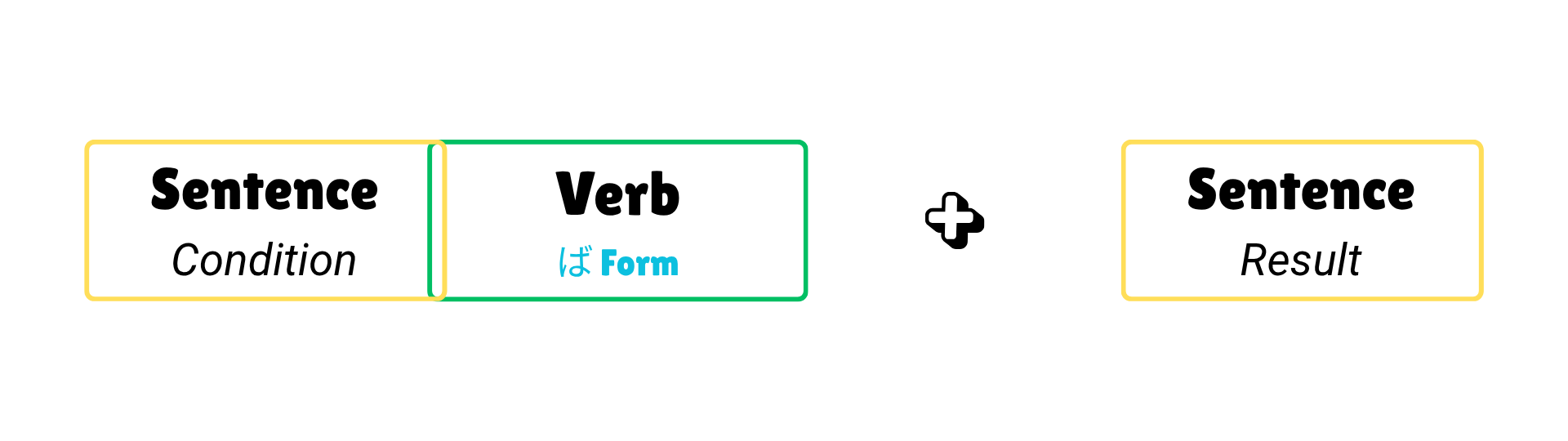
ば is used to express a logical relationship where the result naturally follows once the condition is satisfied.
It often sounds explanatory, reason-based, and slightly more formal than たら.
This form is commonly used when giving advice, explaining general truths, or talking about cause-and-effect relationships. The result feels like a natural consequence rather than a deliberate action taken in the moment.
時間があれば、映画を見ます。
じかんがあれば、えいがをみます。
jikan ga areba, eiga wo mimasu.
If I have time, I watch a movie.
💡 Quick Tip
たら (tara) - real situations, plans, requests
と (to) - automatic, always happens
ば (ba) - logical condition and natural result


早く起きれば、朝食をゆっくり食べられます。
はやく おきれば、ちょうしょく を ゆっくり たべられます。
hayaku okireba, choushoku wo yukkuri taberaremasu.
If you wake up early, you can eat breakfast slowly.
十分に寝なければ、疲れがとれません。
じゅうぶん に ねなければ、つかれ が とれません。
juubun ni nenakereba, tsukare ga toremasen.
If you don’t sleep enough, you won’t recover from fatigue.
いま日本に行かなければ、後悔します。
いま にほん に いかなければ、こうかい します。
ima nihon ni ikan kereba, koukai shimasu.
If I don’t go to Japan now, I’ll regret it.
暑ければ、エアコンをつけます。
あつければ、えあこん を つけます。
atsukereba, eakon wo tsukemasu.
If it’s hot, I’ll turn on the air conditioner.
便利ならば、そちらのホテルに泊まります。
べんり ならば、そちら の ほてる に とまります。
benri naraba, sochira no hoteru ni tomarimasu.
If it’s convenient, I’ll stay at that hotel.
外国人旅行者ならば、特別な割引があります。
がいこくじん りょこうしゃ ならば、とくべつ な わりびき が あります。
gaikokujin ryokousha naraba, tokubetsu na waribiki ga arimasu.
If you’re a foreign traveler, there is a special discount.

- Grammar Point: ば (ba)
- JLPT Level: N4
- Meaning: If, when (a condition is met, a natural result follows)
- Quick Explanation: ば is used to express a conditional relationship where if a certain condition happens, a result naturally follows.
It’s often used for general truths, logical outcomes, advice, or hypothetical situations where the result makes sense as a consequence of the condition.
So that’s how we use ば!
It’s perfect when you want to talk about cause-and-effect in a clear, logical way. Especially for habits, rules, advice, and general situations.
少しでも日本語がわかるようになれば、あなたの世界がもっと広がるね!
すこしでも にほんご が わかる よう に なれば、あなた の せかい が もっと ひろがる ね!
sukoshi demo nihongo ga wakaru you ni nareba, anata no sekai ga motto hirogaru ne!
If you can understand even a little Japanese, your world will open up even more!
Try using ば when you want to explain conditions or give advice naturally.
Your Japanese will sound clearer, smarter, and more confident.
Your Sensei,
Hikari 👩🏻🏫✨
Get Hikari's JLPT Mock Exams & Preparation Lessons!
Whether you are studying to pass the JLPT or looking for a challenge in your learning journey, these courses are perfect for you!
Join my ニュースレター Newsletter 📩
You can expect an email from me once a week about Japanese culture.
Don't worry, your information will not be shared.
We hate SPAM. We will never sell your information, for any reason.