JLPT N4 - Grammar 🌟 あとで atode
“Did you do your homework?”, “I’m busy(playing a game)! I’ll do it later.”
I think that’s a universal conversation in households all around the world, right? (lol)
And it’s not just homework, “I’ll call you later,” or “Let’s talk after this meeting.” We use “not now, but later” almost every single day.
In Japanese, that’s where あとで (ato de) comes in!
It’s an N4-level grammar point, and it’s super handy for talking about things that happen after something else, or simply “later.”
Once you learn あとで, you’ll be able to schedule your actions, delay things politely, and sound much more natural in daily conversations.
Shall we check it out?

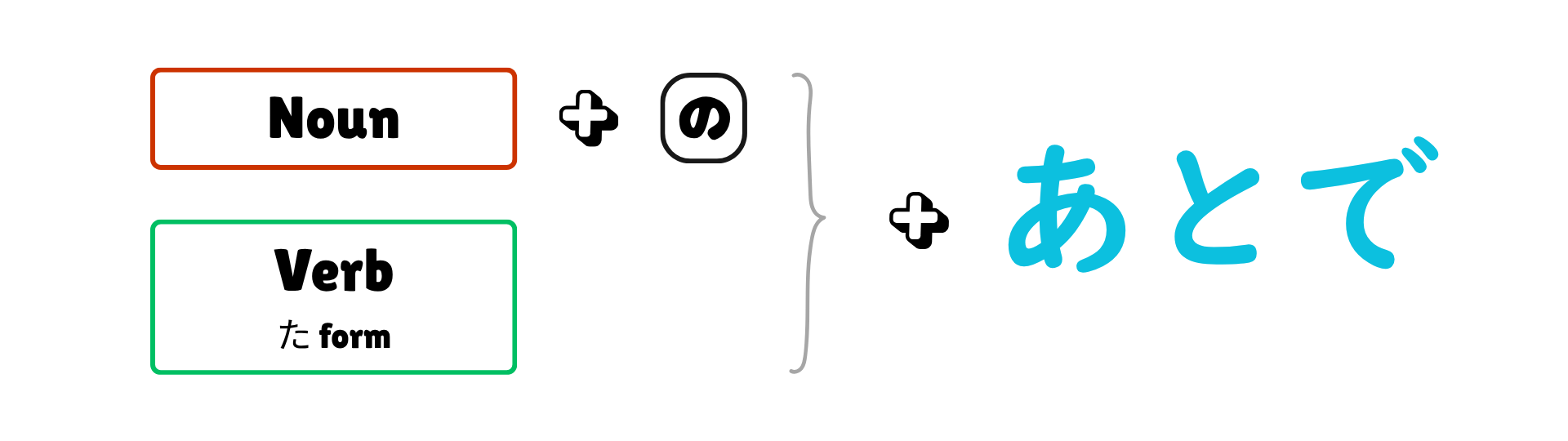

あとで + [Action]
あとで can also appear on its own like an adverb, meaning simply “later.”
そのことについては、あとで連絡します。
そのこと について は、あとで れんらく します。
sono koto ni tsuite ha, ato de renraku shimasu.
’ll contact you about that later.
のちに (nochi ni)
This also means “later, after,” but it’s more formal and often used in writing, news, or historical contexts.
彼は大学を卒業したのちに海外で働き始めた。
かれ は だいがく を そつぎょう した のちに かいがい で はたらき はじめた。
kare ha daigaku wo sotsugyou shita nochi ni kaigai de hataraki hajimeta.
After graduating from university, he began working overseas.
💡 Tip:
あとで (ato de) → everyday, casual, usually near future (later today, after a task, etc.)
のちに (nochi ni) → formal, written, or distant in time (history, official documents, news)

前回のレッスンを復習をしたあとで、次のレッスンに進みます。
ぜんかい の れっすん を ふくしゅう を した あとで、つぎ の れっすん に すすみます。
zenkai no ressun wo fukushuu wo shita ato de, tsugi no ressun ni susumimasu.
After reviewing the last lesson, we’ll move on to the next one.
郵便局に行ったあとで、図書館に行こう。
ゆうびんきょく に いった あとで、としょかん に いこう。
yuubinkyoku ni itta ato de, toshokan ni ikou.
Let’s go to the library after going to the post office.
写真を撮ったあとで、色を編集します。
しゃしん を とった あとで、いろ を へんしゅう します。
shashin wo totta ato de, iro wo henshuu shimasu.
After taking the photo, I’ll edit the colors.
仕事のあとで、飲みに行きませんか。
しごと の あとで、のみに いきませんか。
shigoto no ato de, nomi ni ikimasen ka.
After work, shall we go for a drink?
<Conversation Example>
Mother : 宿題やったの?
しゅくだい やった の?
shukudai yatta no?
Did you do your homework?
Kid : ゲームをしたあとで、宿題をやるよ。ぼくにとってはゲームの方が大事なんだ!
げーむ を した あとで、しゅくだい を やる よ。ぼく に とって は げーむ の ほう が だいじ なんだ!
geemu wo shita ato de, shukudai wo yaru yo. boku ni totte ha geemu no hou ga daiji nanda!
I’ll do my homework after playing games. For me, games are more important!

- Grammar Point: あとで (ato de)
- JLPT Level: N4
- Meaning: After, later
- Quick Explanation: Use あとで when one action happens after another, or when you want to say “later.” Super handy for daily conversations, whether it’s homework, work, or fun plans!
So that’s how we use あとで in Japanese!
It’s a lifesaver when you want to say “later” or “after” in everyday life.
このブログを読み終わったあとで、私のポッドキャストを聞きませんか?
この ぶろぐ を よみおわった あとで、わたし の ぽっどきゃすと を ききませんか?
kono burogu wo yomiowatta ato de, watashi no poddokyasuto wo kikimasen ka?
After finishing this blog, why not listen to my podcast?
Now it’s your turn, try making your own sentence with あとで. What will you do later today?
Your Sensei,
Hikari 👩🏻🏫
Get Hikari's JLPT Mock Exams & Preparation Lessons!
Whether you are studying to pass the JLPT or looking for a challenge in your learning journey, these courses are perfect for you!
Join my ニュースレター Newsletter 📩
You can expect an email from me once a week about Japanese culture.
Don't worry, your information will not be shared.
We hate SPAM. We will never sell your information, for any reason.