JLPT N4 - Grammar 🌟 あまり〜ない amari ~ nai
Have you ever wanted to say something negative in Japanese… but in a more mild and gentle way?
For example, you’re at a friend’s house.
They smile at you and say, “Are you hungry?”
Behind them… there’s a big pot of curry on the stove and smells amazing.
But the truth is, you just had lunch.
You don’t want to say, “No, I’m not hungry at all.” That sounds a little too direct.
Or maybe someone asks you, “Is this food spicy?” and you’re thinking, “Well… it is spicy, but not that spicy.”
In Japanese, saying things too directly can sometimes sound harsh.
So instead of saying a strong “no,” people often choose a softer, gentler expression.
That’s where あまり〜ない (amari ~ nai) comes in.
It means “not very” or “not much,” and it helps you say no politely, while still being honest.
Let’s learn how to use あまり〜ない to sound natural, considerate, and very Japanese.


全然〜ない(zen zen ~ nai) vs あまり〜ない(amari ~ nai)
Both 全然〜ない (zen zen ~ nai) and あまり〜ない (amari ~ nai) are used to express negation, but the strength and tone are very different.
全然〜ない (zenzen ~ nai) - Not at all, zero
全然〜ない (zenzen ~ nai) expresses complete negation.
It means 0% and sounds strong and very direct. It’s often used when you want to clearly say “not at all.”
お腹が全然空いていない。
おなか が ぜんぜん すいて いない。
onaka ga zenzen suite inai.
I’m not hungry at all.
Use 全然〜ない (zenzen ~ nai) when something is completely false or does not exist.
あまり〜ない (amari ~ nai) - Not very, not much
あまり〜ない (amari ~ nai) expresses a low degree or low frequency, not zero.
It sounds softer and more polite, and often leaves room for nuance.
Because of this, it’s commonly used in everyday conversation, polite refusals, and gentle opinions.
お腹があまり空いていない。
おなか が あまり すいて いない。
onaka ga amari suite imasen.
I’m not very hungry.
Use あまり〜ない (amari ~ nai) when you want to be gentle, indirect, or considerate.

私はテレビをあまり見ないです。
わたし は てれび を あまり みない です。
watashi ha terebi wo amari minai desu.
I don’t watch TV very much.
彼は自分のことをあまり話さないです。
かれ は じぶん の こと を あまり はなさない です。
kare ha jibun no koto wo amari hanasanai desu.
He doesn’t talk about himself very much.
私は肉をあまり食べないようにしています。
わたし は にく を あまり たべない よう に して います。
watashi ha niku wo amari tabenai you ni shite imasu.
I try not to eat meat very much.
今日はあまり寒くないですね。
きょう は あまり さむく ない です ね。
kyou ha amari samuku nai desu ne.
It’s not very cold today, is it?
この人は日本ではあまり有名じゃないです。
この ひと は にほん で は あまり ゆうめい じゃ ない です。
kono hito ha nihon de ha amari yuumei ja nai desu.
This person is not very famous in Japan.
この場所はあまり安全ではない。
このばしょはあまりあんぜんではない。
Kono basho wa amari anzen de wa nai.
This place is not very safe.

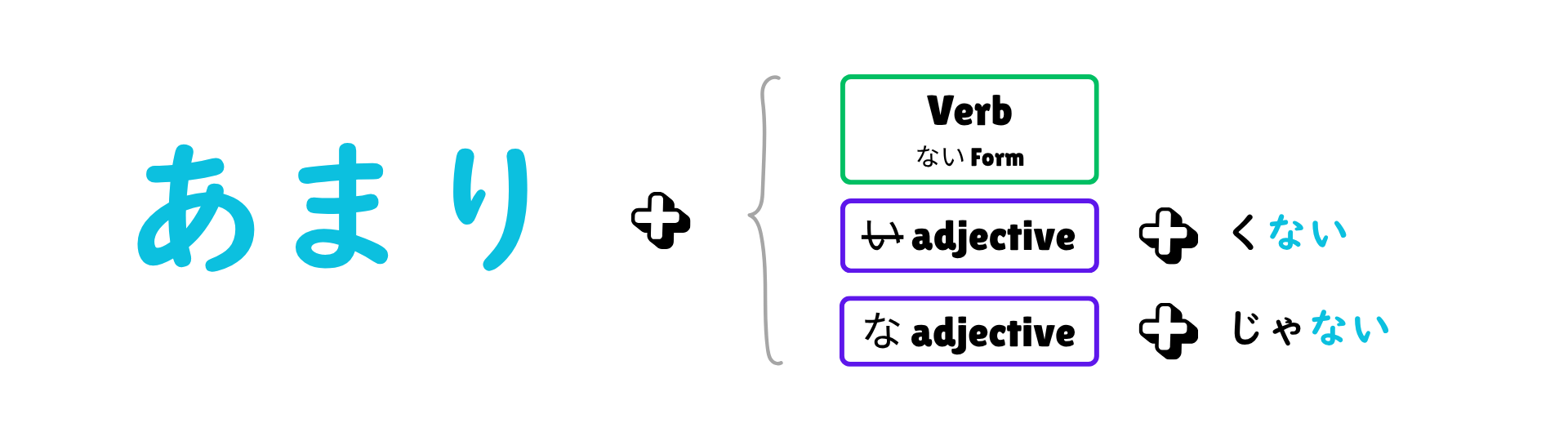
- Grammar Point: あまり〜ない (amari ~ nai)
- JLPT Level: N4
- Meaning: Not very, not much
- Quick Explanation: あまり〜ない is used to express a low degree or low frequency.
It always comes with a negative form and is often used to sound softer and more polite, especially when you want to avoid strong or direct statements.
So that’s how we use あまり〜ない!
It’s a very Japanese way to express negative ideas gently and thoughtfully, without sounding too strong.
いま、日本語にあまり自信がないと思ってても、私と一緒に勉強すれば大丈夫!
いま、にほんご に あまり じしん が ない と おもって いても、わたし と いっしょ に べんきょう すれば だいじょうぶ!
ima, nihongo ni amari jishin ga nai to omotte itemo, watashi to issho ni benkyou sureba daijoubu!
Even if you feel like you’re not very confident in Japanese right now, you’ll be okay if you study together with me!
Now, it’s your turn!
Try making your own sentence with あまり〜ない. Maybe about food, habits, or how you feel today.
Your Japanese will sound more natural, more polite, and much more Japanese.
Your Sensei,
Hikari 👩🏻🏫✨
Get Hikari's JLPT Mock Exams & Preparation Lessons!
Whether you are studying to pass the JLPT or looking for a challenge in your learning journey, these courses are perfect for you!
Join my ニュースレター Newsletter 📩
You can expect an email from me once a week about Japanese culture.
Don't worry, your information will not be shared.
We hate SPAM. We will never sell your information, for any reason.