JLPT N3 - Grammar 🌟 ずに zuni
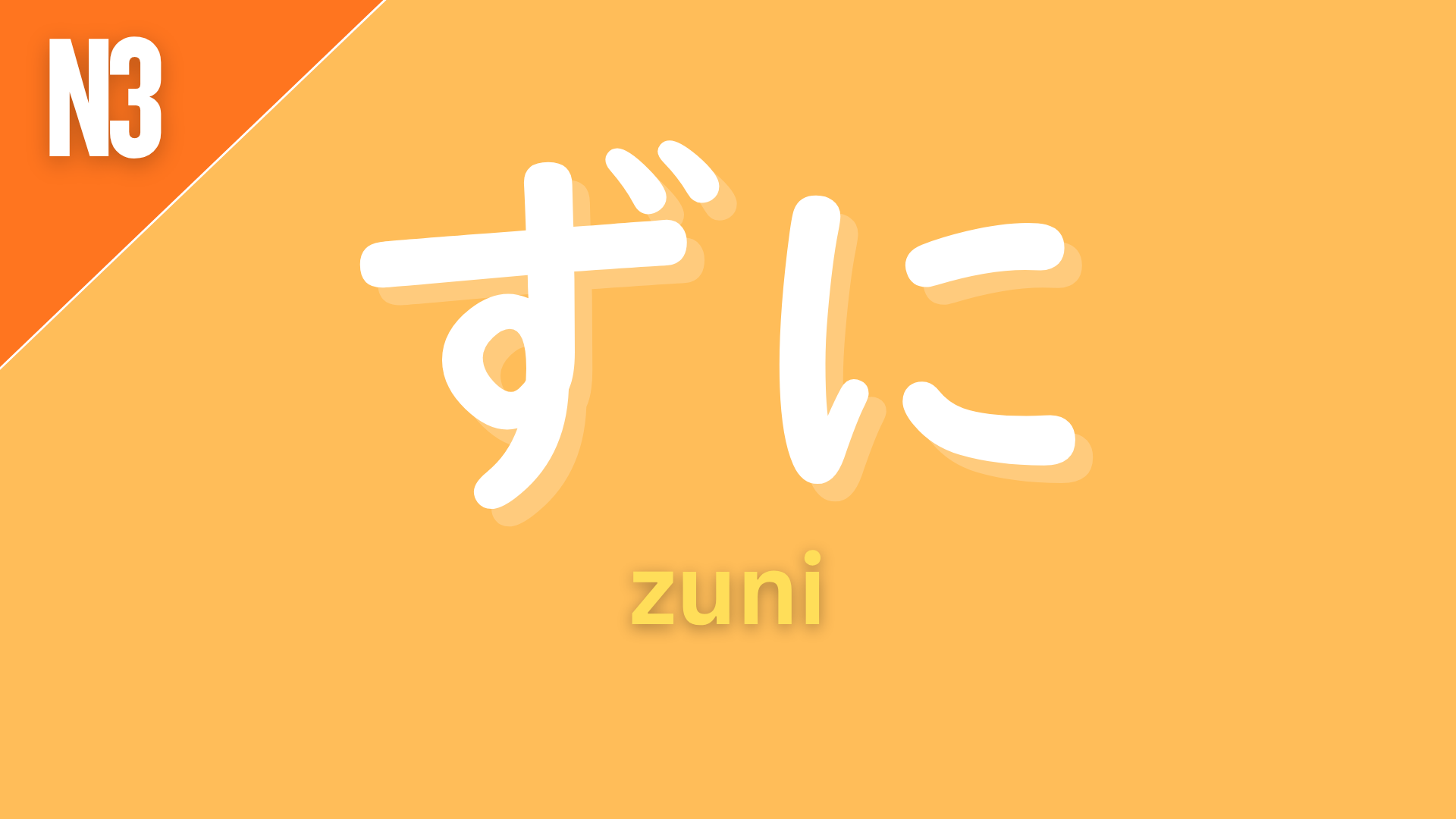
Have you ever done something like this?
You skipped breakfast and rushed out the door.
You stayed up late without turning off the lights.
You kept going without giving up, even when things were tough.
In English, you might say “without doing something.”
In Japanese, there are two common ways to say this.
One is ないで, which you probably learned already.
The other is ずに (zuni)!
They mean almost the same thing, but ずに sounds more formal and written.
You will see it a lot in books, news articles, speeches, and JLPT questions.
Let’s learn how ずに works, and when Japanese prefers this slightly more serious expression.


ないで (naide) vs ずに (zuni)
Both expressions mean “without doing,” but they feel different.
ないで (naide)
ないで is used a lot in daily conversation.
It sounds natural and friendly.
朝ごはんを食べないで、学校へ行きました。
あさごはん を たべない で、がっこう へ いきました。
asagohan wo tabenai de, gakkou e ikimashita.
I went to school without eating breakfast.
You can also use it for requests.
行かないでください。
いかないでください。
ikanaide kudasai.
Please don’t go.
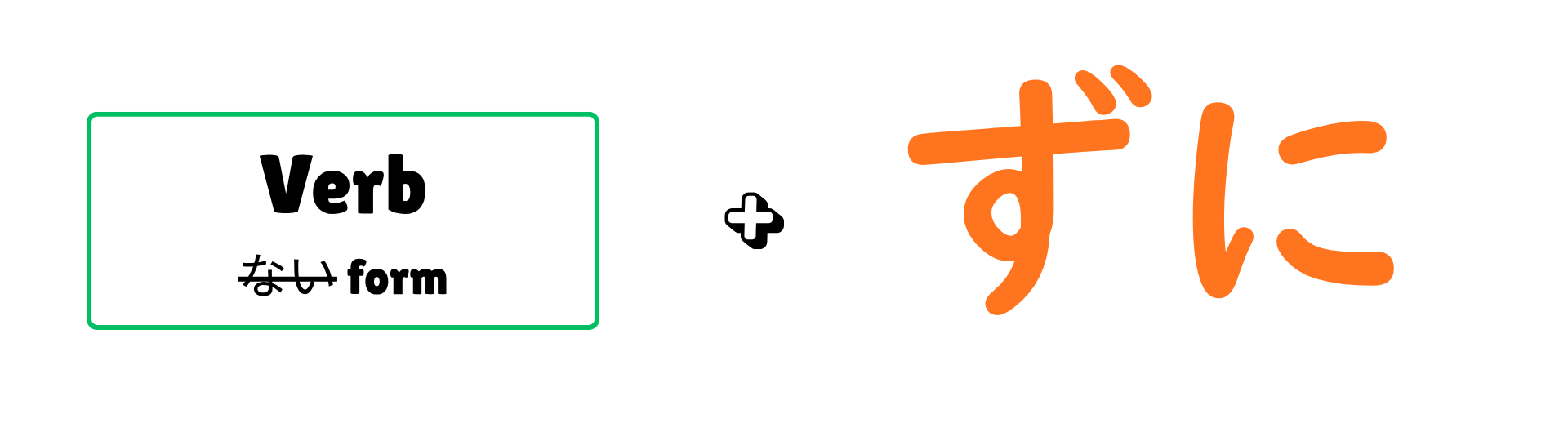
ずに (zuni)
ずに sounds more formal and is often used in writing, speeches, and careful explanations.
朝ごはんを食べずに、学校へ行きました。
あさごはん を たべずに、がっこう へ いきました。
asagohan wo tabezuni, gakkou e ikimashita.
I went to school without eating breakfast.
💡Tip:
You cannot say 行かずにください (ikazu ni kudasai). ずに (zuni) is not used with requests.
💡Tip:
する(suru) changes to せずに(sezu ni)

昨日は電気を消さずに寝てしまいました。
きのう は でんき を けさずに ねて しまいました。
kinou ha denki wo kesazuni nete shimaimashita.
I fell asleep without turning off the lights yesterday.
辞書を使わずに日本語のニュースを読みました。
じしょ を つかわずに にほんご の にゅーす を よみました。
jisho wo tsukawazuni nihongo no nyuusu wo yomimashita.
I read Japanese news without using a dictionary.
友達は何も言わずに教室を出て行った。
ともだち は なにも いわずに きょうしつ を でて いった。
tomodachi ha nanimo iwazuni kyoushitsu wo dete itta.
My friend left the classroom without saying anything.
立ち止まらずに、そのまま出口に進んでください。
たちどまらずに、そのまま でぐち に すすんで ください。
tachidomarazuni, sono mama deguchi ni susunde kudasai.
Please go straight to the exit without stopping.

- Grammar Point: ずに (zuni)
- JLPT Level: N3
- Meaning: Without doing
- Quick Explanation: ずに is used to describe doing something while not doing another action.
So that’s how we use ずに!
You will often see it in written Japanese, polite explanations, and JLPT texts.
すぐに理解できなくても、あきらめずに何回でも復習しましょう!
すぐ に りかい できなくても、あきらめずに なんかい でも ふくしゅう しましょう!
sugu ni rikai dekinakute mo, akiramezuni nankai demo fukushuu shimashou!
Even if you don’t understand it right away, don’t give up. Let’s review it as many times as needed!
Now, it’s your turn! Try making your own sentence with ずに.
Think about something you did without doing something else. It does not have to be perfect. A simple sentence is more than enough.
Your Sensei,
Hikari 👩🏻🏫✨
Get Hikari's JLPT Mock Exams & Preparation Lessons!
Whether you are studying to pass the JLPT or looking for a challenge in your learning journey, these courses are perfect for you!
Join my ニュースレター Newsletter 📩
You can expect an email from me once a week about Japanese culture.
Don't worry, your information will not be shared.
We hate SPAM. We will never sell your information, for any reason.