JLPT N3 - Grammar 🌟 うちに uchi ni

You know those moments when you think,
“I should’ve gone shopping while it was still sunny!”
Or maybe,
“I wish I had started studying Japanese while I was still a student…”
In Japanese, there’s a perfect phrase for expressing these “while you can” moments, うちに (uchi ni).
It means “while” or “before something changes.”
You can use it to talk about things you wish you had done, or things you should do now, before the situation changes.
For example:
“Eat it while it’s still warm!”
or
“Let’s go out while it’s nice and sunny!”
うちに helps you describe those fleeting moments in life, when time, weather, or even feelings might change soon.
So let’s learn how to use うちに naturally, and make the most of every moment, before it slips away! Let’s go!


とき (toki) vs あいだに (aida ni) vs うちに(uchi ni)
All three expressions relate to “when / while / during”, but the feeling and focus are different.
とき is the most neutral, it simply shows when something happens.
It’s about time in general.
テレビを見ているとき、電話がかかってきた。
てれび を みている とき、でんわ が かかって きた。
terebi wo miteiru toki, denwa ga kakatte kita.
The phone rang when I was watching TV.
あいだに focuses on the entire period that something continues.
Something else happens during that time span.
母が買い物に行っているあいだに、掃除をした。
はは が かいもの に いっている あいだに、そうじ を した。
haha ga kaimono ni itteiru aida ni, souji wo shita.
I cleaned the house while my mom was out shopping.
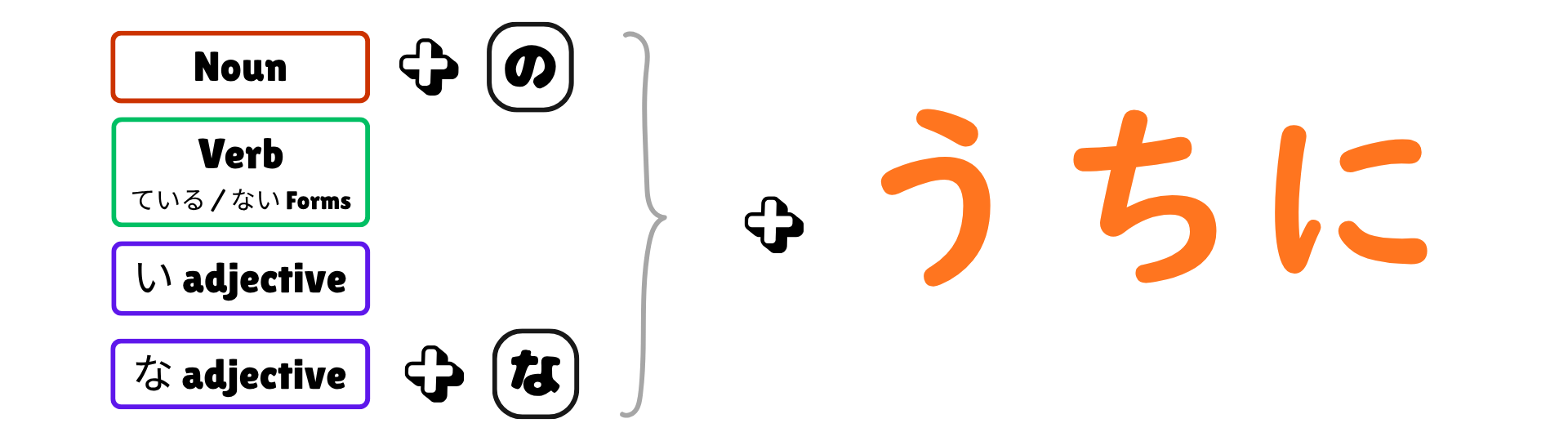
うちに focuses on a limited time or temporary state, before it changes or ends.
It’s often used with a feeling of “before it’s too late” or “while you still can.”
温かいうちに食べてください。
あたたかい うちに たべて ください。
atatakai uchi ni tabete kudasai.
Please eat it while it’s still warm.
💡Summary of Feelings:
とき : general timing (“when”)
あいだに : full duration (“during that period”)
うちに : opportunity before change (“while you still can”)


忘れないうちにメモしておこう。
わすれない うちに めもして おこう。
wasurenai uchi ni memoshite okou.
Let’s take a note before we forget.
話しているうちに、彼のことがどんどん好きになった。
はなしている うちに、かれ の こと が どんどん すき に なった。
hanashiteiru uchi ni, kare no koto ga dondon suki ni natta.
While we were talking, I started liking him more and more.
雨が降らないうちに、家に帰ろう。
あめ が ふらない うちに、いえ に かえろう。
ame ga furanai uchi ni, ie ni kaerou.
Let’s go home before it starts raining.
若いうちに海外で生活してみたい。
わかい うちに かいがい で せいかつ して みたい。
wakai uchi ni kaigai de seikatsu shite mitai.
I want to live abroad while I’m still young.
両親が元気なうちに、日本旅行に一緒に行きたい。
りょうしん が げんき な うちに、にほん りょこう に いっしょ に いきたい。
ryoushin ga genki na uchi ni, nihon ryokou ni issho ni ikitai.
I want to visit Japan with my parents while they’re still healthy.
子供のうちに、さまざまな経験をしてほしい。
こども の うちに、さまざまな けいけん を して ほしい。
kodomo no uchi ni, samazamana keiken wo shite hoshii.
I want children to have many different experiences while they’re still young.

- Grammar Point: うちに (uchi ni)
- JLPT Level: N3
- Meaning: While, before (something changes)
- Quick Explanation: Use うちに to describe something that happens while a certain state continues or before that state changes.
So that’s how we use うちに!
It’s a simple but powerful expression that helps you describe life’s little moments of change, from “before it rains” to “while you’re still young.”
日本にいるうちに、たくさん旅行してくださいね。
にほんに いる うちに、たくさん りょこう して ください ね。
nihon ni iru uchi ni, takusan ryokou shite kudasai ne.
While you’re in Japan, please travel as much as you can.
Now it’s your turn! Try making your own sentences with うちに, and think about what you want to do while you still can!
Your Sensei,
Hikari 👩🏻🏫
Get Hikari's JLPT Mock Exams & Preparation Lessons!
Whether you are studying to pass the JLPT or looking for a challenge in your learning journey, these courses are perfect for you!
Join my ニュースレター Newsletter 📩
You can expect an email from me once a week about Japanese culture.
Don't worry, your information will not be shared.
We hate SPAM. We will never sell your information, for any reason.