JLPT N3 - Grammar 🌟 つい tsui

Have you ever promised yourself not to eat snacks at night… and then suddenly realized you finished a whole bag of potato chips?
Or maybe you told yourself not to check your phone before bed, but before you know it, you’re scrolling through social media again…
(But hey, if you were checking my social media, thank you! )
That’s when Japanese people use つい (tsui), a small but expressive word meaning “accidentally,” “without thinking,” or “unintentionally.”
It’s used when something just slips out of your control, you didn’t plan to do it, but you did it anyway.
Let’s learn how to use つい naturally to describe those “oops” moments we all have sometimes!


うっかり(ukkari) vs 思わず(omowazu) vs つい (tsui)
These three adverbs all describe doing something unintentionally, but their feelings are slightly different.
うっかり
Used when you forget or make a careless mistake.
It often implies an accident caused by lack of attention.
うっかり宿題を家に忘れた。
うっかり しゅくだい を いえ に わすれた。
ukkari shukudai wo ie ni wasureta.
I carelessly forgot my homework at home.
思わず
Used when you act instinctively, without thinking, often due to emotion, surprise, or shock.
思わず笑ってしまった。
おもわず わらって しまった。
omowazu waratte shimatta.
I couldn’t help laughing.
つい
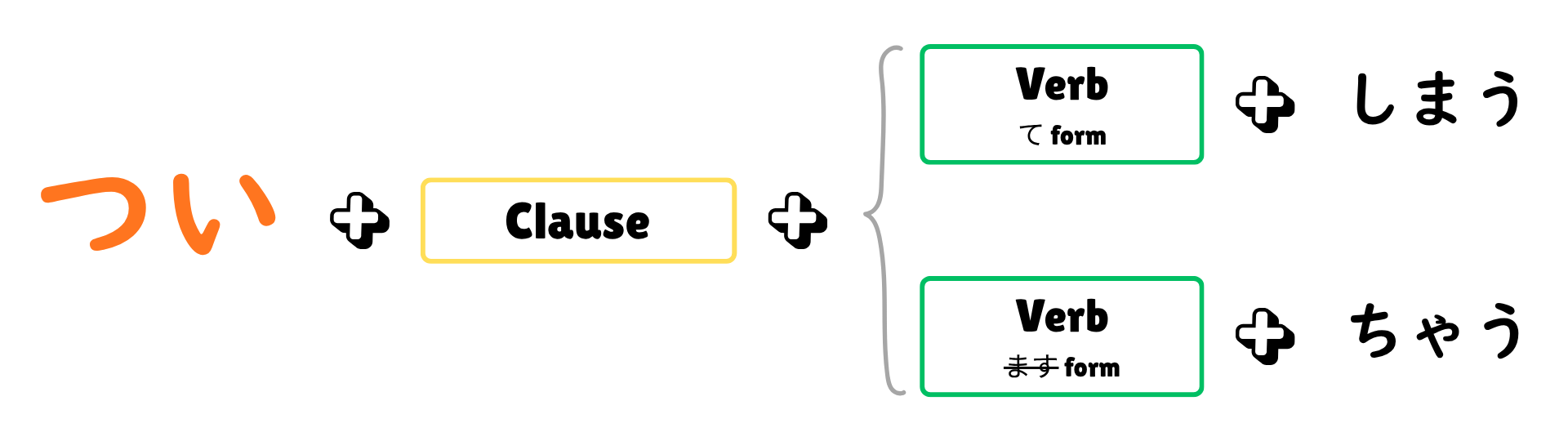
Used when you do something without intending to, even though you knew you shouldn’t.
It’s often followed by てしまう, expressing slight regret.
つい夜更かししてしまった。
つい よふかし して しまった。
tsui yofukashi shite shimatta.
I ended up staying up late again without meaning to.
💡Quick Tip:
うっかり → carelessness
思わず → emotion or instinct
つい → temptation or habit

YouTubeを見ていると、ついお菓子を食べてしまう。
YouTube を みている と、つい おかし を たべて しまう。
YouTube wo miteiru to, tsui okashi wo tabete shimau.
When I watch YouTube, I end up snacking without realizing it.
会議中に、つい居眠りしてしまった。
かいぎちゅう に、つい いねむり して しまった。
kaigichuu ni, tsui inemuri shite shimatta.
I accidentally dozed off during the meeting.
スマホを見ていると、つい時間が過ぎてしまう。
すまほ を みている と、つい じかん が すぎて しまう。
sumaho wo miteiru to, tsui jikan ga sugite shimau.
When I’m on my phone, time just flies by.
感情的になり、つい本音を言ってしまった。
かんじょうてき に なり、つい ほんね を いって しまった。
kanjouteki ni nari, tsui honne wo itte shimatta.
I got emotional and accidentally said what I really thought.
その歌を聞くと、つい歌っちゃう。
そのうたをきくと、ついうたっちゃう。
Sono uta o kiku to, tsui utacchau.
When I hear that song, I can't help singing along.
初ボーナスが嬉しすぎて、つい買い物しすぎちゃった。
はつ ぼーなす が うれしすぎて、つい かいもの しすぎちゃった。
hatsu bo-nasu ga ureshisugite, tsui kaimono shisugichatta.
My first bonus made me so happy that I ended up overspending.

- Grammar Point: つい (tsui)
- JLPT Level: N3
- Meaning: Accidentally, unintentionally
- Quick Explanation: Use つい when you do something without meaning to, often because you couldn’t resist temptation or lost focus. It expresses those little moments when your actions slip out before you realize it.
So that’s how we use つい!
It’s a small word, but it perfectly captures those relatable, human moments, when you do something even though you know you shouldn’t.
あなたが、ついやってしまうことってなんですか?
anata ga, tsui yatte shimau koto tte nan desu ka?
What’s something you end up doing without meaning to?
Now it’s your turn! Try making your own sentences with つい, and think about those funny or relatable moments when you just can’t help yourself!
Your Sensei,
Hikari 👩🏻🏫
Get Hikari's JLPT Mock Exams & Preparation Lessons!
Whether you are studying to pass the JLPT or looking for a challenge in your learning journey, these courses are perfect for you!
Join my ニュースレター Newsletter 📩
You can expect an email from me once a week about Japanese culture.
Don't worry, your information will not be shared.
We hate SPAM. We will never sell your information, for any reason.