JLPT N3 - Grammar 🌟 ところで tokorode
Have you ever been chatting with a friend, suddenly remembered something you wanted to ask for a while, and felt like changing the topic?
Or maybe at work, you’re talking with a colleague and you think, “Oh, right, didn’t he say he was traveling this weekend? And there’s an event I’m curious about happening there. I should ask him about it!”
In English, we use “by the way” in these situations.
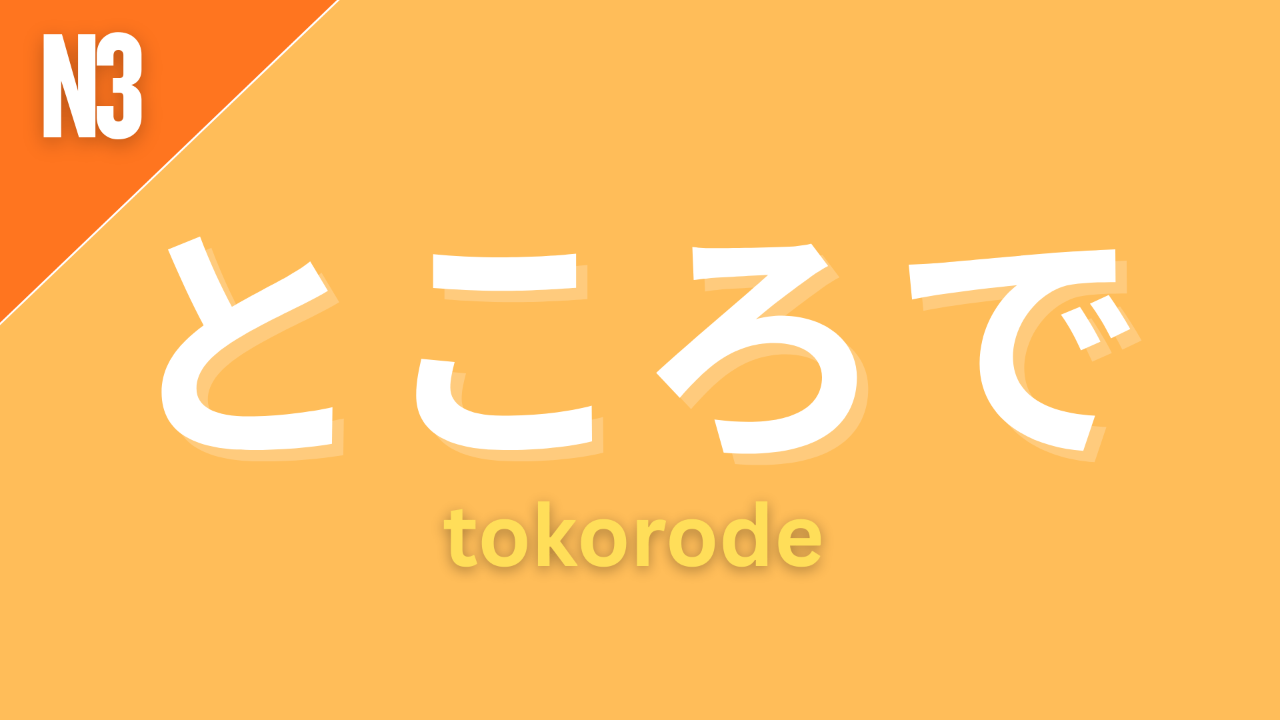
In Japanese, the expression is ところで (tokoro de).
It’s a handy little phrase to smoothly change the topic in conversation.
Let’s check it out!



そういえば (sou ieba) → oh, that reminds me…
Used when something just came to your mind. It’s a little softer than ところで (tokoro de).
そういえば、昨日駅であなたを見かけたよ。
そういえば、きのうえきであなたをみかけたよ。
sou ieba, kinou eki de anata wo mikaketa yo.
Oh, that reminds me, I saw you at the station yesterday.
ところが (tokoro ga) → however, but
This looks similar to ところで, but the meaning is completely different! It’s used to show contrast, often something unexpected.
コンビニに行こうと思った。ところが、急に雨が降ってきた。
こんびににいこうとおもった。ところが、きゅうにあめがふってきた。
konbini ni iku to omotta. tokoro ga, ame ga kyuu ni futte kita.
I was going to go to a convenience store. However, it suddenly started to rain.
💡Tip:
ところで (tokoro de) is neutral and works in both casual and polite situations.

ところで、日本語レッスンの宿題は終わった?
ところで、にほんごれっすんのしゅくだいはおわった?
tokoro de, nihongo ressun no shukudai ha owatta?
By the way, did you finish your Japanese lesson homework?
ところで、明日のランチの予定はどうですか?
ところで、あしたのらんちのよていはどうですか?
tokoro de, ashita no ranchi no yotei ha dou desu ka?
By the way, what’s your plan for lunch tomorrow?
ところで、週末は何をしますか?
ところで、しゅうまつはなにをしますか?
tokoro de, shuumatsu ha nani wo shimasu ka?
By the way, what are you doing this weekend?
ところで、さっきの話は本当ですか?
ところで、さっきのはなしはほんとうですか?
tokoro de, sakki no hanashi ha hontou desu ka?
By the way, was that story you mentioned earlier true?
ところで、これは だれのペンですか?まちがえて使ってしまいました!
ところで、これはだれのぺんですか?まちがえてつかってしまいました!
tokoro de, kore ha dare no pen desu ka? machigaete tsukatte shimai mashita!
By the way, whose pen is this? I accidentally used it!
このクライアント、メールの返事を全然してくれないんです。ところで、明日のミーティングは何時に始まりますか?
このくらいあんと、めーるのへんじをぜんぜんしてくれないんです。ところで、あしたのみーてぃんぐはなんじにはじまりますか?
kono kuraianto, meeru no henji wo zenzen shite kurenai n desu. tokoro de, ashita no miitingu ha nan-ji ni hajimarimasu ka?
This client hasn’t been replying to my emails at all. By the way, what time does tomorrow’s meeting start?
あなたは猫より犬が好きなんですね!ところで、コーヒーは好きですか?
あなたはねこよりいぬがすきなんですね!ところで、こーひーはすきですか?
anata ha neko yori inu ga suki nan desu ne! tokoro de, koohii ha suki desu ka?
So you prefer dogs to cats, huh? By the way, do you like coffee?

- Grammar Point: ところで (tokoro de)
- JLPT Level: N3
- Meaning: By the way, incidentally
- Quick Explanation: ところで is a conjunction used at the beginning of a sentence to shift topics or bring up something new.
It’s often used in daily conversation when you suddenly remember something or want to change the subject.
So that’s how we use ところで in Japanese!
It’s a simple but useful phrase to shift topics smoothly, just like saying “by the way” in English.
ところで… do you listen to my podcast? 🎧
Don’t just read the blog, absorb lots of Japanese through your ears, too!
It’s available on Spotify, YouTube, and many other platforms, so choose your favorite way to listen. Enjoy!
Your Sensei,
Hikari 👩🏻🏫
Get Hikari's JLPT Mock Exams & Preparation Lessons!
Whether you are studying to pass the JLPT or looking for a challenge in your learning journey, these courses are perfect for you!
Join my ニュースレター Newsletter 📩
You can expect an email from me once a week about Japanese culture.
Don't worry, your information will not be shared.
We hate SPAM. We will never sell your information, for any reason.