JLPT N3 - Grammar 🌟 といい / たらいい to ii / tara ii
Have you ever looked at the sky and thought, "I really hope it stays sunny for my picnic tomorrow"?
Or maybe you’ve seen a friend working way too hard and wanted to say, "You should probably take a break!"
If so, today’s grammar is going to be your new favorite! We are learning といい (to ii) and たらいい (tara ii).
These expressions are perfect for sharing your hopes, wishes, or even giving a gentle piece of advice. The best part? These phrases are naturally soft and don't sound pushy at all, making them very safe to use in daily life!
It’s like sending a little bit of good energy out into the world.
Whether you are wishing for luck on an exam or hoping the train isn't crowded, these phrases help you express that "I hope..." feeling perfectly.
Let’s dive in and learn how to spread some positivity in Japanese!
Ready? Let's go!

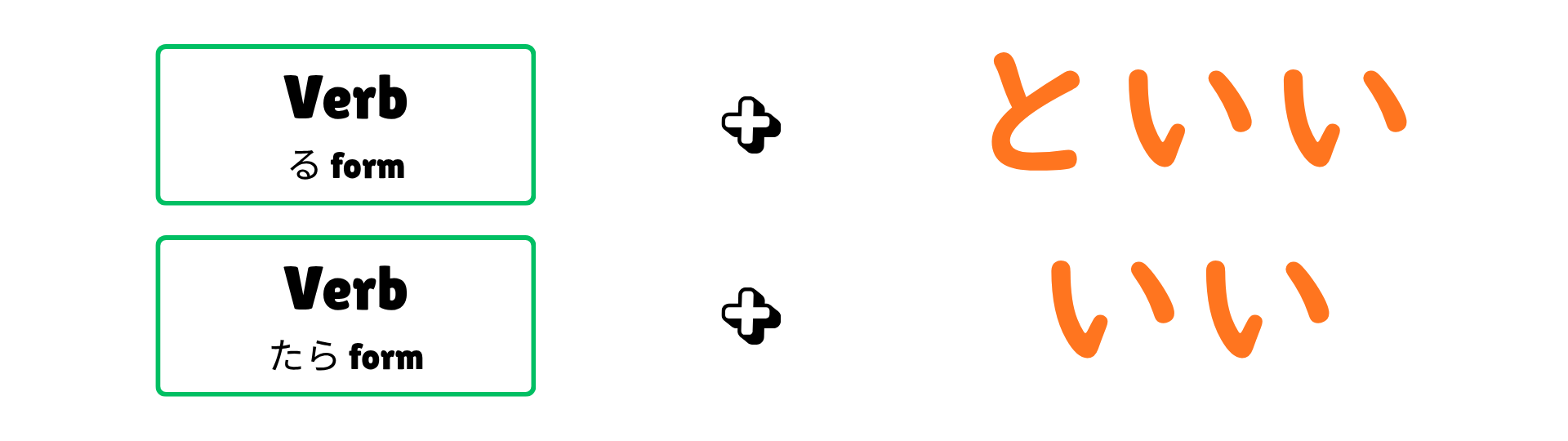

The Difference: といい (to ii) vs. たらいい (tara ii)
Both mean "I hope" or "it would be nice if," but they have slightly different vibes!
といい (to ii)
といい feels a bit more objective. It’s often used for things you can’t control, like the weather or natural events. It sounds like you are looking at a situation from the outside and wishing for a good outcome.
明日、晴れるといいですね。
あした、はれる と いい です ね。
ashita hareru to ii desu ne.
I hope it will be sunny tomorrow.
たらいい (tara ii)
たらいい has a stronger nuance of "if only this situation happened." Because of this "if" feeling, it is the go-to choice when you want to give someone advice.
分からないことは、先生に聞いたらいいですよ。
わからない こと は、せんせい に きいたら いい です よ。
wakaranai koto ha, sensei ni kiitara ii desu yo.
You should ask your teacher what you don't understand.
Don't mix them up! なくてもいい (nakutemo ii) vs. ないといい (naito ii) / なかったらいい (nakattara ii)
When we use the negative form, it can get a little confusing! Make sure you distinguish between "I hope [something] doesn't happen" and "You don't have to [do something]."
なくてもいい (nakutemo ii)
This means "You don't have to" or "It’s okay if you don't." It’s about permission or lack of obligation.
無理しなくてもいいですよ。
むり しなくても いい です よ。
muri shinakutemo ii desu yo.
You don't have to overdo it. (It's okay to rest!)
ないといい (naito ii) / なかったらいい (nakattara ii)
This is a wish that something bad doesn't happen.
無理しなかったらいいのですが。
むり しなかったら いい の です が。
muri shinakattara ii no desu ga.
I hope you don't overdo it. (I'm worried about you!)
Be Careful with the Tone
While these are soft expressions, they can sometimes sound a bit "detached" (他人事/たにんごと taningoto) if someone is sharing a very serious problem.
If you say it too lightly, it might sound like you aren't taking them seriously!
Also, avoid using this for advice toward your boss or teachers.
Telling a superior "〜したらいいですよ~shitara ii desu yo" can sound a bit "bossy" or like you are looking down on them. In those cases, use polite Keigo like "〜されてはいかがでしょうか ~sarete ha ikaga deshou ka" (How about doing...?) instead!

いい仕事が見つかるといいですね。
いい しごと が みつかる と いい です ね。
ii shigoto ga mitsukaru to ii desu ne.
I hope you find a good job.
道が混んでいないといいですね。
みち が こんでいない と いい です ね。
michi ga kondeinai to ii desu ne.
I hope the roads aren't crowded.
JLPT試験、合格してるといいな。
JLPTしけん、ごうかく してる と いい な。
JLPT shiken, goukaku shiteru to ii na.
I hope I pass the JLPT exam.
今日は早く寝たらいいですよ。
きょう は はやく ねたら いい です よ。
kyou ha hayaku netara ii desu yo.
You should go to bed early today.
お腹が空いたら、これを食べたらいいですよ。
おなか が すいたら、これ を たべたら いい です よ。
onaka ga suitara, kore wo tabetara ii desu yo.
If you are hungry, you should eat this.
風邪をひかなかったらいいのですが。
かぜ を ひかなかったら いい の です が。
kaze wo hikanakattara ii no desu ga.
I hope I don't catch a cold.

- Grammar Point: といい (to ii) / たらいい (tara ii)
- JLPT Level: N3
- Meaning: It would be nice if, I hope…, you should...
- Quick Explanation: Use these to express a wish or hope for the future.
So that’s how we use といい and たらいい!
It’s a beautiful way to show you care about someone or to stay positive about the future.
みんなの日本語が、もっともっと上手になるといいな!
みんな の にほんご が、もっと もっと じょうず に なる と いい な!
minna no nihongo ha, motto motto jouzu ni naru to ii na!
I hope everyone's Japanese becomes better and better!
Now it’s your turn! Try making your own "hope" sentence in the comments. What are you wishing for today?
Your Sensei,
Hikari 👩🏻🏫✨
Get Hikari's JLPT Mock Exams & Preparation Lessons!
Whether you are studying to pass the JLPT or looking for a challenge in your learning journey, these courses are perfect for you!
Join my ニュースレター Newsletter 📩
You can expect an email from me once a week about Japanese culture.
Don't worry, your information will not be shared.
We hate SPAM. We will never sell your information, for any reason.