JLPT N3 - Grammar 🌟 と言えば to ieba
Have you ever had a conversation like this?
Someone says one word, and suddenly it reminds you of something else.
A place, a food, a memory, or even a slightly different opinion you want to add.
In English, you might say “Speaking of …” at moments like this.
In Japanese, there is a very natural expression that works in the same way.
That expression is と言えば (to ieba).
It helps you smoothly connect ideas, change topics, or bring up something that feels closely related to what was just said.
It is also used when you want to mention something that feels most typical or representative of that word, like saying “Summer? The beach!”
Let’s learn how と言えば works, and how it makes Japanese conversations flow more naturally!


について (ni tsuite) vs と言えば (to ieba)
Both expressions are related to a topic, but they are used in very different ways.
について (ni tsuite)
について is used when you want to talk directly and clearly about a topic.
It sounds neutral and is often used in explanations, presentations, writing, or questions.
日本の文化について勉強しています。
にほん の ぶんか について べんきょう して います。
nihon no bunka ni tsuite benkyou shite imasu.
I’m studying about Japanese culture.
Use について when you want to stay focused on one topic and explain it.
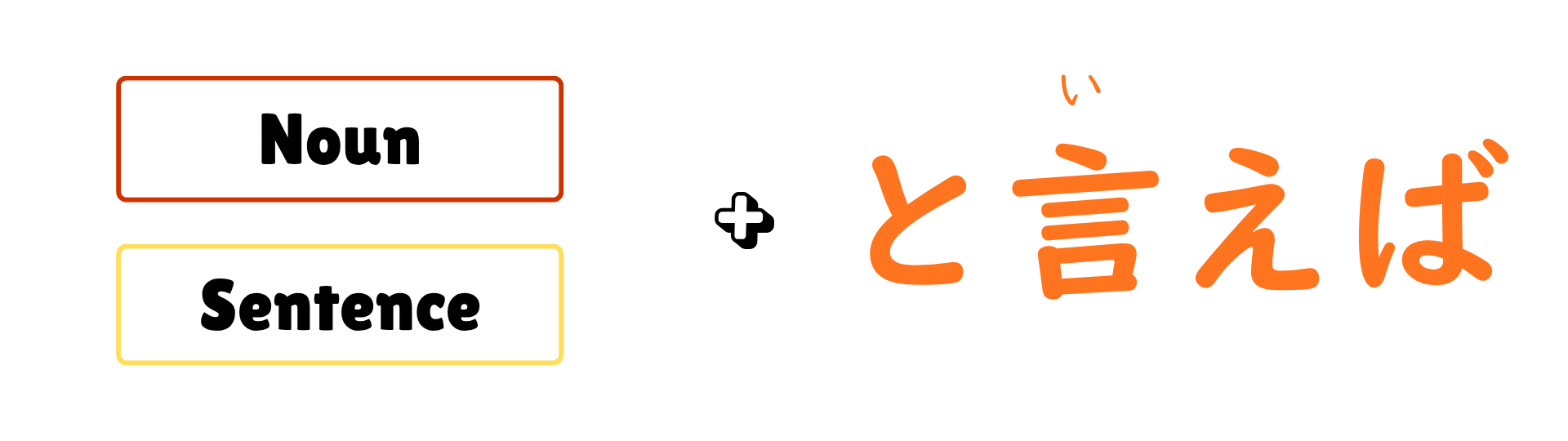
と言えば (to ieba)
と言えば is used when a word or topic reminds you of something else.
It feels more casual and conversational, like following a train of thought.
日本の文化と言えば、お正月の習慣が面白いですね。
にほん の ぶんか といえば、おしょうがつ の しゅうかん が おもしろい です ね。
nihon no bunka to ieba, oshougatsu no shuukan ga omoshiroi desu ne.
Speaking of Japanese culture, New Year customs are interesting.
Use と言えば when you want to connect ideas naturally or shift the topic.
と言えば (to ieba) for Concessions
と言えば can also be used as a concession expression.
This means you first acknowledge something, and then gently add a different opinion.
It’s a very Japanese way to say,
“Yes, that’s true… but there’s another side to it.”
Common Use Pattern:
[ Adjective / Verb ] + と言えば + [ Same adjective / verb ] + が/けど…
高いと言えば高いが、品質はとてもいい。
たかい といえば たかい が、ひんしつ は とても いい。
takai to ieba takai ga, hinshitsu ha totemo ii.
It is expensive, but the quality is very good.
This pattern helps you sound polite, balanced, and considerate, especially when you want to share an opinion without sounding too strong or negative.

週末のパーティーと言えば、何を持っていくか決めた?
しゅうまつ の ぱーてぃー といえば、なに を もって いく か きめた?
shuumatsu no paatii to ieba, nani wo motte iku ka kimeta?
Speaking of the weekend party, have you decided what to bring?
次の休暇と言えば、日本旅行に行くかもって言ってたよね?
つぎ の きゅうか といえば、にほん りょこう に いく かも って いってた よ ね?
tsugi no kyuuka to ieba, nihon ryokou ni iku kamo tte itteta yo ne?
Speaking of the next vacation, you said you might go on a trip to Japan, right?
日本のスポーツと言えば、やっぱり相撲かな!
にほん の すぽーつ といえば、やっぱり すもう かな!
nihon no supootsu to ieba, yappari sumou kana!
Speaking of Japanese sports, sumo comes to mind!
京都と言えば、やっぱりお寺が有名です。
きょうと といえば、やっぱり おてら が ゆうめい です。
kyouto to ieba, yappari otera ga yuumei desu.
Speaking of Kyoto, temples are famous, of course.
この靴は歩きやすいと言えば歩きやすいが、デザインが古く感じる。
この くつ は あるきやすい といえば あるきやすい が、でざいん が ふるく かんじる。
kono kutsu ha arukiyasui to ieba arukiyasui ga, dezain ga furuku kanjiru.
These shoes are comfortable to walk in, but the design feels a bit old.
<Conversation Example>
A: 昨日、鎌倉に行ってきたんだ。
きのう、かまくら に いって きた んだ。
kinou, kamakura ni itte kita n da.
I went to Kamakura yesterday.
B: 鎌倉と言えば、大仏が有名だよね!行ったことある?
かまくら といえば、だいぶつ が ゆうめい だ よ ね!いった こと ある?
kamakura to ieba, daibutsu ga yuumei da yo ne! itta koto aru?
Speaking of Kamakura, great Buddha is famous, right? Have you been to one?

- Grammar Point: と言えば (to ieba)
- JLPT Level: N3
- Meaning: Speaking of, when you say, that reminds me of
- Quick Explanation: と言えば is a natural expression used to smoothly connect ideas. You can use it to change topics, bring up a typical example, or recall something related.
It can also be used as a concession expression. You first acknowledge something, then gently add another opinion.
So that’s how we use と言えば!
It’s a very natural expression, just like saying “Speaking of …” in English, and it helps your conversations flow smoothly.
日本と言えば、寿司が有名です。
にほんといえば、すしがゆうめいです。
Nihon to ieba, sushi ga yuumei desu.
Speaking of Japan, sushi is famous.
Now, it’s your turn! Try making your own sentence with と言えば.
Think of a place, a person, or something that feels “classic” or memorable to you!
Your Sensei,
Hikari 👩🏻🏫✨
Get Hikari's JLPT Mock Exams & Preparation Lessons!
Whether you are studying to pass the JLPT or looking for a challenge in your learning journey, these courses are perfect for you!
Join my ニュースレター Newsletter 📩
You can expect an email from me once a week about Japanese culture.
Don't worry, your information will not be shared.
We hate SPAM. We will never sell your information, for any reason.