JLPT N3 - Grammar 🌟 とは限らない toha kagiranai
Have you ever noticed how people love making these big, bold statements as if they’re universal truths?
“Hard work guarantees success.”
“Expensive things are always high quality.”
“Everyone from Japan must know how to make sushi.”
(…I mean, I eat sushi, yes. Making it? That’s another story.)
They sound convincing, right?
But reality loves to surprise us.
Life is rarely that simple. There are always exceptions!
And in Japanese, we have a perfect expression for talking about those not-so-universal “universal rules”:
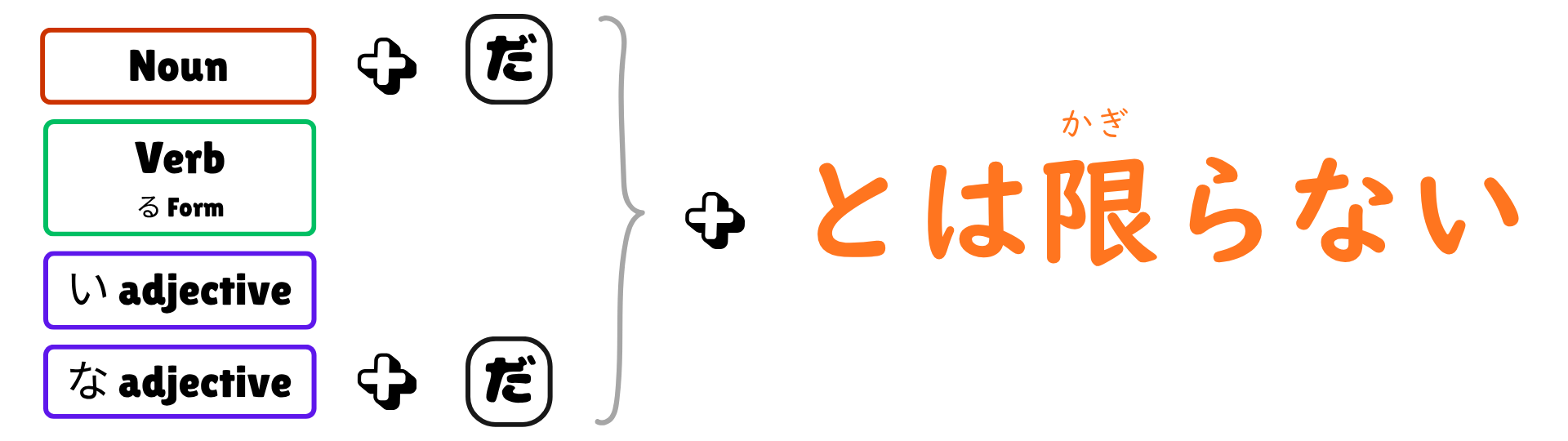
とは限らない (とはかぎらない / toha kagiranai) !
It means “not necessarily” or “not always true.”
You use it when you want to gently challenge someone’s assumption, or show that something isn’t true 100% of the time.
(It’s like saying, “Well… actually… ” but politely.)
This expression is incredibly useful for sounding thoughtful, logical, and nuanced in Japanese. Especially at the N3 level and above.
Ready to learn how to use it naturally and confidently?
Let’s dive in!


わけではない (wake deha nai) vs とは限らない (toha kagiranai)
These two expressions can both “soften a denial,” but the nuance is quite different. And using the right one will make your Japanese sound much more natural.
わけではない (wake deha nai)
わけではない is used to gently correct or clarify something.
It means “it’s not exactly that…” / “it doesn’t mean that…”
It responds to an assumption and adjusts it softly.
お金持ちが幸せなわけではない。
おかねもち が しあわせ な わけ では ない。
okanemochi ga shiawase na wake deha nai.
It’s not that rich people are (always) happy.
(You’re clarifying an impression.)
This focuses on your perspective or nuance.
とは限らない (toha kagiranai)
とは限らない points out that a general belief is not always true.
It means “not necessarily” or “there are exceptions.”
お金持ちが幸せとは限らない。
おかねもち が しあわせ と は かぎらない。
okanemochi ga shiawase to ha kagiranai.
Rich people are not necessarily happy.
(You’re stating an objective fact: exceptions exist.)
This is more logical, objective, and often used for general truths or stereotypes.

努力する人が成功するとは限らない。
どりょく する ひと が せいこう する と は かぎらない。
doryoku suru hito ga seikou suru to ha kagiranai.
People who work hard don’t necessarily succeed.
日本に住んでいるからといって、日本語が上手とは限らない。
にほん に すんでいる から と いって、にほんご が じょうず と は かぎらない。
nihon ni sunde iru kara to itte, nihongo ga jouzu to ha kagiranai.
Just because someone lives in Japan doesn’t mean they’re good at Japanese.
日本人だからといって、お寿司が作れるとは限らない。
にほんじん だから と いって、おすし が つくれる と は かぎらない。
nihonjin dakara to itte, osushi ga tsukureru to ha kagiranai.
Being Japanese doesn’t automatically mean someone can make sushi.
行列だからといって、美味しいお店だとは限らない。
ぎょうれつ だから と いって、おいしい おみせ だ と は かぎらない。
gyouretsu dakara to itte, oishii omise da to ha kagiranai.
A long line doesn’t necessarily mean the restaurant is good.
高いものがいいものだとは限らない。
たかい もの が いい もの だ と は かぎらない。
takai mono ga ii mono da to ha kagiranai.
Expensive things are not always good.
大企業が安定しているとは限らない。
だいきぎょう が あんてい している と は かぎらない。
daikigyou ga antei shite iru to ha kagiranai.
Large companies aren’t necessarily stable.
最新技術が全員に便利だとは限らない。
さいしん ぎじゅつ が ぜんいん に べんり だ と は かぎらない。
saishin gijutsu ga zen’in ni benri da to ha kagiranai.
The latest technology isn’t always convenient for everyone.

- Grammar Point: とは限らない (toha kagiranai)
- JLPT Level: N3
- Meaning: Not necessarily, not always true
- Quick Explanation: とは限らない is used to gently challenge assumptions or general beliefs.
It means “just because A is true, doesn’t guarantee B.”
So that’s how we use とは限らない!
It’s an incredibly useful expression for sounding logical, thoughtful, and nuanced. Especially when you want to say that something isn’t true 100% of the time.
天気予報が当たるとは限らない。
てんきよほうがあたるとはかぎらない。
Tenki yohou ga ataru to wa kagiranai.
Weather forecasts aren’t always accurate.
Now it’s your turn! Try making your own sentences using とは限らない and deepen your understanding of nuance in Japanese!
Your Sensei,
Hikari 👩🏻🏫✨
Get Hikari's JLPT Mock Exams & Preparation Lessons!
Whether you are studying to pass the JLPT or looking for a challenge in your learning journey, these courses are perfect for you!
Join my ニュースレター Newsletter 📩
You can expect an email from me once a week about Japanese culture.
Don't worry, your information will not be shared.
We hate SPAM. We will never sell your information, for any reason.