JLPT N3 - Grammar 🌟 たとたん ta totan

Have you ever had one of those moments where something happens the very second you do something. And you think, “Wait, seriously? Right now?”
Picture this…
You finally get home, sink into your sofa, and the moment you relax your shoulders, sleep just washes over you and you almost drift off. (We've all been there!)
Or you crack your door open just a little to grab a package and your dog chooses that exact second to try and slip outside like it’s an opportunity of a lifetime.
Or maybe you step outside in the Monday morning and as soon as your foot crosses the doorway, a freezing wind hits your face. Instant wake-up call.
These sudden “right when I did A, B happened!” moments?
That’s exactly what たとたん(ta totan)is used for.
It’s perfect for surprises, sudden changes, and things you didn’t expect at all.
Let’s jump in and learn how to use it naturally in your Japanese!


たら (tara) vs たとたん (ta totan)
Both たら and たとたん can describe something happening after an action, but the speed and unexpectedness are very different.
たら (tara)
たら is broad and flexible. It can mean “when,” “after,” or “if” depending on the context.
It’s used for your own plans, normal sequences, and things you can control.
There’s no suddenness or surprise, just “A happens, then B.”
駅に着いたら、電話しますね。
えき に ついたら、でんわ します ね。
eki ni tsuitara, denwa shimasu ne.
When I arrive at the station, I’ll call you.
This is your planned intention and typical sequence.
たとたん (ta totan)
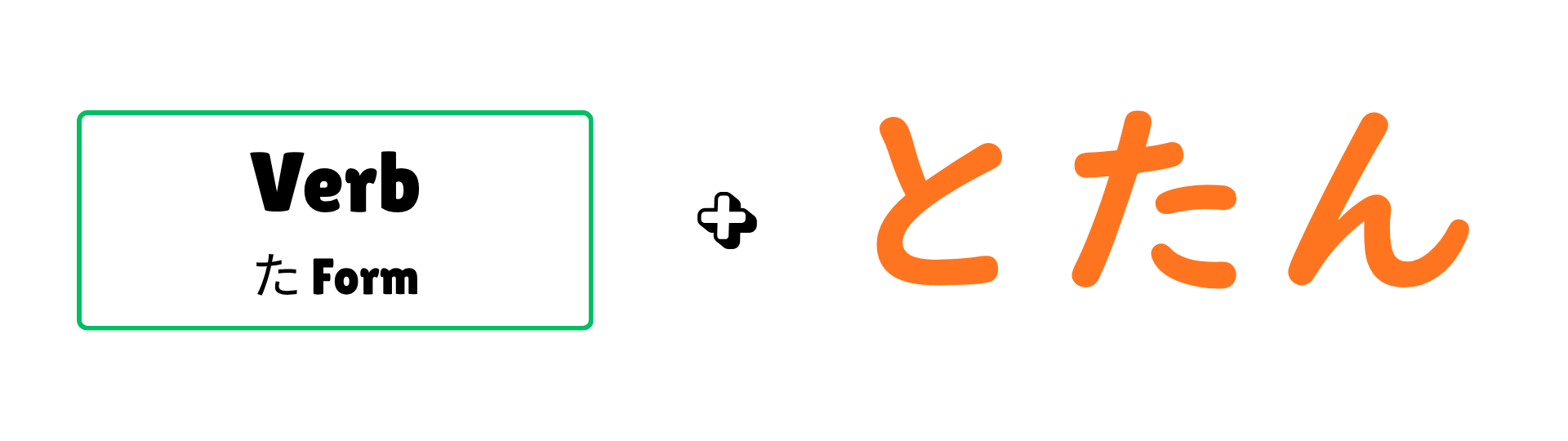
たとたん means “the exact moment when…”,
and what comes after is usually sudden, surprising, or out of your control.
It describes a moment where something happens instantly and unexpectedly.
駅に着いたとたん、雨が降り出した。
えき に ついた とたん、あめ が ふりだした。
eki ni tsuita totan, ame ga furidashita.
The moment I arrived at the station, it suddenly started raining.
You didn’t plan this. It happened immediately and unexpectedly.

ソファに座ったとたん、眠気におそわれた。
そふぁ に すわった とたん、ねむけ に おそわれた。
sofa ni suwatta totan, nemuke ni osowareta.
The moment I sat on the sofa, a wave of sleepiness hit me.
赤ちゃんが私の顔を見たとたん、泣き出した。
あかちゃん が わたし の かお を みた とたん、なきだした。
akachan ga watashi no kao wo mita totan, nakidashita.
The moment the baby saw my face, they started crying.
椅子から立ったとたん、めまいがした。
いす から たった とたん、めまい が した。
isu kara tatta totan, memai ga shita.
The moment I stood up from the chair, I felt dizzy.
旅行から帰ってきたとたん、風邪を引いてしまった。
りょこう から かえってきた とたん、かぜ を ひいてしまった。
ryokou kara kaette kita totan, kaze wo hiite shimatta.
The moment I got back from my trip, I caught a cold.
友達は恋人ができたとたん、一緒に遊んでくれなくなった。
ともだち は こいびと が できた とたん、いっしょ に あそんで くれなく なった。
tomodachi wa koibito ga dekita totan, issho ni asonde kurenaku natta.
The moment my friend got a boyfriend/girlfriend, they stopped hanging out with me.
2人は出会ったとたんに、恋に落ちた。
ふたり は であった とたん に こい に おちた。
futari wa deatta totan ni, koi ni ochita.
The moment the two met, they fell in love.

- Grammar Point: たとたん (ta totan)
- JLPT Level: N3
- Meaning: As soon as, the moment, just as
- Quick Explanation: たとたん is used when something unexpected happens the very moment another action finishes. The key nuance is surprise or loss of control, what comes after とたん is usually sudden, unplanned, or out of your hands.
So that’s how we use たとたん!
It’s the perfect expression for capturing those “the moment I did X, something surprising happened!” situations. Like instantly getting sleepy, someone suddenly calling you, or a change happening out of nowhere.
テキストを開いたとたんに、眠くなる時ってあるよね?
てきすと を ひらいた とたん に、ねむく なる とき って ある よね?
tekisuto wo hiraita totan ni, nemuku naru toki tte aru yo ne?
You know those moments when you open your textbook and suddenly get sleepy? Happens to all of us!
Now it’s your turn! Try making your own sentences with たとたん and describe those surprising, sudden moments in Japanese!
Your Sensei,
Hikari 👩🏻🏫✨
Get Hikari's JLPT Mock Exams & Preparation Lessons!
Whether you are studying to pass the JLPT or looking for a challenge in your learning journey, these courses are perfect for you!
Join my ニュースレター Newsletter 📩
You can expect an email from me once a week about Japanese culture.
Don't worry, your information will not be shared.
We hate SPAM. We will never sell your information, for any reason.