JLPT N3 - Grammar 🌟 例えば tatoeba
When you explain something, it’s tough to make it clear without giving examples, right?
If I had to write a blog without using “for example,” I’d be stuck… and I bet you’d agree with me!
That’s where the magic word 例えば (tatoeba) comes in.
It usually means “for example”, perfect for giving real-life examples.
But depending on the situation, it can also work like “let’s say”, when you want to set up a hypothetical situation.
So whether you’re listing real examples or imagining a “what if” scenario, 例えば is your go-to tool for making things clear and natural in Japanese.
Shall we check it out?

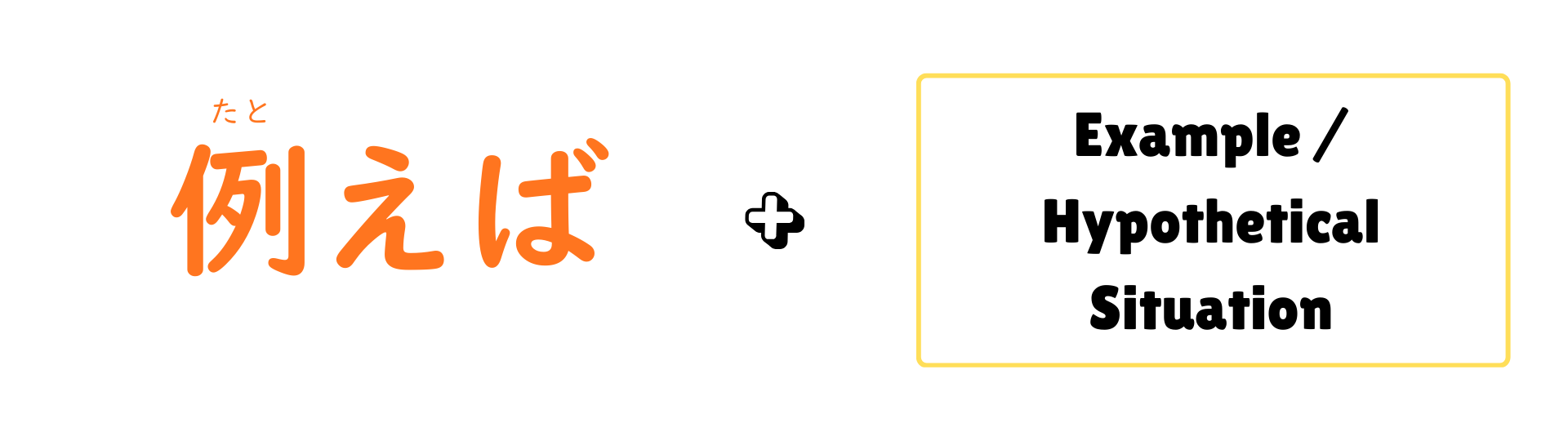

例えば + など (nado) → Adding など after examples makes the sentence feel more open-ended, like “for example… and so on.”
日本の食べ物は、例えばすしやラーメンなどが有名です。
にほんのたべものは、たとえばすしやらーめんなどがゆうめいです。
nihon no tabemono ha, tatoeba sushi ya raamen nado ga yuumei desu.
Japanese foods such as sushi and ramen are famous.
~とか (toka) → A more casual version, often used in spoken Japanese.
休みの日は、映画を見るとか、本を読むとかしています。
やすみのひは、えいがをみるとか、ほんをよむとかしています。
yasumi no hi ha, eiga wo miru toka, hon wo yomu toka shite imasu.
On my days off, I do things like watch movies or read books.
💡 Tip:
とか (toka) and など (nado) already carry the nuance of “giving examples,” so 例えば (tatoeba) is not always necessary. You’ll hear all of these a lot in Japanese, depending on the formality and situation.

日本の東北地方にはきれいな観光地がたくさんあります。例えば、岩手県の浄土ヶ浜や、山形県の蔵王です。
にほんのとうほくちほうにはきれいなかんこうちがたくさんあります。たとえば、いわてけんのじょうどがはまや、やまがたけんのざおうです。
nihon no Tohoku chiho ni ha kirei na kankouchi ga takusan arimasu. Tatoeba, Iwate-ken no Joudogahama ya, Yamagata-ken no Zao desu.
There are many beautiful sightseeing spots in the Tohoku region of Japan. For example, Jodogahama in Iwate or Zao in Yamagata.
明日の待ち合わせなんだけど、例えば7時にハチ公前はどう?
あしたのまちあわせなんだけど、たとえば7じにはちこうまえはどう?
ashita no machiawase nanda kedo, tatoeba shichi-ji ni Hachiko-mae ha dou?
About tomorrow’s meeting spot, how about, let’s say, 7 o’clock in front of Hachiko?
日本には有名な都市がたくさんあります。例えば、東京や大阪です。
にほんにはゆうめいなとしがたくさんあります。たとえば、とうきょうやおおさかです。
nihon ni ha yuumei na toshi ga takusan arimasu. Tatoeba, Tokyo ya Osaka desu.
There are many famous cities in Japan. For example, Tokyo and Osaka.
ジブリアニメが好きです。例えば、『天空の城ラピュタ』や『風の谷のナウシカ』です。
じぶりあにめがすきです。たとえば、「てんくうのしろらぴゅた」や「かぜのたにのなうしか」です。
jiburi anime ga suki desu. Tatoeba, "Tenkuu no Shiro Laputa" ya "Kaze no Tani no Naushika" desu.
I like Ghibli movies. For example, "Castle in the Sky" or "Nausicaa of the Valley of the Wind".
東京から大阪に行くには、いろいろな方法があります。例えば、新幹線や飛行機、夜行バスなどです。
とうきょうからおおさかにいくには、いろいろなほうほうがあります。たとえば、しんかんせんやひこうき、やこうばすなどです。
Tokyo kara Osaka ni iku ni ha, iroiro na houhou ga arimasu. Tatoeba, shinkansen ya hikouki, yakou basu nado desu.
There are many ways to travel from Tokyo to Osaka. For example, by shinkansen, airplane, or overnight bus.
明日の会議なんだけど、例えば10時に始めるのはどう?
あしたのかいぎなんだけど、たとえば10じにはじめるのはどう?
ashita no kaigi nan da kedo, tatoeba juu-ji ni hajimeru no ha dou?
For tomorrow’s meeting, let’s say we start at 10?
次の旅行先を考えているんだけど、例えば沖縄に行くのはどうかな?
つぎのりょこうさきをかんがえているんだけど、たとえばおきなわにいくのはどうかな?
tsugi no ryokou saki wo kangaete iru n da kedo, tatoeba Okinawa ni iku no ha dou kana?
I’m thinking about the next travel destination, how about going to Okinawa, for example?

- Grammar Point: 例えば (tatoeba)
- JLPT Level: N3
- Meaning: For example, for instance, let’s say, how about (setting up a hypothetical situation)
- Quick Explanation: 例えば is placed before examples or a situation you want to introduce.
So that’s how we use 例えば in Japanese!
It’s your best friend when giving examples or setting up a “what if” situation. Super useful for everyday conversations, teaching, or even making your stories more fun.
If you’re reading this blog, it means you want to improve your Japanese, right?
So…例えば、how about you start right now by making your own sentences with 例えば?
What example would you give to explain your hobbies, favorite food, or dream trip?
Your Sensei,
Hikari 👩🏻🏫🌸
Get Hikari's JLPT Mock Exams & Preparation Lessons!
Whether you are studying to pass the JLPT or looking for a challenge in your learning journey, these courses are perfect for you!
Join my ニュースレター Newsletter 📩
You can expect an email from me once a week about Japanese culture.
Don't worry, your information will not be shared.
We hate SPAM. We will never sell your information, for any reason.