JLPT N3 - Grammar 🌟 たしかに tashika ni

Have you ever wanted to say “That’s true” or “You’re right about that” in Japanese?
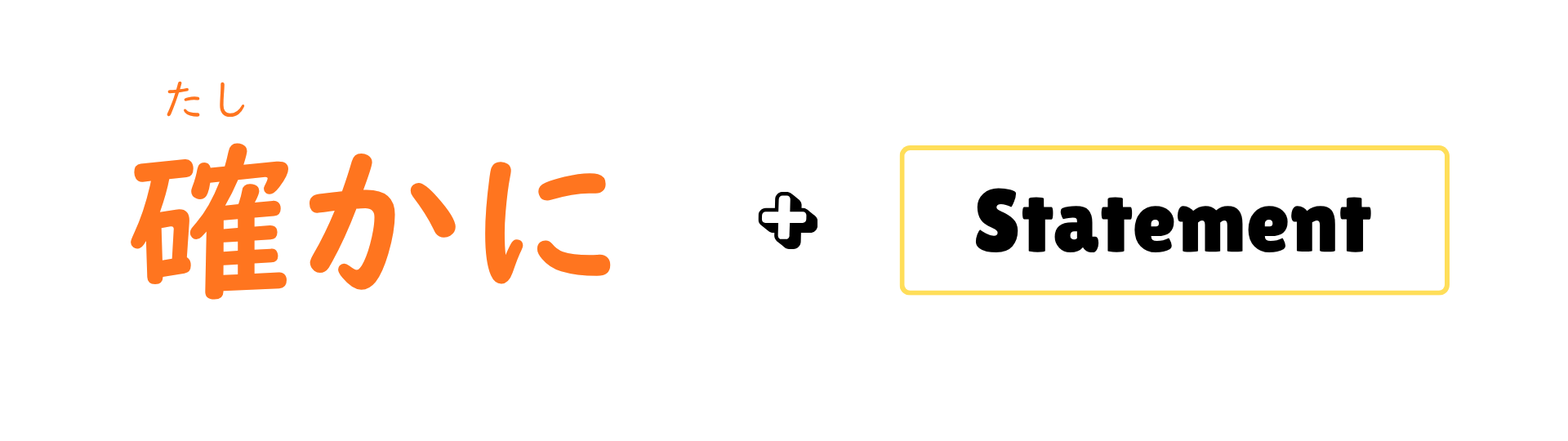
That’s where 確かに(たしかに / tashika ni) comes in.
It means “surely,” “certainly,” or “indeed,” and it’s used when you want to recognize something as true or undeniable.
When you use 確かに, you’re not just agreeing, you’re expressing thoughtful acknowledgment of a fact or statement. It often gives your words a calm, intelligent tone that feels natural in both casual and formal Japanese.
You can also use it when you agree with someone’s point but want to add your own opinion afterward, just like saying, “That’s true, but…” in English.
Let’s take a closer look at how to use 確かに naturally and make your Japanese sound more confident and nuanced!


本当に (hontou ni) vs. 確かに(tashika ni)
Both 本当に (hontou ni) and 確かに (tashika ni) can be translated as “really” or “indeed,” but they express different nuances.
本当に (hontou ni) means “really” or “truly,” and expresses the speaker’s feelings or emotional emphasis.
確かに (tashika ni) means “certainly” or “indeed,” and is used to objectively agree with or acknowledge a fact.
For example:
本当に彼の意見は正しい。
ほんとうにかれのいけんはただしい。
hontou ni kare no iken ha tadashii.
His opinion is really correct. (emotional emphasis)
確かに彼の意見は正しい。
たしかにかれのいけんはただしい。
tashika ni kare no iken ha tadashii.
Certainly, his opinion is correct. (objective agreement)

確かにあなたのいう通りですね。
たしかに あなた の いう とおり です ね。
tashika ni anata no iu toori desu ne.
Certainly, you’re right.
確かに言われてみればそうですよね。
たしかに いわれて みれば そう です よ ね。
tashika ni iwarete mireba sou desu yo ne.
Now that you mention it, that’s true.
確かに昔は娯楽は少なかったけど、時間にゆとりがあったように思うよ。
たしかに むかし は ごらく は すくなかった けど、じかん に ゆとり が あった よう に おもう よ。
tashika ni mukashi ha goraku ha sukunakatta kedo, jikan ni yutori ga atta you ni omou yo.
It’s true that there was less entertainment in the past, but I think people had more free time.
確かに彼は職人として腕は優れています。けれども、気難しい人でね..。
たしかに かれ は しょくにん として うで は すぐれて います。けれども、きむずかしい ひと で ね..。
tashika ni kare ha shokunin toshite ude ha sugurete imasu. Keredomo, kimuzukashii hito de ne..
It’s true that he’s very skilled as a craftsman. But he’s quite a difficult person, you know...
確かに無駄な出費は減らしたい。でも、最低限の保険は入るべきですよね。
たしかに むだ な しゅっぴ は へらしたい。 でも、さいていげん の ほけん は はいる べき です よ ね。
tashika ni muda na shuppi ha herashitai. Demo, saiteigen no hoken ha hairu beki desu yo ne.
It’s true that I want to cut down on unnecessary expenses, but we should at least have basic insurance, right?

- Grammar Point: 確かに(たしかに tashika ni)
- JLPT Level: N3
- Meaning: Surely, certainly, indeed
- Quick Explanation: 確かに is used when you strongly agree with something, acknowledge a fact, or express certainty about what’s being said. It can also soften disagreement by showing partial agreement before giving your own opinion.
So that’s how we use 確かに!
It’s perfect for expressing thoughtful agreement, a polite and natural way to show that you understand what someone’s saying while adding your own view.
確かに日本語の勉強は大変なこともあります。でも、私がいるから大丈夫!
たしかに にほんご の べんきょう は たいへん な こと も あります。 でも、わたしが いる から だいじょうぶ!
tashika ni nihongo no benkyou ha taihen na koto mo arimasu. Demo, watashi ga iru kara daijoubu!
It’s true that studying Japanese can be tough. But hey, you’ve got me, so you’ll be just fine!
Now it’s your turn, try using 確かに in your own conversations to agree naturally and sound more fluent!
Your Sensei,
Hikari 👩🏻🏫
Get Hikari's JLPT Mock Exams & Preparation Lessons!
Whether you are studying to pass the JLPT or looking for a challenge in your learning journey, these courses are perfect for you!
Join my ニュースレター Newsletter 📩
You can expect an email from me once a week about Japanese culture.
Don't worry, your information will not be shared.
We hate SPAM. We will never sell your information, for any reason.